
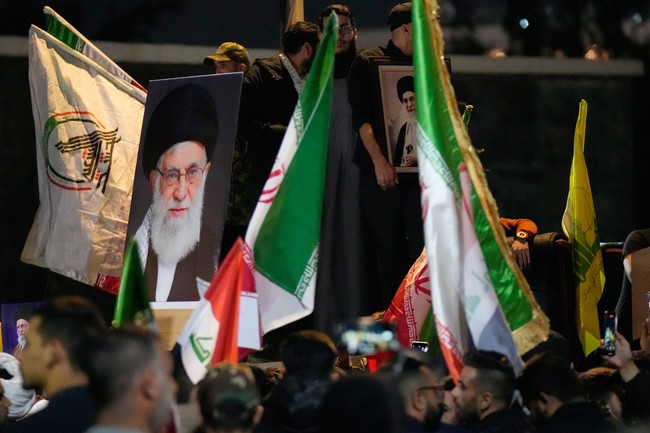
Washington Square Park in lower Manhattan turned into a flashpoint after a vigil for the dead Iranian leader drew a small but vocal crowd and provoked a street brawl, with New York Police stepping in and arrests made amid shouted obscenities and bloody scenes. The gathering, honoring Ayatollah Ali Khamenei after reports of his death in Operation Epic Fury, exposed raw emotions in a city still haunted by the memory of 9/11 and revealed deep divisions over how America and allies conduct themselves against regimes that sponsor terror. Video from the day shows a man trying to tear down a poster, another striking him, scuffles over flags, and bystanders reacting with anger and disgust. The event highlights the tension between free speech and public outrage when demonstrators honor a figure many view as a mass murderer and an enemy of U.S. allies.
Washington Square Park has a long history of protest and passion, from abolitionists to antiwar activists to modern demonstrations, and this latest incident fits that tradition of heated public expression. The park sits near Ground Zero, where the memory of nearly 3,000 Americans killed on September 11 remains vivid for many people who live and work in New York. That proximity matters: some saw the vigil as a deliberate affront, an insensitive celebration for a leader blamed for sponsoring terror and oppressing his own people. Emotions were high on both sides before fists started flying.
The crowd included people who openly supported the Iranian regime and its former Supreme Leader, Ayatollah Ali Khamenei, who was reportedly killed in strikes tied to Operation Epic Fury. Opponents in the park reacted violently when they perceived praise for a figure widely accused of atrocities, and tensions quickly escalated into physical confrontations. Videos circulated showing a man in a SpongeBob sweatshirt punch another man who was trying to remove a poster, sending him to the ground and prompting a broader melee. Police intervened to separate combatants and make arrests, calming the scene after blood and cuffs were visible.
Chaos erupted in Washington Square Park in Manhattan as a vigil mourning the death of Iranian Supreme Leader Ayatollah Ali Khamenei descended into violence Friday.
Video from the event showed a man attempting to pull down a poster of the dictator, who was killed last week in an Israeli airstrike, when a man wearing a SpongeBob sweatshirt punched him in the face, sending him to the ground.
Others began fighting, prompting New York City Police Department (NYPD) intervention.
As the brawl unfolded, the crowd could be heard shouting profanity.
Not everyone at the park wanted trouble, but the optics were explosive: celebrating a man blamed for decades of brutality in a city that lost thousands to Islamist terror is bound to provoke a fierce reaction from people who still carry that grief. Onlookers described flags being snatched, people being shoved into police cruisers, and at least one person bloodied and cuffed on the arch. When actual violence shows up in public spaces, it becomes a law enforcement issue fast, and the NYPD acted to separate those fighting and effect arrests. The scene was chaotic, loud, and ugly—exactly the kind of clash that makes neighbors wonder how tolerant public life can remain.
Here is how eyewitness reports described the aftermath: “A fight broke out, with one person on each side taken away arrested by NYPD.” That short line captures the blunt reality: two people removed, tempers still simmering, and a reminder that freedom of assembly includes the right to protest even if many citizens find the cause abhorrent. People on the ground were visibly upset not only about the vigil itself but about the idea that a violent ideologue could be memorialized in a place that symbolizes civic life. The protest tested the balance between protecting free speech and preventing violence in public squares.
Many Americans find it morally repugnant to honor Khamenei, whom critics accuse of ordering mass repression at home, sponsoring terrorism abroad, and enforcing draconian policies against women. Those feelings are especially strong in New York, where the wounds of Islamist violence still run deep and where surviving families and first responders live with daily reminders. Opponents of the vigil saw their reaction as righteous indignation, while some organizers argued they were exercising constitutional rights. The clash made that tension concrete and left observers debating whether the response was proportional or dangerous.
There were also baffling moments where unrelated grievances were invoked, and some viral posts mixed up unrelated symbols and causes in ways that confused more than clarified. That kind of mashup only heightens the sense that modern protests can be chaotic and unfocused, and it underlines how easily peaceful dissent can turn violent. For many onlookers, the emotional charge of seeing a leader long accused of crimes honored in public was simply too much to bear without showing visible opposition. The result was a messy, confrontational scene that will likely be replayed and argued about for days.
A fight broke out, with one person on each side taken away arrested by NYPD.
Respect for the First Amendment means allowing citizens to assemble and express unpopular views, but it does not mean those views will be met without pushback or disgust. Plenty of people in the park used their speech to condemn the vigil and Khamenei, and others used their bodies to stop perceived provocations. When protests touch raw wounds, they test civic norms and force communities to ask where lines should be drawn between tolerance and outrage. The Washington Square episode is one more example of that difficult national conversation.
Add comment