
The Wisconsin Democratic primary produced a late-night pileup: a socialist favorite faltered, a more conventional candidate eked out a narrow win, and election officials discovered that five Milwaukee USB sticks left the facility without the correct vote files, prompting fresh questions about technology, procedure, and how polling keeps getting it wrong.
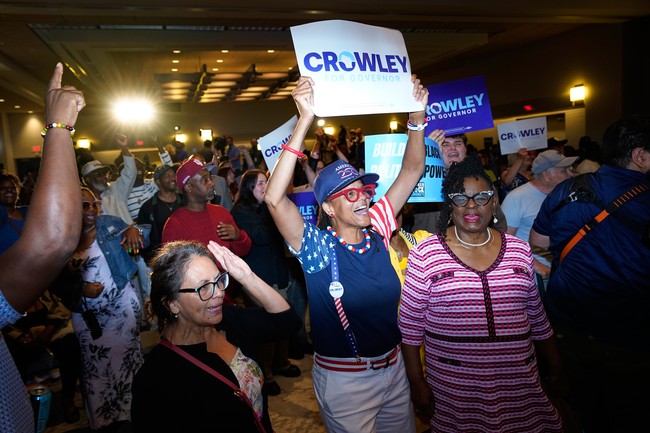
Francesca Hong, who had been treated as the insurgent favorite in polling, failed to close the deal on primary night while Milwaukee County Executive David Crowley pulled ahead in the count. The race tightened to a margin so close it highlighted bigger worries about confidence in the process and the accuracy of pre-election polls. Voters and political observers should be paying attention to both the human errors and the polling disconnects exposed by this result.
The immediate technical drama centered on five USB sticks that were supposed to carry tabulated results from Milwaukee precincts. Election observers reported that those sticks were missing results, forcing election officials to return to an absentee facility to re-extract the data. That kind of slip-up is the kind of error that chips away at trust when outcomes are tight.
Here’s what happened, according to the of Wisconsin election observer Alexander Shur:
Five of the USB sticks were missing results from the election.
Election officials have to go back to the absentee facility to get the results again.
But election officials extracted “results” from some tabulators in 10 minutes and others in three. Election officials tell me it should take longer than three mins for results to download.
Milwaukee election chief Paulina Gutierrez confirmed to me that officials just clicked the wrong button on five of the tabulators. That’s why it went so quickly.
They downloaded audit logs but not results
Even television analysts sounded puzzled by how fast some downloads happened and by what was missing. The questions are straightforward: how can so many storage devices leave an election operation without complete files, and how did human error play into accepting incomplete exports? Every preventable mistake undermines faith in election administration.
That technological hiccup collides with another mystery: the polls. For months, multiple polls showed Hong with commanding leads—some by margins that would be considered landslides. Those same polls now sit beside an outcome where Crowley narrowly prevailed, and that gap demands an explanation beyond simple forecasting error.
One late July Marquette poll had Hong up by an astonishing 31 points, and other pollsters produced similarly dominant numbers. A State Navigate internal reassessment produced a “worst case scenario” that still projected a 17-point win for Hong, but reality turned out very different. When multiple methods converge on the same story and the result still deviates wildly, either turnout behavior shifted dramatically or the methodologies are missing something crucial.
There are plausible mechanics behind the misses. Enthusiastic niche movements often show up in survey samples at higher rates than they show up at the ballot box, especially if their voters are more talkative or engaged online. Past contests, like Michigan’s Democratic Senate primary, demonstrated how a polling favorite can underperform when the broader electorate fails to match the enthusiasm gap.
https://x.com/hjessy_/status/2087403842795131201
Still, those are tactical explanations that don’t excuse sloppy election admin. Clicking the wrong button and extracting audit logs instead of results is a preventable operational failure. If digital systems and human procedures combine to create delays and uncertainty, it makes a stronger case for simplicity in the voting process—not a deepening reliance on fragile digital handoffs.
From a political angle, Democrats who assumed a sweeping socialist wave based on poll snapshots are getting a wake-up call. Enthusiasm in certain segments does not automatically translate into votes where it counts, and party operatives who plan strategy off inflated leads risk being blindsided on Election Day. Wisconsin’s result is a reminder that ground-level turnout, message discipline, and reliable administration matter more than warm polls.
For voters and political professionals alike, the twin lessons are clear: shore up election procedures so human error can’t erase public confidence, and treat polling with healthy skepticism—especially when it looks too good to be true. That combination would make for sturdier elections and more realistic campaign planning going forward.
Ultimately, whether the explanation for the polling misses is differential turnout, sampling bias, or overconfident models, the public deserves transparency about both the numbers and the technical glitches. Only then can voters trust that close results reflect actual ballots cast and not preventable breakdowns in the process.


Home-based job that pays more than 12,000 Dollar per month by doing simple tasks on a laptop or mobile device part-time. Last month, I earned 24,863 Dollar from this job by working 4 hours per day online. Very simple jobs to do, and the earnings are insane. Everyone can now make more money online by joining the website listed below…..
𝒋𝒖𝒔𝒕 𝒖𝒔𝒊𝒏𝒈 𝒕𝒉𝒊𝒔 𝒔𝒊𝒕𝒆.. Www.PayAtHome1.Com