
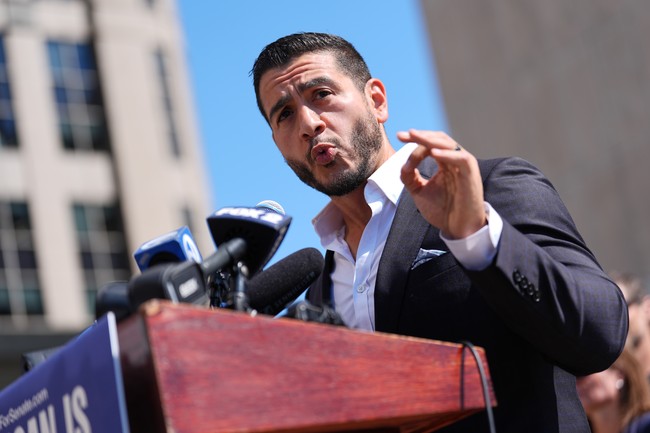
Abdul El-Sayed’s old posts and comments have resurfaced, and they reveal a pattern of attacking mainstream American pastimes while quietly erasing the record when it mattered. In Michigan, where football and Fourth of July traditions matter to everyday voters, those positions have become a political liability. His GOP opponent, former Congressman Mike Rogers, wasted no time pointing out the disconnect between El-Sayed’s public persona and his past rhetoric. This article lays out the key moments, the reactions, and what they suggest about El-Sayed’s campaign instincts.
A few months into his Michigan Senate run, El-Sayed quietly removed much of his social media history, prompting scrutiny over what he wanted hidden. Reports showed he had once advocated positions tied to the Democratic Socialists of America, positions that clash with mainstream Michigan values. Deleting that history looks less like a fresh start and more like damage control. Voters tend to notice when candidates scrub their past rather than explain it.
Beyond social posts, old podcast episodes and blog items have reemerged, and they push El-Sayed into even more awkward territory. He reportedly discussed doing away with the 2nd Amendment and criticized fireworks and football in ways many Michiganders found offensive. Those topics are culturally sensitive in a state where patriotism and community traditions are front and center. When a candidate sneers at common pastimes, it gives opponents an easy opening.
When Mike Rogers highlighted those past remarks, his message landed with voters who prize faith, family, and local traditions. The campaign framed El-Sayed as someone out of step with the everyday pleasures of Michiganders. Rogers’ team emphasized protecting what people love about their communities while casting El-Sayed’s comments as elitist. That contrast has political weight in a swing environment where cultural affinity matters at the ballot box.
You can almost hear a collective gasp across Michigan for all the things he spends time hating on. I mean, when I go back, I want to make sure we’re protecting our faith and our families and our factories and our freedoms, while he’s advocating doing away with our fireworks, football, the Fourth of July.
This guy spent hours hating on what most Michiganders would enjoy in their pastimes, and he should be held to account for that. These are views that he held, that he was pretty strong about, but he knew that he had to delete them all, [because] if people really knew who he was, they wouldn’t vote for him. It’s just a matter of making sure that we have the resources and people that are out there fighting [for] what I think is the heart and soul of the country in this particular race.
Rogers’ line of attack is straightforward: when a candidate mocks a state’s culture, you call it out and let voters decide. That blunt approach works in politics because it frames the debate in relatable terms. El-Sayed’s attempts to reframe or scrub the record can look evasive when contrasted with a simple defense of local traditions. Voters often prefer candidates who show respect for what binds communities together.
When El-Sayed reacted publicly, he tried to turn it into a challenge with a touch of bravado. “Since you’re too afraid to debate me, how about you ‘hold me accountable’ on a football field instead,” poor little El-Sayed Wednesday morning on X, so angry he left words out. The social media moment read as petulant and performed, not as leadership or a serious policy rebuttal. For many watchers, the stunt underscored the gap between rhetoric and readiness for statewide office.
Context matters: Mike Rogers is an Army veteran and former FBI special agent, a physical presence who naturally pushes back against any suggestion he would cower from a fight. That dynamic made El-Sayed’s taunt feel risky and tone-deaf. Beyond the spectacle, there’s a substantive question about judgment and how elected officials handle conflict. Campaign theater can backfire when it highlights a candidate’s worst instincts instead of their strengths.
https://x.com/Acyn/status/2087348538065957155
Other figures have chimed in, amplifying the idea that El-Sayed carries a certain combative energy that rubs people the wrong way. Public spats and sharp-edged language have followed him into the spotlight, and critics point to those patterns as evidence of poor political instincts. In a close race, personality becomes as important as policy, and missteps that look like petulance can cost votes. Voters expect steadiness in tone from those asking for their trust.
The Rogers campaign has kept up pressure by reminding voters of the cultural dissonance between El-Sayed’s writings and Michigan life. When a candidate needs to “prove” affection for mainstream pastimes, it invites suspicion rather than confidence. This fight is more than a squabble over words; it’s a battle over who represents common sense and respect for shared traditions. Political contests in swing states often hinge on those perceptions.
At stake is whether El-Sayed can move past the negative optics and convince a broad electorate he shares its values. Scrubbing history, firing off provocative posts, and trying to convert every criticism into a spectacle won’t satisfy skeptical voters. The campaign now has to decide whether to engage on substance or keep circling back to scorched-earth messaging. In Michigan, respect for tradition still matters, and that will be a measuring stick for many undecided voters.
Home-based job that pays more than 12,000 Dollar per month by doing simple tasks on a laptop or mobile device part-time. Last month, I earned 24,863 Dollar from this job by working 4 hours per day online. Very simple jobs to do, and the earnings are insane. Everyone can now make more money online by joining the website listed below…..
𝒋𝒖𝒔𝒕 𝒖𝒔𝒊𝒏𝒈 𝒕𝒉𝒊𝒔 𝒔𝒊𝒕𝒆.. Www.PayAtHome1.Com