
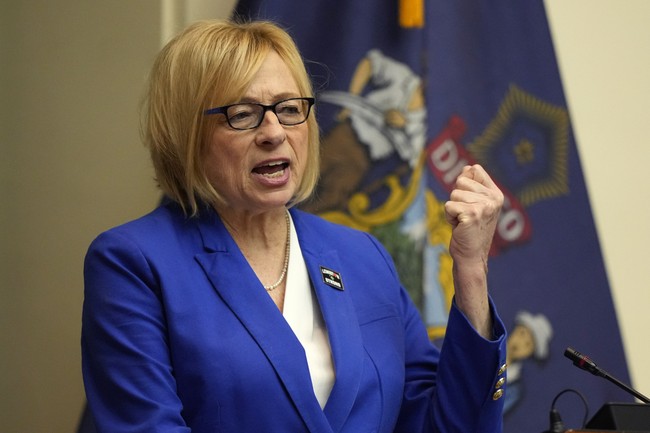
The piece examines a recent Maine decision to pause the issuance of undercover state license plates to federal immigration agents and the political fallout that followed, focusing on statements from Secretary of State Shenna Bellows and Governor Janet Mills, reactions from Republican officials, and the potential risks this policy poses for ICE and CBP personnel operating in the state.
Maine Democrats Just Placed a Giant Bullseye on the Backs of ICE Agents
<pWhile headlines focus on unrest in other states over immigration enforcement, Maine quietly moved to block a common tool used by federal agents. The state’s pause on undercover license plates removes an identification option that helped federal vehicles blend into communities during operations. That change has quickly become a flashpoint in state politics.
Secretary of State Shenna Bellows announced the pause after receiving a request “for confidential, undercover Maine license plates” from Customs and Border Protection. Bellows framed the move as a precaution tied to concerns about rumors of ICE deployment and reports of abuses elsewhere. Her statement emphasized community safety and transparency in how law enforcement vehicles present themselves.
“The Maine Bureau of Motor Vehicles received a request for confidential, undercover Maine license plates from U.S. Customs and Border Protection. These requests in light of rumors of ICE deployment to Maine and abuses of power in Minnesota and elsewhere raise concerns,” Maine Secretary of State Shenna Bellows said in a statement.
At a legislative committee meeting Bellows explained, “Given what’s happening in Minnesota, given the rumors of an ICE deployment to Maine, we made the decision that we are pausing the issuance of unmarked plates, which present as civilian plates . . . and they are not traceable to anyone.” That reasoning links her action to a broader national debate about federal enforcement tactics and local responses. The pause affects only the issuance of new unmarked plates, not every vehicle already working in the state.
The immediate practical result is that new federal vehicles brought into Maine will sport government plates that clearly identify them. Bellows said it’s important for Maine residents to be able to tell if a vehicle links back to a recognized law enforcement agency. That stance, intended to protect privacy and civil liberties, has opponents warning that it could make agents easier targets.
Republican lawmakers reacted strongly, arguing the change endangers public safety by reducing operational options for agents targeting smugglers, traffickers and other dangerous criminals. State Rep. Donald Ardell (R-Monticello) said the pause “is to restrict them to combat smugglers, traffickers, terrorists, child predators and those committing fraud.” Critics contend the decision hands extremists a tool for identifying federal personnel during sensitive operations.
Adding to the political heat, Maine Governor Janet Mills released remarks aimed at residents as federal activity expanded in the state. She warned the federal government against “provocative” tactics and urged locals to resist anything she characterized as undermining civil rights. Those comments reflect a broader state-level solidarity with constituents wary of increased immigration enforcement.
“To the federal government I say this: If your plan is to come here to be provocative and to undermine the civil rights of Maine residents, do not be confused — those tactics are not welcome here,” Mills said in a last week.
“To the people of Maine: I know you care deeply about protecting your neighbors, as do I. And I know that many of you are angry about the potential for any enhanced federal law enforcement presence in Maine. I feel that too,” she added.
Homeland security officials and federal agents will now have to weigh the trade-off between community visibility and officer safety. Unmarked plates have been a routine tool nationwide to allow officers to move without obvious government markings during investigations. Removing that option forces a visible federal footprint for new vehicles, which opponents say increases risk as tensions rise.
Supporters of Bellows’ move point to community concerns and the desire for transparent identification of law enforcement in civilian spaces. They say residents deserve to know when federal agents are operating in their neighborhoods, especially given recent protests and allegations of misconduct elsewhere. Opponents, however, frame the pause as a politicized action that handicaps federal efforts to enforce immigration laws safely and effectively.
The decision has clear political overtones and could set a precedent other states watch closely as federal agencies continue to shift resources. Maine now sits at a crossroads where local officials confront federal priorities and public anxiety intersects with law enforcement strategy. The debate shows how administrative choices about something as mundane as license plates can become a lightning rod in a charged national conversation.
Editor’s Note: Democrat politicians and their radical supporters will do everything they can to interfere with and threaten ICE agents enforcing our immigration laws.
Help us hold these leftists accountable and expose their obstruction. Join RedState and use promo code FIGHT to get 60% off your membership.
On a related personal note, Bellows has taken steps to shield details of her own identity, a contrast critics have pointed out as they weigh the implications of state policy and official posture. With federal agencies reportedly increasing operations in Maine, observers say the state’s new rules could complicate enforcement and fuel partisan controversy. The coming weeks are likely to show whether the pause will stay in effect and how federal partners respond.
Add comment