
I’ll explain how Democrats reacted to recent U.S. strikes on Iran, show Kamala Harris’s sharp criticism, compare her current comments with earlier positions, place the controversy in the broader national security debate, and note what this means for voters evaluating leadership on Iran and global threats.
The debate over U.S. military action against Iran has boiled into full political theater, with Democrats loudly denouncing President Trump’s moves as reckless and illegal. Their narrative frames the strikes as an unnecessary war of choice, while critics argue the administration is acting to decisively remove an existential threat. That partisan back-and-forth is shaping how the public hears every phrase and word coming from elected leaders.
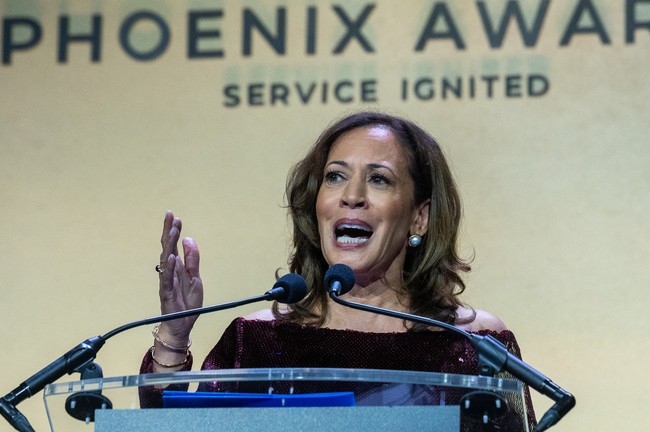
Few politicians have been as vocal as Kamala Harris, who issued a blistering statement accusing the president of “threatening to commit war crimes and wipe out a ‘whole civilization.'” Her language was aimed at painting the operation as immoral and without planning, and it immediately energized both opponents and defenders. Supporters of the administration saw the remark as political theater designed to weaken support for the troops and the president.
The president’s supporters responded that his words were targeted at Iran’s regime and its leaders, not at innocent civilians, and that tough, unmistakable warnings are sometimes necessary in high-stakes diplomacy. They point out that ambiguous or soft language in past administrations allowed Iran to inch closer to nuclear capability and expand regional influence. This argument centers on deterrence: clear consequences can prevent far larger conflicts down the road.
The exchange hardened when Harris’s critique was placed beside previous statements she made about Iran, creating a gap between today’s rhetoric and earlier positions. Some observers dug up video and remarks showing her past willingness to confront Iran and support measures to stop nuclear progress. Those clips have circulated alongside her recent condemnation, prompting accusations of inconsistency from conservatives and allies of the administration.
The exact quote Harris delivered remains unchanged: “The President of the United States is threatening to commit war crimes and wipe out a ‘whole civilization’ — all because he started a disastrous war of his own making and had no plan and no strategy for how to end it.” This block of text became the focal point of debate because it juxtaposes moral outrage with a political calculation about who appears steady on national security. Repeating the verbatim quote allowed people on both sides to argue over intent and tone rather than paraphrase.
Political memory matters in foreign policy fights. Opponents of the administration highlight that past Democratic leaders talked tough about Iran without always translating words into enduring success. Critics of Democrats counter that those past failures underscore the need for bold action now. Both sides use history selectively, but voters tend to judge candidates by whether they appear willing to take responsibility and produce results.
Behind the headlines is a basic question voters care about: who will keep America safe? Conservatives argue that decisive action to degrade Iran’s military and nuclear capacity is necessary after years of vacillation. They warn that delayed responses let hostile states expand influence and create future crises. Liberals, by contrast, worry about escalation, civilian harm, and legal authority, arguing that military strikes need clear congressional backing and strict limits.
For politicians, the stakes are personal as well as strategic. Harris is rumored to be eyeing future campaigns, and her sharp rebuke of the president was both a policy critique and a performance for voters. Opponents say that such performances risk undercutting U.S. credibility when they downplay the regime targeted by the strikes. Supporters of Harris say vigorous oversight and skepticism are central to democratic accountability, especially on matters of war and peace.
What voters should watch next is whether the political theater is followed by sober policymaking: clearer objectives, a plan for protecting civilians, and robust support for service members on the ground. The public tends to reward leaders who demonstrate competence, clarity, and consistent principles in moments of crisis. If recent weeks teach anything, it is that words and actions are scrutinized intensely, and contradictions get amplified quickly in a polarized media environment.
The President of the United States is threatening to commit war crimes and wipe out a “whole civilization” — all because he started a disastrous war of his own making and had no plan and no strategy for how to end it.
This is abhorrent, and the American people do not support this.
Trump’s recklessness is needlessly putting our brave service members in harm’s way, destroying America’s global standing, and making life even more unaffordable for the American people.
We must all stand against this and oppose funding this illegal war of choice.
Some archival footage and earlier remarks from Harris resurfaced, prompting debate about whether her current posture is a departure from prior statements. Those earlier clips are often used to argue she would have acted differently while in office, but critics say outcomes, not rhetoric, should be the measure. The contrast between past and present comments fuels the narrative that political calculation sometimes trumps consistent strategy.
Beyond the politics, national security analysts warn that indecision is costly. If a president hesitates while adversaries advance nuclear capability or proxy influence, the long-term costs to American interests can be severe. Advocates of the recent strikes argue they were aimed at preventing a worse future scenario and restoring deterrence that had eroded under previous approaches.
Observers across the spectrum agree on one point: this episode will shape how voters assess leadership on foreign threats. Who appears steady, decisive, and principled will matter in the next election cycle. The clash between Harris’s moral denunciation and the administration’s claim of necessary action gives voters a clear choice about the kind of judgment and resolve they expect from national leaders.

Add comment