
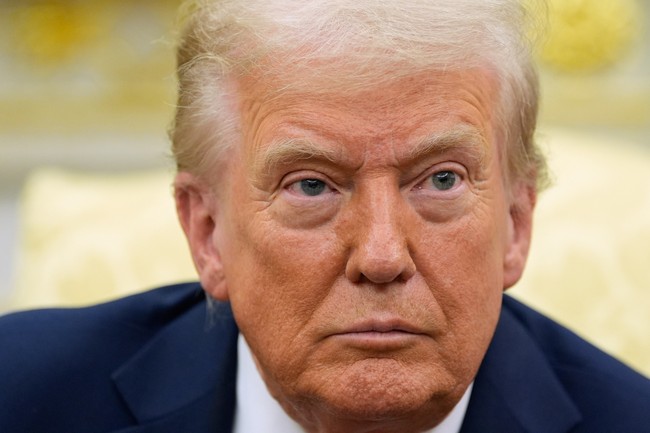
The Indiana Senate rejected a mid-decade redistricting map that President Trump and many Republicans supported, despite claims it could gain the GOP two House seats; the vote was 19 for and 31 against in a chamber where Republicans hold a 40-10 supermajority, and the fallout includes public rebukes, threats of primaries, and the launch of a new Super PAC intent on challenging lawmakers who opposed the plan.
Indiana Republicans in the state Senate voted down a redistricting map Thursday that had strong backing from the White House, even after the Indiana House approved the plan the prior week. The outcome surprised many observers because the GOP enjoys an overwhelming supermajority in the chamber, yet the final tally was 19 in favor and 31 against. That split has triggered sharp criticism from conservative activists and national figures who argued the map would have strengthened Republican chances in next year’s midterms.
Here’s a more detailed look at the vote and what followed. The defeat set off immediate reactions from Trump allies who saw the rejection as a direct blow to Republican prospects in Washington. Vice President JD Vance publicly warned state leaders that “dishonesty cannot be rewarded,” signaling that national conservatives viewed the vote as a betrayal that would not be forgotten.
During debate, Indiana Senate President Pro Tem Rodric Bray came under intense fire for siding with Democrats to block the map, a move critics framed as undermining party unity and jeopardizing House control. House Republicans had passed the same map the previous Friday, so the Senate’s rejection felt especially abrupt to many conservatives who expected the chamber to follow suit. That divergence between the two chambers exposed rifts within the state GOP over strategy, local power dynamics, and how to handle pressure from national leaders.
While the vote played out in Indianapolis, national voices piled on. Vice President Vance warned Bray directly, and President Trump released a forceful public message urging passage of the plan and criticizing those who stood in the way. The president framed the map as a straightforward opportunity to “contribute to a WIN in the Midterms for the Republicans” and blamed state leaders who opposed it for risking the party’s majority in the U.S. House. His remarks were blistering and personal, singling out several names and promising political consequences.
The president’s statement did not hold back, and it included language meant to signal that primary challenges would be used to enforce loyalty. That threat was reinforced by new organizing on the ground: a Super PAC called Fair Maps Indiana Action has publicly announced plans to spend a seven-figure sum to back primary challengers against Republicans who voted against the map. Conservatives view the PAC’s involvement as a predictable next step when institutional pressure and public shaming don’t produce the desired outcome.
In the heat of this showdown, President Trump issued an extended message that was carried and repeated in full by many conservative outlets. The quote below is reproduced exactly as delivered:
I love the State of Indiana, and have won it, including Primaries, six times, all by MASSIVE Majorities. Importantly, it now has a chance to make a difference in Washington, D.C., in regard to the number of House seats we have that are necessary to hold the Majority against the Radical Left Democrats. Every other State has done Redistricting, willingly, openly, and easily. There was never a question in their mind that contributing to a WIN in the Midterms for the Republicans was a great thing to do for our Party, and for America itself. In all fairness, the Democrats have been doing Redistricting for years, and continue to do so. Unfortunately, Indiana Senate “Leader” Rod Bray enjoys being the only person in the United States of America who is against Republicans picking up extra seats, in Indiana’s case, two of them. He is putting every ounce of his limited strength into asking his soon to be very vulnerable friends to vote with him. By doing so, he is putting the Majority in the House of Representatives, Washington, D.C., at risk and, at the same time, putting anybody in Indiana who votes against this Redistricting, likewise, at risk. The people of Indiana don’t want the Party of Sleepy Joe Biden, Kamala, Ilhan Omar, or the rest to succeed in Washington. Bray doesn’t care. He’s either a bad guy, or a very stupid one! In any event, he and a couple of his friends will partner with the Radical Left Democrats. They found some Republican “SUCKERS,” and they couldn’t be happier that they did! Guys like Failed Senate Candidate Mitch Daniels, who I opposed in his Race against Senator Jim Banks, and Cam Savage, whoever that is, are fighting against the Republican Party, all the way. Bray and his friends are the favorite Republicans of Hakeem Jeffries, Crazy Nancy Pelosi, and Cryin’ Chuck Schumer. Anybody that votes against Redistricting, and the SUCCESS of the Republican Party in D.C., will be, I am sure, met with a MAGA Primary in the Spring. If Republicans will not do what is necessary to save our Country, they will eventually lose everything to the Democrats. Rod Bray and his friends won’t be in Politics for long, and I will do everything within my power to make sure that they will not hurt the Republican Party, and our Country, again. One of my favorite States, Indiana, will be the only State in the Union to turn the Republican Party down!
The political consequences are already in motion. The announced Super PAC intends to target those senators with serious primary spending, and conservative activists have vowed to recruit challengers. For state legislators who voted against the map, that means an increased likelihood of well-funded opponents and a long, bruising primary season. The episode has also sharpened national debates about intra-party discipline and whether leaders should tolerate dissent on high-stakes votes.
Beyond the immediate fights, the episode raises questions about how statewide strategy is decided and who gets the final say when local preferences collide with national political priorities. Some Indiana Republicans argued they were protecting district integrity or responding to constituent concerns, while national allies called for prioritizing congressional gains. That clash of priorities leaves open whether future redistricting efforts will be smoother or even more contentious.
For now, the political story moves from the statehouse to the primary voters and the money machines that influence their choices. Conservatives who expected a quick, decisive redistricting victory now find themselves organizing for a longer fight, one that could reshape the state GOP and influence national power calculations heading into the next Congress.
Same problem that has always existed, to many democrats in the Republican Party!