
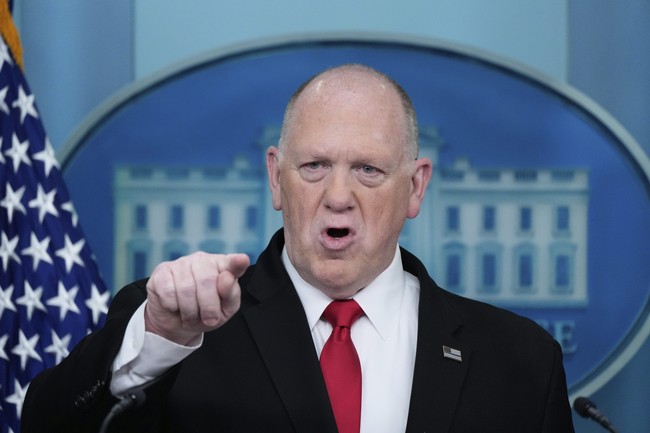
Virginia Governor Abigail Spanberger’s shift from a moderate campaign persona to a progressive governing style has ignited a clash over immigration enforcement, with Border Czar Tom Homan warning that reduced cooperation with ICE could prompt federal agents to move into Virginia neighborhoods. Recent violent crimes allegedly committed by illegal immigrants have sharpened the debate, and Homan has made it clear the federal response will follow policy choices at the state level. Spanberger defends limits on state cooperation with ICE as a deliberate policy; critics say that stance endangers public safety. The exchanges include direct quotes about elections, law enforcement, and plans to deploy more ICE teams if sanctuary-style policies persist.
Spanberger campaigned as a pragmatic, law-and-order Democrat, but her record in office looks different to many voters. Her approval numbers are reportedly slipping as critics point to recent violent incidents and tie them to her decision to curtail cooperation with federal immigration authorities. The governor frames her actions as protecting state sovereignty and local policing independence, arguing that state police should not fall under federal supervision.
Tom Homan, the administration’s border czar, pushed back hard in interviews, reminding audiences that elections have consequences and suggesting Spanberger now acts differently in office than she did on the campaign trail. He referenced prior federal-state cooperation examples and said the federal government may respond by increasing street-level enforcement where state jails or local officials limit access. Homan’s comments center on public safety and a federal commitment to enforce immigration laws regardless of state-level sanctuary policies.
“Elections have consequences,” Homan explained. “[Spanberger] ran on a law enforcement position that she was a career law enforcement person. [She] is a much different person now since she’s in that governor’s slot.”
“Bottom line is, I wish she’d take a page out of the Minnesota chapter when the president sent me to Minneapolis to get more cooperation with the county jailers, which means less public safety threats in the communities,” Homan added.
Homan reiterated that ICE will continue its enforcement mission and that the federal government can and will deploy teams into neighborhoods where state policies obstruct cooperation. His message is straightforward: if states adopt policies that prevent ICE from working with jails or detaining individuals who pose threats, federal agents will operate on the streets instead. That approach, he argues, is necessary to make communities safer by addressing criminals who are in the country illegally and have committed other offenses.
The border czar said, “ICE is not going to stop enforcing law” and that if blue states like Virginia continue to uphold strict sanctuary laws, the Trump administration will deploy more immigration enforcement agents into the streets.
“We’ll just send more teams into the streets, into the neighborhoods,” Homan told Fox News Digital. “Because we’re going to do the job that President Trump promised, to make his country safer again, especially against illegal aliens that committed other crimes while they’re here.”
Recent reporting cites several violent incidents in Fairfax County allegedly involving illegal immigrants, which critics use to argue that reduced cooperation with ICE has real consequences. One public post compiled claims about “4 m*rders in Fairfax County” this year allegedly tied to illegal immigrants, listing a stabbing at a bus stop, a machete attack and the death of an infant among the incidents. Those accounts have amplified calls from opponents who say state leaders must reconsider policies that limit ICE access to detention facilities.
“Out of the 4 m*rders in Fairfax County, Virginia so far this year have been allegedly at the hands of illegal immigrants, including a stabbing at a bus stop, a machete hacking of a man in his own home and a beating murder of a three-month-old infant.” — @BillMelugin_
Elections have consequences. Virginia doesn’t work with ICE.
Spanberger signed legislation in February that curbed cooperation between Virginia law enforcement and ICE, framing the move as a protection of state policing autonomy. She defended that decision publicly, saying Virginia State Police are a “top-notch law enforcement agency” and asserting she would not place them under federal control. Her comment about standing by the change underscores a political choice to prioritize state control over collaboration with federal immigration enforcement.
“Virginia State Police is a top-notch law enforcement agency, and I don’t think it’s responsible for us, for me as governor, for the commonwealth of Virginia, to put Virginia State Police under the supervision or direction of ICE,” Spanberger told reporters. “That is a change I made, I think it is the right one, I know it is the right one, and I stand by it.”
Opponents argue the governor’s stance amounts to political theater when public safety is at stake, noting that requests for ICE assistance were focused on detaining alleged violent offenders rather than ceding overall control of state policing. Spanberger has pushed back on critics by pointing to electoral success and campaign messaging, claiming victories and ongoing work for Virginians as validation of her choices. She used rhetoric about campaign mailers and election margins to imply that opposition is politically motivated rather than grounded in policy concerns.
“I would say if everyone hated me, then why is everyone putting my face on their mailers, for the referendum, would be question number one,” Spanberger said. “The only poll that matters, is my election, 17 point win, and now I’m doing the work for Virginians, so what matters to me in the end, is what I’m delivering for the people.”
The dispute lays bare a broader national fight over immigration enforcement, state authority and public safety. One side emphasizes federal enforcement and deploying ICE where state cooperation is limited, while the other side insists on protecting state-level control and limiting federal reach. That tension will likely continue as both sides press their arguments to voters and lawmakers in Virginia and beyond.


Add comment