
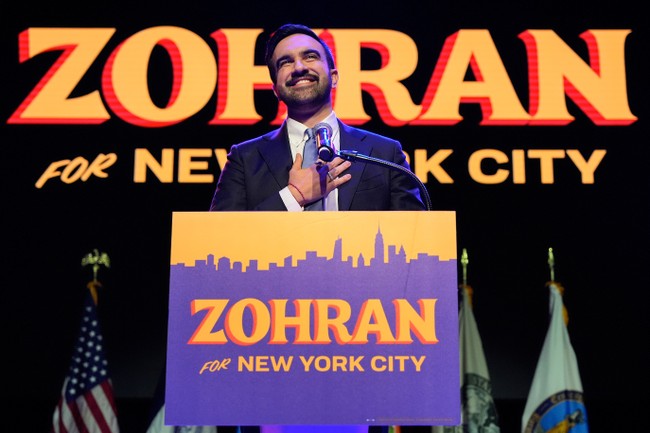
The city’s mayoral result has jolted the national conversation, and Republicans are already framing it as evidence of a broader leftward shift they plan to exploit in 2026; this piece looks at the immediate political aftermath, Republican response plans, the risks Democrats now see, the role of the Democratic Socialists of America in messaging, and the potential implications for midterm campaigns.
Last night’s mayoral result in New York City shocked many and sparked swift reaction from both parties. Voters in the nation’s largest city picked a candidate who identifies as a democratic socialist, and that choice has given opponents a clear narrative to run with. Republicans are already translating that narrative into ads and talking points aimed at battleground districts.
Republican operatives wasted no time producing messaging that labels the new mayor a symbol of where Democrats might be headed. Digital ads are rolling out in districts across the country, warning that what happened in New York could happen elsewhere and framing the mayor as the face of the national party. The intent is to connect local victories to national consequences and keep the spotlight on ideological differences.
That strategy is part political damage control and part offensive playbook ahead of 2026. House Republicans are highlighting the mayor’s platform and visibility to paint suburban and swing voters as vulnerable if Democratic nominees lean too far left. Party leaders argue this is an opportunity to nationalize the debate about governance, crime, and economic priorities.
Many Democrats are aware of the risk and have reacted defensively, with internal memos and memos from allied groups urging caution. One centrist-left group described the mayor’s style of politics as “politically toxic” and warned that certain policies will be unpopular in the red and purple areas Democrats need to hold. That kind of language signals internal concern about how far national campaigns should associate with the new mayor’s ideas.
Critics point to the Democratic Socialists of America as a particular liability when crafting messages for competitive districts. Their platform, long on critics’ lists, is described as a potent source of attack lines for opponents. Republicans believe those ideological points can be turned into hard-hitting ads that force Democratic candidates to clarify their positions or risk being tagged as allies of more extreme proposals.
Just a glance at the DSA platform makes clear how politically toxic it would be to any voter not deeply in the sway of socialist ideology. It includes, among many other things, “free[ing] all people from involuntary confinement” (i.e., closing all prisons and releasing ALL prisoners), “disarm[ing] law enforcement officers,” “abolish[ing] the U.S. Senate,” and “the nationalization of businesses.” Republicans used the “defund the police” slogan to win seats up and down the ballot in 2020 and beyond, and the DSA agenda could prove far more politically lethal.
The new mayor did not shy away from his identity on victory night, and his statement has become a soundbite Republicans can replay. “I am young, despite my best efforts to grow older. I am Muslim. I am a democratic socialist. And most damning of all, I refuse to apologize for any of this,” he said, and that defiant framing feeds the opposition narrative. For opponents, his direct embrace of labels removes ambiguity and simplifies the messaging pipeline for campaigns aiming to nationalize the race.
Political strategists on both sides are now weighing how much this one city’s choice will influence voters in places far from Gotham. One internal Republican memo showed very high name recognition for the new mayor in dozens of battleground districts, suggesting the brand is already on voters’ minds. For GOP planners, that recognition is fuel to press an advantage; for Democrats, it’s a warning to decouple where necessary.
There are practical limits to how much a single urban election can move the national dial, but campaigns know symbols matter. Candidates who refuse to distance themselves from the mayor risk being tagged with that label, while those who disavow or differentiate themselves face blowback from parts of their base. That tension will play out in primaries and general election messaging over the next year.
Ultimately, the immediate GOP approach is clear: turn a local result into a national argument about priorities, safety, and economic direction. If Republicans succeed at framing the choice as emblematic of a broader trend, it could alter the conversation in the midterms. The political fight is already underway, and both parties are recalibrating strategy in response to what happened in New York.



Add comment