
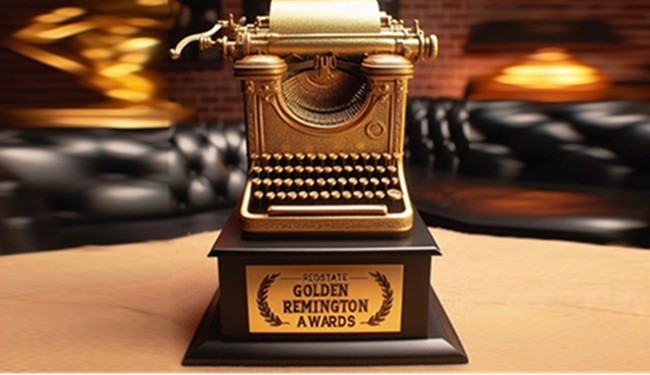
The Golden Remington Awards call out the year’s worst of mainstream journalism: a closing roundup of major (dis)honors that highlights tone-deaf reporting, skewed narratives, and performative outrage from outlets and individuals who repeatedly missed the mark in 2025.
We started the year by tracking sloppy explanatory pieces and moved through local, international, breaking, investigative, and national reporting missteps; now we hand out the big prizes and name the outlets and personalities whose work most visibly broke faith with basic reporting standards. Expect sarcasm, disbelief, and a clear-eyed look at how often narrative beat facts. The winners are chosen for being emblematic rather than accidental, showing patterns of carelessness or ideological spin.
Distinguished Explanatory Reporting featured entries that mistook spectacle for insight and speculation for analysis. Donie O’Sullivan at CNN treated the end of platform fact-checking as if it were equivalent to a regional tragedy, invoking firefighters in Los Angeles and likening misinformation spread to wildfire. Mary Beth Sheridan at Washington Post produced a story on a mysterious drop in fentanyl seizures where a 90 percent fall in border crossings was not treated as a major factor.
Another explanatory entry involved a host who described chanting of “Death To America” as containing a “friendliness” to its threats, a line that read as dangerously naive about hostile environments. On the lighter side, one commentator warned the country would suffer because lumber “doesn’t just grow on trees,” undercutting the seriousness of tariff debates with an awkward metaphor. These pieces showed an appetite for dramatic framing over sober context.
WINNER: Lawrence O’Donnell — MSNBC. O’Donnell furnished his case by playing a clip from the 1939 film Mr. Smith Goes To Washington and arguing that the absence of National Guard troops in that fictional scene proved President Trump’s real-world decisions were wrong. That leap from cinema to policy made for a bizarre bit of punditry and underscored the episode’s symbolic overreach.
DISTINGUISHED LOCAL REPORTING included viral reactions and social embeds that amplified confusion rather than clarity. Social posts and quick-turn commentary often became the story itself, with little effort to verify basics before amplification. This trend produced headlines that were hot in the moment but hollow under scrutiny.
DISTINGUISHED INTERNATIONAL REPORTING showcased odd priorities and missed context from outlets covering foreign curiosities. The Associated Press ran a story connecting budget cuts to impacts on Pakistani transgender cooking schools in a way that felt speculative about the causal chain. Another piece fixated on a Swiss politician’s purchase of pink water pistols from Temu as if that were a national security crisis, while Radio New Zealand reported expansively on a crowd watching a man fold a fitted sheet.
WINNER: Katie Westwood — The Brussels Times. Her piece on alleged Dutch complaints that Belgium was “stealing wind” because offshore turbines allegedly affect neighbors’ wind resources turned a standard energy development dispute into a caricature of petty international grievance. The copy leaned into the absurd rather than explaining the real technical or policy issues.
DISTINGUISHED BREAKING NEWS was crowded with fast-moving stories that rewarded immediacy over verification. Reporters rushed to blame airline incidents, public events, and protests on administration policies or specific officials without full evidence. Graphics claimed AI-created imagery as source material, and some correspondents touted premature conclusions about enforcement actions at sporting events.
WINNER: Jacob Soboroff — MSNBC. When protests broke out with costumed demonstrators, Soboroff treated an inflatable pink unicorn like a front-page source, shoving a microphone into a plastic muzzle to conduct a live interview. The stunt prioritized spectacle over substance and made the coverage look performative rather than informative.
DISTINGUISHED INVESTIGATIVE and NATIONAL REPORTING rounds exposed pieces that spun tangled theories and personalized danger. One reporter argued that Russia planted documents in 2016 to hide its own involvement, creating a theory within a theory that stretched credulity. Another correspondent warned that a government shutdown would somehow hurt ferret populations, a leap that typified the era’s weak causal claims.
WINNER: Scott MacFarlane — CBS News. MacFarlane described near-death PTSD tied to the Donald Trump assassination attempt but framed the danger as coming from Trump supporters rather than the actual shooter. His account included the line: “You could see it in their eyes – they were coming for us! And if he didn’t jump up with his fist, they were coming to kill us!” The rhetoric read as performative fear and raised questions about perspective and proportionality.
For the Distinguished Public Service category, nominees were judged on prolonged behavior rather than a single misstep. Teen Vogue’s closure and ensuing staff reactions became a flashpoint for commentary about newsroom culture and industry shrinkage. The Daily Beast repeatedly misreported Vatican interactions around Vice President JD Vance, cycling through errors and corrections and eroding trust in its coverage. The BBC endured internal upheaval after airing and then retracting a Gaza-based documentary, alongside a list of editorial failures. CNN spent much of the year acting as a rapid-response chamber for partisan image repair, rotating guests who used the network to deflect criticism.
WINNER: The Miami Herald. The paper’s relentless coverage of the Alligator Alcatraz facility kept it in the headlines, with a burst of reporting that included assertions about detainee conditions and children being held inside the complex. At one point the Herald produced roughly 200 reports on the facility within a single month, illustrating determination that sometimes tipped into obsession and claims that outpaced confirmed facts.
These awards are theater and critique combined: a reminder that journalism can and should do better, balancing speed with verification and skepticism with facts. The examples above show how the year’s media narratives too often favored spectacle, certainty, and partisan framing over clear-eyed reporting.


Add comment