
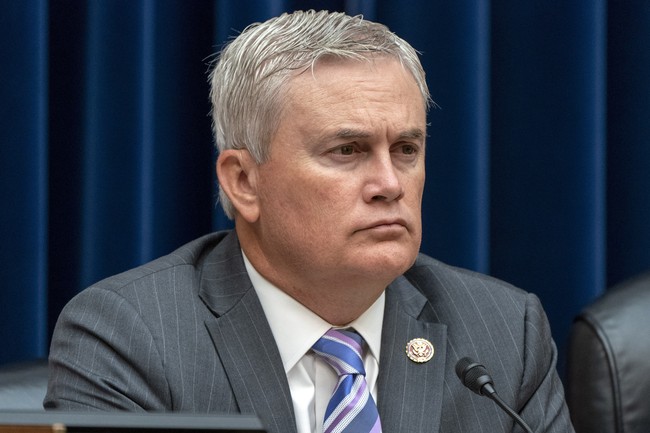
This piece covers Rep. James Comer’s public pushback against what he calls “clickbait” coverage about a supposed split on the House Oversight Committee over a potential pardon for Ghislaine Maxwell, lays out what he actually said, highlights how media framing on social platforms escaped context, and explains why the committee’s role and the pardon power are being misunderstood in the coverage.
Republican Rep. James Comer made a blunt point: reporters should use his full quotes or not quote him at all. He pushed back after a news outlet framed his comments in a way that suggested he supported a pardon deal for Ghislaine Maxwell, the convicted Epstein co-conspirator. Comer, who chairs the House Oversight and Government Reform Committee, objected to being portrayed as part of a faction willing to trade a pardon for testimony.
The initial report implied the committee was split and left readers to wonder who on the Republican side supported what. Comer said his committee was divided but stressed he does not speak for individual members. That distinction matters because news packaging on social platforms often flattens nuance into a headline-friendly narrative that benefits clicks more than clarity.
Members on the House Oversight and Government Reform Committee are divided over whether President Donald Trump should pardon Jeffrey Epstein’s convicted co-conspirator Ghislaine Maxwell in exchange for her cooperation in the panel’s Epstein investigation, Chair James Comer said in an interview Wednesday.
Maxwell, who was deposed by the Oversight Committee as the sole convicted accomplice in the Epstein sex trafficking scheme, previously invoked her Fifth Amendment right in declining to answer the panel’s questions.
Those quoted lines captured part of the situation but left out how Comer explicitly separated his views from what others on the panel might think. Later excerpts clarified his stance, but the framing damage was already done on X where initial tweets and headlines pushed a simpler, more sensational line. That kind of rapid-fire social coverage often gives readers the impression of better certainty than actually exists.
The outlet also quoted the committee’s ranking Democrat saying Democrats were unanimously against a pardon. From a Republican perspective, that kind of headline invites a misleading takeaway: if Democrats oppose it, some Republicans might support it. Comer was careful to call out the incomplete messaging and push back publicly when his full words weren’t used up front.
When asked whether he believed it was a favorable deal to issue a pardon in return for Maxwell’s testimony, Comer said, “A lot of people do.”
“My committee’s split on that,” he added, declining to name who on the panel supported granting a pardon. “I don’t speak for my committee.”
Comer himself wasn’t in favor.
“I think it looks bad,” he said. “Honestly, other than Epstein, the worst person in this whole investigation is Maxwell.”
Comer’s insistence that his own view is opposed to a pardon is important, and it undercuts the narrative that leadership was quietly steering toward a controversial deal. Republicans, especially Committee chairs, have a responsibility to avoid deals that look like trading justice for testimony, and Comer made clear he thought such a deal “looks bad.” That line needed to be front and center, not buried under a click-friendly characterization.
Social posts from the reporter and the outlet first emphasized the committee split without supplying Comer’s fuller comments, then later added his full words. The timing created a perception problem that Comer publicly corrected. He used his social platform to point out the omission and make sure his position was properly recorded in the public conversation.
Republicans can argue this is a classic example of media bias in action: fast, attention-grabbing framing that sacrifices nuance. Comer demanded accuracy, not spin, because incomplete quotes can be weaponized by opponents to create false impressions. From a conservative viewpoint, insisting on precision is not theater, it’s accountability.
It also bears repeating that the House Oversight Committee cannot pardon anyone. That constitutional power belongs solely to the president. The public debate about trading a pardon for testimony often confuses what the committee can actually do with what the president might consider. That distinction is central to understanding why Comer’s comments were about committee dynamics and not an endorsement of a presidential action.
Press coverage that compresses complicated legal and political realities into a single tweet or headline does a disservice to readers and to the institutions involved. Comer’s reaction is a reminder that leaders will push back when reporting creates misleading impressions. Republicans arguing for transparency and accountability see value in calling that out when it happens.
Reporting should aim for accuracy even under the pressure of rapid social updates. When coverage misses context, officials deserve the chance to correct the record, and the public deserves reporting that distinguishes between what a committee can do and what only the presidency can authorize. In this instance, Comer insisted on that distinction and demanded his full words be used so voters would know where he stood.


Add comment