
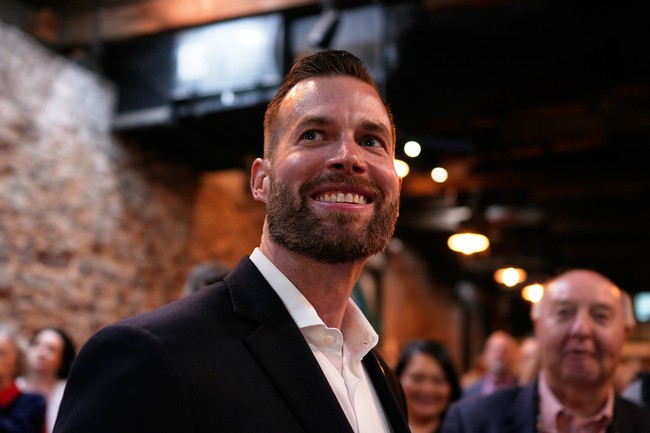
Clay Fuller’s decisive special election win in Georgia’s 14th District landed as a clear endorsement of Trump-aligned Republican messaging, and he’s telling fellow conservatives to lean into that approach. Fuller crushed heavy Democratic spending, shrugged off skeptical pundits, and credited President Trump’s backing as a crucial factor in the victory. The result suggests Georgia 14 is moving firmly in step with the national America First movement and sets a tone for how local candidates might approach November. Below are the details, direct quotes, and the campaign context for what happened and why it matters.
The special runoff came after the seat was vacated by Marjorie Taylor Greene, and Fuller entered with strong local roots as a Judicial Circuit DA. Decision Desk HQ initially called the race with Fuller holding a comfortable margin, and the final tally expanded into a commanding 14-point win. That margin surprised some analysts who had expected a narrower result, and it offered a quick rebuttal to anyone predicting a Republican stumble in suburban or exurban Georgia.
Fuller celebrated the scale of the victory in plain terms, summing it up with an image voters understand. He said “two touchdowns.” That short line captured his tone: confident, unapologetic, and eager to translate the special election win into momentum for the fall. The campaign made it clear that turnout strategy, voter contact, and a unifying message were central to that outcome.
Fuller also took aim at the Democrats’ spending strategy and the pundits noting turnout spikes as some kind of moral success. He mocked the idea that a huge ad buy could be spun into a win when the result was a clear loss, and he emphasized the difference between spending and persuading voters. That critique framed the race as proof that big cash does not automatically buy political traction in conservative districts.
The DA’s remarks included a pointed breakdown of the opponent’s approach and how Republicans outworked it on the ground. He pointed out that special election turnout is a different animal and that the campaign expected to build on this foundation heading into November. Fuller’s message to voters was straightforward: steady organizing and a clear platform win elections more often than flashy ad campaigns.
He did not hesitate to name the center of gravity for his success: President Trump and his agenda. Fuller said, “He’s undefeated. And my recommendation to any candidate that’s running out there across the nation in the Republican Party, is to embrace President Trump, because his policies and supporting him leads to victory. You see that in Georgia 14. And he was the key factor, he was the “Trump Card.” And no matter how much money the Democrats will continue to pour in to try to defeat President Trump, they just can’t beat him.” Those are Fuller’s exact words and they underline a strategic takeaway for Republicans.
President Trump’s endorsement of Fuller before the runoff was a visible element of the campaign, and Fuller thanked the movement afterward. The candidate’s lines tied his win to the larger narrative of a grassroots, pro-Trump coalition that turns out in key places. That alignment is what Fuller says will carry into midterm success, particularly in districts where the America First message resonates.
Not everyone in conservative circles applauded every element of the contest. Marjorie Taylor Greene shared criticism from a pollster and posted a line: “[…] but the results speak for themselves. Trump flipping MAGA from America First to America Last, covering up for the Epstein files, and betraying key campaign promises of no more foreign wars has been the best help for the Democrats. Sad!” That criticism reflects ongoing debates within the movement about strategy and loyalty, and it shows the internal dynamism of today’s GOP.
Still, the takeaway for most Republican voters and operatives in Georgia 14 is straightforward: the Trump-endorsed candidate won by a big margin despite heavy enemy spending. Local organizers point to turnout discipline, clear issue framing, and an unapologetic posture on national priorities as the recipe. Fuller’s campaign says it will use the special election playbook to expand support for November.
The implications extend beyond one district because the result offers a playbook Republican candidates can use when they face big-dollar surges from national opponents. Fuller’s victory argues that disciplined messaging, strong field operations, and the loyalty of the America First coalition can neutralize expensive opposition efforts. For Republicans in competitive areas, the lesson Fuller stresses is to stay focused, court the base, and make turnout the campaign’s north star.
Fuller concluded by setting the goal for the months ahead: translate a special election win into a stronger general election showing and keep the seat secure. He framed November as the next big test and promised to scale the operation to produce an even bigger victory. For voters who backed him, Clay Fuller represents the kind of candidate who marries local credibility with national alignment under President Trump.

Add comment