
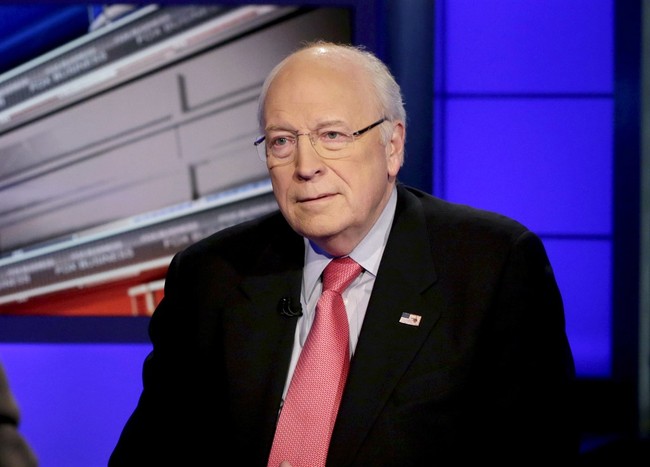
The funeral for former Vice President Dick Cheney at the National Cathedral drew an unusual mix of attendees and absences, sparking talk about who showed up, who did not, and what that mix says about Washington politics and alliances.
Dick Cheney’s Funeral Had People Talking About Who Was There – and Who Wasn’t
The ceremony at the National Cathedral in Washington, D.C., marked the public farewell to Dick Cheney, who served as Vice President from 2001 to 2009 and died on Nov. 3 at 84 years old “due to complications from pneumonia and cardiac and vascular disease.” The service was invitation-only, which made the guest list a statement as much as an arrangement. People noticed the front rows, the familiar faces, and the notable absences, and many of those details quickly became a topic of conversation across social media and in newsrooms.
Former President George W. Bush stood with family as eulogies were delivered, and Cheney’s daughter, Liz, led a personal remembrance that mixed recollection and critique. The ordering of seats put some surprising neighbors next to each other, a reminder that funerals in Washington often double as diplomatic theatre. With so many figures from different wings of politics in one place, observers read meaning into every handshake, glance, and empty seat.
Absent from the list of invitees were President Donald Trump and Vice President JD Vance, a point that immediately caught attention. Cheney and his daughter had been vocal critics of Trump, and reports made clear that the family chose the guest roster with those disagreements in mind. Vance publicly offered condolences and wished the family well, showing restraint in a charged moment.
Some commentators expected the family to avoid inviting leaders who had been targets of public attacks, and that calculation seemed to guide who received an invite. The decision not to include certain figures underscored how political splits follow people even into private mourning. Personal history and policy disagreements shaped a room that was both respectful and quietly divided.
Vice President Kamala Harris attended and sat near President Biden and First Lady Jill Biden, which produced plenty of onlookers noting posture and gestures during the service. Those front-row arrangements also included the Bushes and former Vice President Mike Pence and his wife, showing the event pulled from multiple Republican generations. Behind them sat former Vice Presidents Al Gore and Dan Quayle, and beyond were members of Congress including Sen. Mitch McConnell, Senate Majority Leader John Thune, and Rep. Nancy Pelosi. The sequence of seating created a visible map of relationships past and present.
The Jan. 6th Committee had representation in the pews, with figures such as Sen. Adam Schiff and Rep. Jamie Raskin attending, which prompted remarks from both sides about what their presence signaled. Journalists and photographers highlighted these pairings, noting that funerals can be an arena for optics as much as for grief. The gathering was a snapshot of contemporary Washington: overlapping circles, old grudges, and new alliances all visible in one place.
Notably missing were former Presidents Barack Obama and Bill Clinton, with aides citing scheduling conflicts and offering minimal public explanation. The absences of the Obamas and Clintons fed speculation about how personal and political obligations are weighed in moments of public mourning. At the same time, unexpected attendees drew equal attention, including public figures from media and public health who have been sharply critical of Cheney in the past. That juxtaposition raised eyebrows for many observers.
Among the attendees sat Dr. Anthony Fauci, Rachel Maddow, and James Carville in the same row, a seating choice that surprised conservative commentators who recalled harsher past comments. Maddow once called Cheney the “maestro of terror politics” in 2009, a line that made her presence particularly notable to critics. The sight of longtime adversaries sharing space suggested that opposition to later political figures can change how alliances are perceived in the moment.
Bush recounted the story of choosing Cheney as his running mate, offering a personal anecdote that balanced the political overtones with human memory. Those remarks highlighted the odd mix of loyalty and contention that defined Cheney’s career, and the way his relationships shifted over decades. Family remembrance and public politics coexisted throughout the service, as speakers moved between admiration, critique, and consolation.
Liz Cheney’s own address to the congregation was intimate and firm, reflecting both filial affection and the public record her family occupies. The remarks underscored the way personal loss can intersect with national debate in Washington, where every line is policed for meaning. Attendants left with impressions shaped as much by who was present as by what was said at the podium.
Other moments from the service were captured and shared widely, and Liz Cheney’s continued prominence in the conversation ensured the event would be dissected for days. The formal closing and the procession that followed were watched by audiences looking for signs about the future of conservative coalitions and broader political alignment. The gathering at the National Cathedral offered a brief, concentrated view of a divided capital.
l Get paid over $110 per hour working from home. l never thought I’d be able to do it but my buddy makes over $22150 a month doing this and she convinced me to try. The possibility with this is endless….
Copy This ____________ EarnApp1.Com