
America added roughly 3.5 million new businesses in the first half of 2026, driven by surging entrepreneurship across multiple states and industries, strong small-business momentum despite global uncertainty, and signs that construction and manufacturing are powering much of the growth.
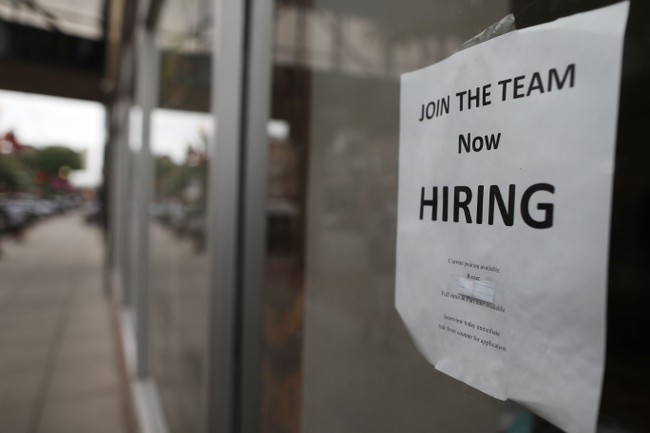
Small businesses remain the engine of job creation, often starting with one founder and scaling slowly into employers that hire more people over time. New business formation matters because it reflects people willing to bet their time and capital on a future, not just consumer sentiment. The headline figure of approximately 3,493,381 new entities in the first six months of 2026 points to an energetic reaction from Americans who are choosing ownership over simply waiting for jobs to appear.
Registered Agents Inc., a business formation service provider, released its June 2026 business report. It found that the U.S. added 3,493,381 businesses in the first six months of 2026, despite economic pressures and uncertainty in global markets.
The month of June alone showed an increase of 548,060 businesses, a greater increase over the June 2021 post-pandemic surge of 509,474. The June 2026 increase is also substantially more than June 2025, where the economy added 490,265 businesses.
Overall business growth also exceeded the same time period as last year. The economy had a 12% year-over-year increase compared to the same time period in 2025.
June’s jump, larger than recent Junes, signals that formation activity kept pace through a season that often cools. That resiliency suggests entrepreneurs are responding to local opportunities and to a national environment in which policies have reduced regulatory friction and encouraged private-sector dynamism. Where politicians shout doom and gloom, actual people are filing paperwork, signing leases, and hiring contractors.
“This represents 442,415 more businesses than the first half of last year, illustrating a massive wave of nearly half a million more entrepreneurs stepping up to build against a backdrop of economic uncertainty and job-market squeezes,” the report reads.
Typically, the report said, the summer season shows a dip in business creation. However, this year’s business growth showed to be more flat than deflated.
“June capped off a truly remarkable first half of the year for entrepreneurship in America,” said Molly Cavanah, vice president of Revenue Growth and Data at Registered Agents Inc. “While people continue to navigate inflation and higher interest rates, record-breaking formation activity reflects a strong sense of confidence and determination among new business owners.”
Those numbers matter for anyone watching the economy from a pro-growth perspective. New firms mean fresh job openings, more competition that keeps prices in check, and new sources of taxable income without relying on Washington to create demand. When Americans choose to start businesses, they are voting with capital and grit for the future of local communities and the national economy.
Some of the strongest percentage increases came from states not usually credited with boomtown status. Oregon posted a 53 percent year-over-year rise in June, adding more than 8,000 new businesses versus last year. Mississippi and North Dakota also recorded hefty gains, with year-over-year increases near 46 percent and 44 percent respectively, showing that entrepreneurship is spreading beyond traditional coastal hubs.
Registered Agents Inc. also analyzed how all 50 states were adapting to the business growth trends. The report found Oregon took the lead in June 2026 with a 53% year-over-year increase in business formation from the same time period in 2025. More than 8,000 businesses were included in Oregon’s growth total.
“Industries like construction, manufacturing, and hospitality may be driving new formations as skilled workers move towards ownership rather than employment,” the report reads.
Mississippi and North Dakota also had some of the highest year-over-year increases for business growth at 46% and 44%, respectively.
Industry mix matters: construction and manufacturing show up as hot lanes for new ownership, which is a practical signal for young people weighing education and career choices. Skilled trades like welding, carpentry, and mechanical work can translate faster into self-employment and stable income than some entry-level white collar tracks, especially when formation activity is strong.
This wave of startups is happening in a complex geopolitical moment and a noisy domestic political scene, yet it underscores how private initiative can outpace fear. The data suggest Americans are ready to build, hire, and take calculated risks, and that private-sector momentum can be the most reliable driver of prosperity in uncertain times.



Add comment