
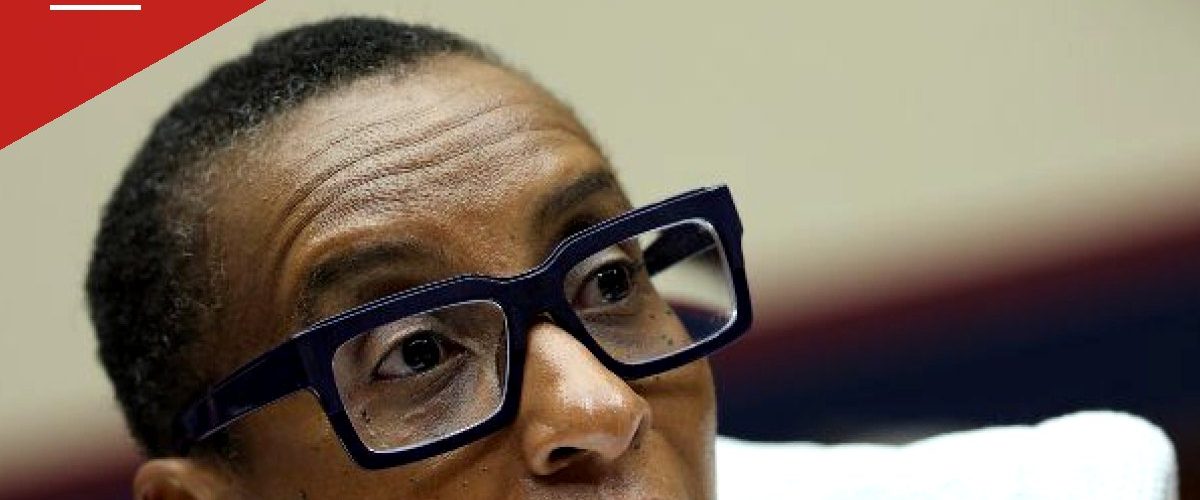
Claudine Gay, who resigned as Harvard University’s president in January 2024 amid plagiarism allegations and fallout from her congressional testimony on antisemitism, is teaching classes at the Cambridge, Massachusetts school again — including one that uses Harvard itself as a case study.
According to a report by the Wall Street Journal, Gay is teaching three courses during the 2026-2027 academic year, a schedule first disclosed by the Harvard Crimson in March. Gay resigned on January 2, 2024, after six months in office, the shortest presidential tenure in the university’s history.
Her fall course, GOV 94HE, is titled “What is a University?: Purpose and Politics in Higher Education.” The tutorial, capped at 16 students, traces the history of American higher education before turning to present-day disputes over “curriculum, admissions, research, preservation, and governance.”
The course description states: “A central goal of the course is to encourage Harvard students to engage in critical thinking about their own institution and to understand the background political, social, and market pressures that influence their college experience.” Students are expected to finish the semester by proposing “a vision for institutional reform or reinvention.”
Two More Courses in the Spring
Gay will teach two additional courses in spring 2027: GOV 94GC, “African American Politics,” and GOV 2576, “Politics of Race, Ethnicity and Immigration.”
“African American Politics” begins with the 1965 Voting Rights Act and examines the opportunities and constraints that have shaped Black political life since, along with the reach of Black political influence more broadly.
“Politics of Race, Ethnicity and Immigration” is a doctoral seminar Gay is co-teaching with professor Jennifer L. Hochschild. It covers “racial domination and contestation” from the nation’s founding to the present, including the racial and ethnic dimensions of elections and governance.
Before her brief presidency, Gay served as Harvard’s dean of Social Sciences and dean of the Faculty of Arts and Sciences. She had never held a teaching position at Harvard until now.
The Plagiarism Controversy
Gay’s resignation followed the discovery of numerous instances of alleged plagiarism in her academic work, on top of widely criticized congressional testimony on antisemitism at Harvard. A Boston Globe op-ed at the time challenged the university’s handling of the matter, pointing to what it called contradictory standards.
Harvard’s own guidance on plagiarism states that “it is considered plagiarism to draw any idea or any language from someone else without adequately crediting that source in your paper.” But the university’s policy also holds that a formal finding of research misconduct requires that the conduct be committed “intentionally, knowingly, or recklessly” — a distinction the Globe argued left room for inconsistent enforcement.
Gay has largely stayed out of public view since leaving the presidency nearly three years ago. Her return to teaching marks her first classroom role at the Middlesex County institution she once led.


Add comment