
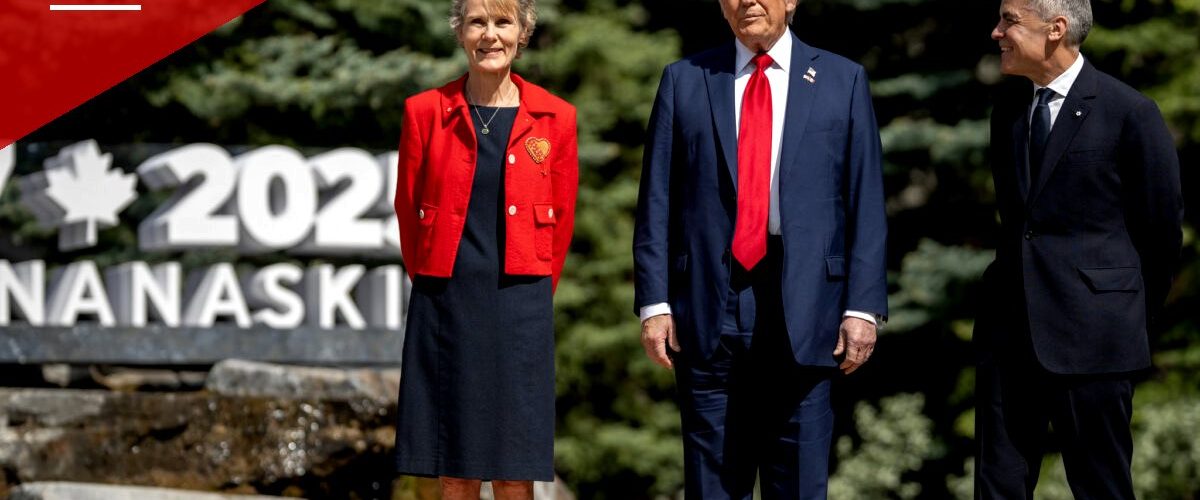
Canadian Prime Minister Mark Carney spent this week in Strasbourg pitching a “unique alliance” with the European Union, all while his government courts Chinese investment back home. The message to Canadians is that President Trump’s tariffs and his repeated “51st state” jabs make the country’s long-standing economic reliance on the United States too risky to continue, and that Ottawa should pivot toward Brussels and Beijing instead.
The trouble is that geography, capital flows, language and supply chains don’t bend easily to political messaging, and by most measures, Canada has few realistic paths away from the American market.
The EU Door Is Effectively Closed
Canada cannot become an EU member; the bloc’s treaties restrict membership to a “European state.” European Commission President Ursula von der Leyen floated the idea of “associate membership” with Carney present, but no such status exists in EU law. Establishing one, or negotiating a deep association agreement, would require unanimous approval from the Council and ratification by all 27 member states through a mixed-agreement process.
That’s the same obstacle that has kept the Comprehensive Economic and Trade Agreement with Canada in limbo since it began provisional application in 2017 — it remains unratified by ten countries, including France. Any expanded partnership touching defense industry, critical minerals, artificial intelligence or the Arctic would face identical veto risk.
China Trade Is Growing, But It Doesn’t Move Oil or Auto Parts
Canadian exports to China rose 30 percent in the first half of 2026, largely on energy and minerals. A January agreement traded limited access for Chinese electric vehicles in exchange for lower tariffs on Canadian canola and a target of 50 percent export growth by 2030. Chinese state-backed funds showed up at a Toronto investment summit this week.
But Ottawa has treated the Chinese market as a security concern for years, and a wider opening is likely to provoke American retaliation. More importantly, deeper trade with China does nothing to reroute Canadian oil pipelines or restructure auto-parts supply chains that run north-south.
The U.S. Still Anchors the Canadian Economy
Roughly 75 percent of Canadian goods exports have historically gone to the United States, and America still dominates even after tariffs. Manufacturing accounts for only 10 percent of Canada’s GDP, but it represents the high-wage, tightly integrated segment of the economy that Europe has no capacity to absorb — Ontario auto parts don’t easily slot into supply chains in Slovakia or North Africa.
American investors hold about 46 percent of the total stock of foreign direct investment in Canada and provided more than half of 2025 investment inflows. Canadian companies, in turn, hold nearly half their outbound foreign investment in the United States. A KPMG survey found that 42 percent of Canadian manufacturers have already moved production to the U.S. or plan to, and 77 percent expect to act within two years.
On energy, Canadian heavy crude is refined in the U.S. Midwest and Gulf Coast because there are no East Coast export terminals, and the proposed Energy East pipeline that would have changed that is dead. Canada has 840,000 kilometers of pipeline infrastructure pointing south; reversing that orientation would take 15 to 20 years and capital that isn’t coming from Brussels.
Rhetoric as Leverage
President Trump’s provocations — calling Carney “Governor,” joking about annexation — work as negotiating leverage precisely because the dependence between the two countries is lopsided. Canada treats U.S. market access as existential; Washington treats Canadian supply as merely convenient, with alternatives available in Venezuelan oil, Mexican auto production, and pricier lumber.
Defense Spending Outpaces Defense Readiness
Canada finally reached NATO’s old 2 percent of GDP defense-spending benchmark in 2025-26, decades after it was set. Carney has since floated 4 percent by 2030 and the alliance’s newer 5 percent target by 2035. But money alone doesn’t produce ships or fit personnel.
Internal briefings from 2024 found 72 percent of Canadian Armed Forces personnel overweight or obese, a higher rate than the civilian population, contributing to readiness problems and medical releases. The navy still relies on four aging Victoria-class submarines, with the first of 12 planned German-built replacements not due until 2034. New polar icebreakers are under construction but won’t arrive until the early 2030s, and the existing Coast Guard icebreaker fleet is mixed and aging — a thin margin for patrolling a vast Arctic territory.
Betting on Time That May Not Be There
Carney’s strategy appears to rest on the idea that shared values with Europe and commodity demand from China can buy Canada time to reduce its American dependence. Whether that time will actually help remains an open question, particularly if Ottawa is banking on a future U.S. administration being more accommodating on trade and defense spending.
Add comment