
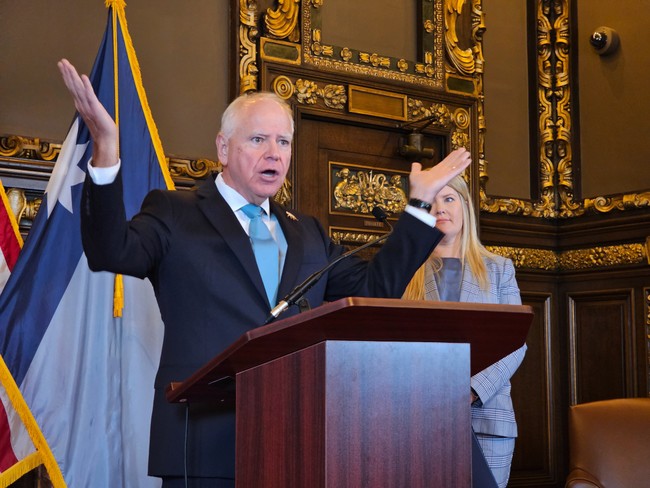
This piece lays out a direct Republican critique of Minnesota Gov. Tim Walz and Attorney General Keith Ellison for their public reactions to the Border Patrol shooting of Alex Pretti, arguing their statements inflame tensions, misstate facts, and encourage resistance to federal immigration enforcement while calling for adherence to the law and cooperation with federal authorities.
Gov. Tim Walz and AG Keith Ellison publicly weighed in on the Alex Pretti shooting in ways that matter because they shape how people respond on the ground. Their words did not sit in a vacuum; leaders influence behavior and law enforcement operations, and the tone they chose escalated a tense situation. This is not about silencing debate, it is about responsibility from elected officials when public safety is involved.
Walz went further than commentary and, in the view of many, pushed inflammatory language that risks making a bad situation worse. He said Pretti was “murdered in front of the world,” a statement that skips the normal process of waiting for facts and official findings. That choice of phrasing, used by the state’s top official, has the practical effect of prejudging an investigation and stoking anger toward federal agents.
The governor also misidentified the agency involved at a critical moment, saying ICE had done the shooting when it was a Border Patrol agent. That factual slip matters because precise language matters in law enforcement incidents. Blurring the lines between agencies feeds the narrative that state officials are at odds with federal enforcement and encourages confrontations that put officers, agents, and citizens at risk.
Walz framed the situation as a choice between siding with a supposedly “all-powerful federal gov’t that can kill and kidnap its citizens” or siding with peaceful residents, calling federal presence an “occupation.” Framing federal law enforcement this way is extreme and misleading, and it paints ordinary immigration enforcement as a malicious takeover. Public officials who deploy hyperbole like that sacrifice credibility for political theater.
There is also the ironic omission in Walz’s focus: while he spotlighted the harm to Alex Pretti and others, he avoided discussing victims of crimes committed by illegal entrants or the work federal agents do to remove dangerous individuals from communities. Such selective attention looks political and undermines a balanced approach to public safety. It is entirely reasonable to ask why victims of violent crime are not given equal attention in this sort of commentary.
Ellison, meanwhile, accused officials of suffering “targeted oppression” because they didn’t vote for Trump, which stretches logic into partisan grievance. Claiming persecution over voting patterns mixes politics with law enforcement in a way that invites distrust and confrontation. That rhetoric also misses the operational facts: federal enforcement results and staffing depend heavily on cooperation from state and local governments, not on partisan complaints.
Ellison argued the situation was not about fraud because federal teams showed up “armed masked men,” a characterization that elevates optics over substance. Federal investigations sometimes require protective measures depending on perceived threats, but painting routine enforcement as sinister without evidence fosters alarm. When public leaders emphasize imagery over facts, they make it harder to have a reasoned debate about compliance and law enforcement priorities.
Both Walz and Ellison have taken steps that, in effect, encourage resistance to federal officials rather than promote cooperation and the rule of law. That posture forces federal agencies to allocate additional resources and personnel to manage oversight and safety, and it can lead to more intense encounters in cities that resist compliance. Those are real consequences people in Minnesota and elsewhere will feel on the streets.
Comparisons that equate enforcing laws passed by Congress to historical atrocities are especially outrageous and corrosive to civil discourse. Asking how anyone can compare enforcement actions to events like the killing of Anne Frank is a fair question given the scale and moral difference between law enforcement operations and genocide. Rhetoric that trivializes historic suffering for political gain should be rejected by anyone who cares about honest public debate.
Public officials who prioritize political theater over clear, corroborated facts fail the basic test of leadership when tensions are high. Leaders in Minnesota should focus on de-escalation, insist on transparent investigations, and cooperate with federal authorities to ensure public safety. That approach protects residents, honors victims, and preserves the integrity of law enforcement operations.
Ultimately, the path forward requires leaders to stop inciting the public against federal agents and to start working within the law to address the problems citizens face. Political grandstanding that encourages obstruction or hostility toward federal teams only increases danger and undermines lawful efforts to solve complex immigration and fraud issues. Citizens deserve leaders who lower the temperature and follow the rule of law rather than fueling conflict.
Plain, direct leadership would mean acknowledging pain while committing to a fair, evidence-based process that protects both investigators and the public. Minnesotans deserve officials who can hold firm to facts and pursue remedies without inflaming passions or obstructing law enforcement. That kind of steady governance is what keeps communities safe and institutions credible.
Efforts to block federal operations or to paint routine enforcement as a moral failing invite more intense federal response and legal pushback. Elected officials who try to prevent lawful federal work should expect the rule of law to respond, not bend to partisan pressure. That reality is unavoidable in a system where federal statutes and federal agencies carry constitutional authority.
When leaders act like they are above federal law, they set themselves up for confrontations that courts and federal agencies will ultimately resolve. Legal remedies exist for disputes over jurisdiction and policy, and those avenues are the correct route, not inflammatory speeches or calls for civil disobedience that endanger lives. Those who govern should choose lawful channels, not populist theater.
State officials can still change course by cooperating with federal counterparts and supporting thorough, independent investigations into the shooting. That kind of responsible conduct serves justice, reduces violence, and restores confidence in institutions, which should be the priority for anyone holding public office.
Add comment