
I’ll explain what happened, who was involved, the exact words used, how polls looked before the election, and why the endorsement could matter for New York City.
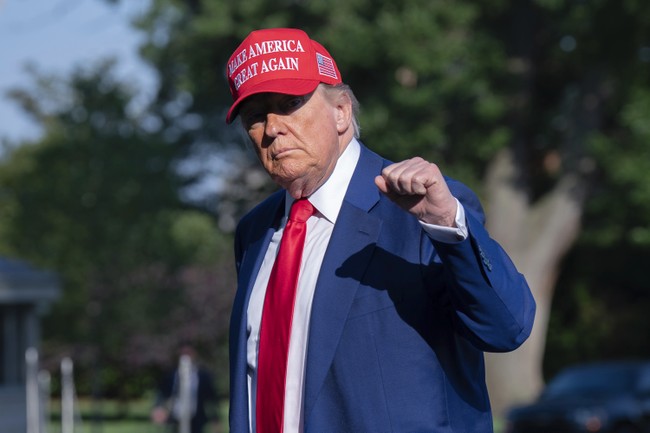
President Donald Trump made a pointed intervention in the New York City mayoral contest by endorsing Andrew Cuomo over Republican Curtis Sliwa, explicitly trying to prevent a victory by Zohran Mamdani. The move is framed as a last effort to stop what Trump called a “Communist Candidate” from taking control of the city he described as “the greatest city in the world.” Trump’s public post framed this as a choice between preserving New York’s future or risking economic and social collapse under Mamdani.
Trump’s choice of Cuomo, a Democrat turned Independent mayoral candidate, surprised many who expected him to back the Republican on the ballot. The endorsement comes as Sliwa struggled to gain traction and as Mamdani maintained a solid lead in polls heading into election day. Trump argued that a vote for Sliwa could effectively hand the race to Mamdani unless voters shifted toward Cuomo to block him.
In his exact words: “If Communist Candidate Zohran Mamdani wins the Election for Mayor of New York City, it is highly unlikely that I will be contributing Federal Funds, other than the very minimum as required, to my beloved first home, because of the fact that, as a Communist, this once great City has zero chance of success, or even survival!” That declaration ties federal funding to the ideological orientation of city leadership and signals the administration would withhold discretionary support if Mamdani prevailed.
Trump continued bluntly: “It can only get worse with a Communist at the helm, and I don’t want to send, as President, good money after bad,” he added. “It is my obligation to run the Nation, and it is my strong conviction that New York City will be a Complete and Total Economic and Social Disaster should Mamdani win.” Those lines are designed to cast the mayoral choice as a national concern, not just a local contest.
He also wrote, “His principles have been tested for over a thousand years, and never once have they been successful.” That historical indictment of communism was offered to underscore his belief that Mamdani’s ideology is incompatible with urban prosperity. Trump framed Cuomo as the preferable, practical option, asserting, “I would much rather see a Democrat, who has had a Record of Success, win, than a Communist with no experience and a Record of complete and total failure.”
Trump called attention to Mamdani’s prior public service record, saying that when Mamdani was an assemblyman he “ranked at the bottom of the class.” He then made an electoral calculation explicit: “We must also remember this — A vote for Curtis Sliwa (who looks much better without the beret!) is a vote for Mamdani,” and concluded, “Whether you personally like Andrew Cuomo or not, you really have no choice. You must vote for him, and hope he does a fantastic job. He is capable of it, Mamdani is not!” That last line reinforces Trump’s message that this is about preventing an outcome he believes would be catastrophic.
Observers noted the tactical nature of the endorsement: asking conservatives and moderates who would never vote for Mamdani to coalesce around Cuomo as the only realistic spoiler. The strategy is simple math — if a slice of Sliwa supporters switch to Cuomo, they could potentially halt Mamdani’s momentum. The question is whether enough voters will respond to that logic in a city where party loyalties and local concerns run deep.
The latest polling cited by national observers showed Mamdani ahead with 44%, Cuomo at 39%, and Sliwa lagging at 16%. Those numbers made the arithmetic clear; a modest shift of Sliwa voters could change the outcome. The campaign turned into a triage exercise: can competing anti-Mamdani forces accept a compromise pick to prevent what they see as a radical result?
Trump’s warning about withholding federal funds is a lever rarely used in local politics but carries real weight as a threat. Even suggesting reduced federal assistance makes this contest feel like more than a municipal election—it becomes a test of whether national leaders will condition support on local political outcomes. For New Yorkers worried about budgets, services, and safety, that signal mattered.
How voters react to a high-profile endorsement from a former and likely future president remains to be seen. Some may be swayed by the national implications Trump painted, while others will view the move as external meddling in a city that tends to resist outside influence. The effect depends on how voters weigh ideology against practical concerns about governance and services.
Campaign strategists watching the numbers stressed that this race was ultimately governed by turnout and small shifts in voter preference. If just a percentage point or two of Sliwa’s would-be voters moved to Cuomo, the numbers suggested Mamdani’s lead could evaporate. That dynamic made the final 48 hours before the vote intensely strategic for all campaigns involved.
Whatever the result, the endorsement put the national spotlight on a local contest and turned New York City into the stage for a larger debate over ideology, governance, and federal influence. The stakes framed by Trump were stark and unapologetic, leaving voters to decide whether to follow his call to block Mamdani by backing Cuomo or to stick with their original choices heading into election day.


Add comment