
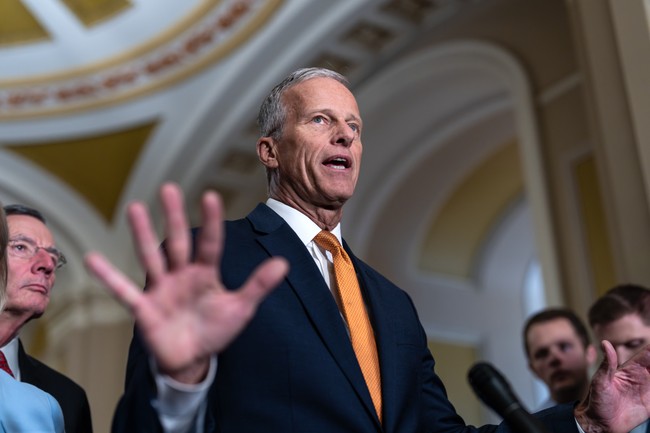
The Senate fight over President Trump’s nominees has been a running story this year, with Republicans changing Senate rules and pressing ahead to confirm hundreds of sub-Cabinet picks despite Democratic efforts to delay and block them.
Senate Republicans Again Outmaneuver Dems in Their Attempt to Hold up Hundreds of Pres. Trump’s Nominees
Months back, Democrats used procedural tools to slow-walk dozens of President Trump’s nominees, creating what looked like a purposeful bottleneck at the heart of government staffing. That resistance continued in fits and starts, with blue-slip traditions and other hurdles turned into routine obstruction. Republicans grew frustrated and decided the status quo was unacceptable for filling federal posts that keep agencies running.
In September, Senate GOP leaders moved to change how nominations are handled, narrowing the filibuster’s impact on sub-Cabinet confirmations and allowing a simple majority to advance most nominees. The change was intended to prevent a small group of senators from freezing the process indefinitely. It was a clear signal that Senate Republicans would no longer let routine staffing be held hostage to partisan gamesmanship.
On Wednesday the Senate again showed that resolve with a 51-47 procedural vote, with two Republicans absent, to advance a large block of nominees, which puts dozens of confirmations on a faster track. That procedural victory sets up a later floor vote to confirm 97 of the president’s picks, a move aimed at filling vacancies across multiple agencies. The tactic is the same one Republicans used after the rules change earlier this year, and it reflects a broader effort to restore operational capacity to the executive branch.
The move tees up a later vote on 97 of Trump’s picks and marks the third time Senate Republicans advanced a bloc of the president’s nominees since changing the confirmation rules in September.
…
Among the list of nominees are former Rep. Anthony D’Esposito, R-N.Y., to serve as inspector general at the Department of Labor, and two picks for the National Labor Relations Board, James Murphy and Scott Mayer, among several others across nearly every federal agency.
https://x.com/SenatePress/status/1998822618695123277
…
It’s also Senate Republicans’ second attempt to move this package after Sen. Michael Bennet, D-Colo., objected last week in a bid to derail the process.
Senate Republicans went nuclear and changed the rules surrounding the confirmation process in a bid to break through Senate Democrats’ monthslong blockade of Trump’s nominees and limited the scope to only sub-Cabinet-level positions that would be advanced through a simple, 50-vote majority.
The nominees cover a broad range of roles, from inspector generals to NLRB members, and carry real authority over how rules are enforced and how agencies operate day to day. Having empty seats at these agencies hampers enforcement, slows grants and approvals, and leaves critical oversight thin. Republicans argued that staffing up is less about politics and more about delivering services and enforcing the law effectively.
Opponents tried to stall the package by lodging objections and reviving traditions designed to slow nominations, but GOP leaders responded by using the new majority procedures to keep the process moving. This is part of a larger play to confirm hundreds of nominees over the coming months so agencies can function without long-term acting leadership. The move also sends a message: a sustained blockade from the minority will not leave key posts vacant indefinitely.
Senate Republicans framed their success as momentum toward a sweeping confirmation effort, noting they expect to confirm a large number of Trump’s picks by year end. The party emphasized that these confirmations compare favorably to administration first years past, and the aim is to restore staffing parity across departments. Followers on the party’s social channels highlighted the tally and touted progress toward confirming hundreds of nominees, .
We’re well on our way to confirming 400 Trump nominees this year.
Senate Republicans have confirmed more nominees this year than the first year of the Biden administration or Trump 1.0.
Next up is a floor vote expected next week that should finalize many of the nominations advanced by the procedural move. If that vote succeeds, agencies will begin to see more permanent leadership in place instead of prolonged acting officials. For Republicans, that outcome validates the rule changes and underscores a determination to keep government staffed and accountable to voters.
Critics will say changing the rules erodes Senate traditions, but supporters counter that tradition cannot be weaponized to block governance. The debate will continue, but the immediate practical effect is simple: more confirmed officials, clearer chains of command, and fewer excuses for inaction. That tangible impact is what drove the Republicans to act and what they expect to deliver as confirmations proceed.



Add comment