
This piece examines the growing clash between Scouting America and the U.S. military after Secretary of War Pete Hegseth signaled plans to end formal ties, arguing the organization has shifted away from a merit-based, male-centered mission toward a genderless, DEI-focused model; it traces the history of the changes, highlights concerns about the impact on military support and youth development, and preserves key statements from Hegseth and others on both sides.
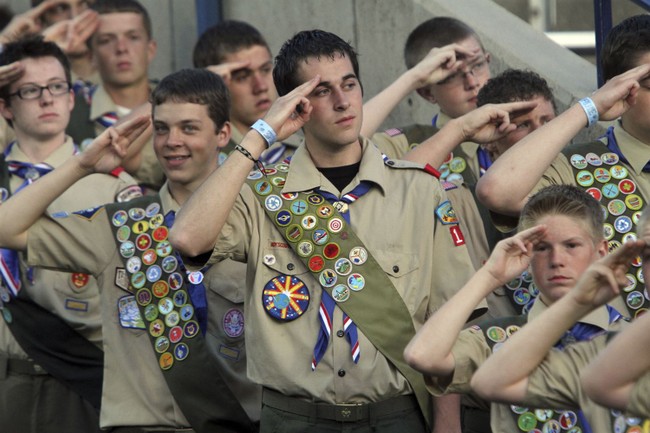
Scouting used to be presented as a straightforward path for young people to pick up practical skills, leadership, and a sense of responsibility. Over decades those programs taught camping, map reading, teamwork, and community service while serving as rites of passage. Many Americans remember earning patches for activities that felt formative and clear in purpose. Lately, critics argue the organization has drifted from that clarity into broader cultural battles.
For a century the military has been closely tied to scouting groups, offering logistical support, training partnerships, and recognition that helped scouts transition into service academies and the armed forces. That relationship is now under threat after public statements and a draft memo from Secretary Pete Hegseth signaled a planned cutoff of support. Hegseth contends the group “no longer supports the future of American boys” and charges it with abandoning a merit-based mission in favor of an agenda that, in his words, seeks to “attack boy-friendly spaces.”
Hegseth’s critique goes beyond a few policies to a broader claim about identity and purpose. In his draft memo he condemned Scouting for becoming “genderless,” and criticized its embrace of diversity, equity, and inclusion. He added that Scouting has gotten away from the mission to “cultivate masculine values.” While still a Fox News Channel host in 2024, Hegseth stated:
The Boy Scouts has been cratering itself for quite some time. This is an institution the left didn’t control. They didn’t want to improve it. They wanted to destroy it or dilute it into something that stood for nothing.
Pulling military support would be concrete and immediate: medical teams, logistical aid for events like the National Jamboree, and permission to use bases for meetings could all be cut. The National Jamboree can gather as many as 20,000 scouts every four years in remote locations, and that scale depends on military cooperation. Ending access to installations and on-site support would ripple through recruitment pipelines and longstanding academy incentives tied to scouting accomplishments.
Scouting America has pushed back by reaffirming its nonpartisan stance and by pointing to its long history of working with administrations across the political spectrum to develop leaders. The group’s response emphasizes continuity in mission language about integrity, responsibility, and community service. Supporters inside the scouting movement insist that program evolution has broadened access without sacrificing core values. Detractors see those changes as a dilution of spaces designed specifically to foster traditional forms of male development.
Both Girl Scouts and Scouting America have made policy choices critics label as “woke,” including opening membership along gender lines in recent years. The Girl Scouts moved to admit transgender girls in 2015, and in 2019 the Boy Scouts rebranded to Scouting America while opening certain programs to girls. Opponents argue those steps erode separate spaces for boys and girls, and that mixing those environments undermines specific kinds of bonding and growth that happen in single-gender settings.
Voices on the conservative side stress tangible outcomes they associate with traditional scouting. One example given by a managing editor: “My two oldest sons are Eagle Scouts, and their Scoutmaster was a special forces guy from Ft Bragg. In addition to all of the orienteering and survival skills they learned, in the process of becoming Eagle Scouts, they learned invaluable leadership and project management skills that serve them to this day in their professional and personal lives.” These personal accounts tie scouting credentials to later advantages at service academies and in military enlistment.
Policy shifts could change incentives that once rewarded scouts in the military sphere. As many as 20 percent of cadets and midshipmen at America’s service academies have been Eagle Scouts, and enlistees who are Eagle Scouts historically received advanced rank and better pay. If Pentagon support is withdrawn, those program-linked benefits could be altered or eliminated, affecting both individual prospects and the broader talent pipeline into the armed forces.
For many former scouts and scout leaders, the debate is also about what kinds of spaces shape youth character. Some former Girl Scouts recall weekends that were private, bonding-focused, and centered on experiences unique to girls, from locker-room-style conversations to leadership practice in a comfortable peer setting. Critics worry that folding these traditions into a unified model sacrifices environments where gender-specific mentorship and learning happen most naturally.


Add comment