
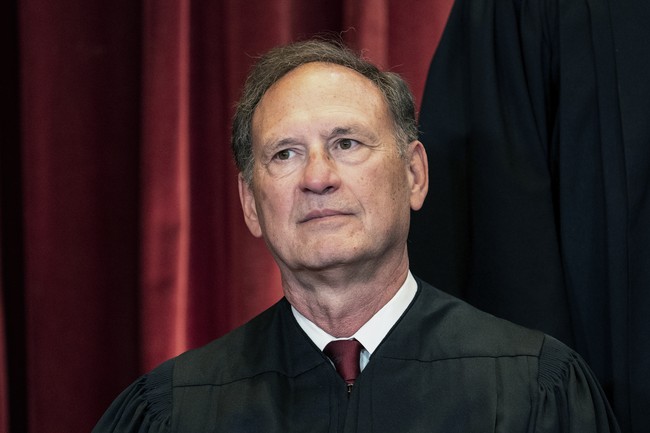
The story covers NPR’s erroneous publication claiming Justice Samuel Alito was retiring, the swift retraction, Nina Totenberg’s unusual explanation and apology, past reporting errors, and the broader questions this raises about newsroom standards and media trust from a Republican perspective.
NPR published a shocking report during a busy day of Supreme Court decisions claiming that Justice Samuel Alito was retiring, then pulled the item within minutes. The quick retraction did not prevent the story from spreading, and it left conservative observers wondering how a major outlet could publish such a consequential claim without ironclad verification. The episode has sparked debate about the standards and instincts of legacy media, especially when reporting on conservative figures.
The archived version of the piece reportedly opened with the line, “Justice Samuel Alito, who wrote the Supreme Court’s opinion reversing Roe v. Wade, is retiring, the court announced Tuesday.” That sentence, now notorious, was followed by a look at Alito’s conservative record. Many people assumed NPR had either engaged in wishful thinking or tripped over a pre-written obituary-type story known in newsrooms as a “pre-write.”
NPR’s public page later carried an editor’s note saying the story was mistakenly published and that neither Alito nor the court had announced his retirement. The outlet described the item as erroneous and retracted it, but readers were left with questions about process and accountability. For conservatives who already distrust mainstream media, this felt like another example of sloppy reporting that benefits from implicit bias.
The most attention-grabbing part came when longtime NPR correspondent Nina Totenberg offered an on-air explanation and an apology that many found hard to accept. Totenberg, a veteran reporter, explained that she rushed out of the courtroom after opinion announcements and misheard a remark about “announcements” as indicating a single retirement. She said she assumed Alito was the subject and that she made “the worst professional mistake” of her career.
She also read the text of the message she sent to Justice Alito. The apology was delivered in full, and it contained an unmistakable admission of error and contrition. That note, read aloud, confirmed she believed she had misheard a conversation and then allowed that misunderstanding to become an authoritative story.
https://x.com/brianstelter/status/2072074474535444759?ref_src=twsrc%5Etfw
“Dear Justice Alito, there are no words to adequately apologize for today’s error in reporting your retirement. It was entirely my fault. I rushed out of the courtroom after the opinion announcements, and when I realized that the usual rush of folks after a few minutes had not happened, I asked somebody was going on inside, to which the answer was, ‘retirement announcements.’ I didn’t hear the ‘s’ on ‘announcements,’ and I assumed something no reporter should ever do, that you were retiring. It was the worst professional mistake of my more than 50 years in journalism. I could go on, but I don’t know what else to say, except that I am so, so sorry.”
This pattern isn’t new for Totenberg in the view of critics. Observers pointed to a previous episode where her reporting about Supreme Court conduct during the COVID era circulated widely but later proved to be confused or insufficiently verified. Those earlier mistakes make the current incident feel less like an isolated slip and more like a troubling pattern. Conservatives see this as evidence that years on the beat do not excuse lapses in basic fact-checking.
Neither Totenberg nor NPR’s public editor fully explained why the reporter “assumed” Alito was the one leaving the court rather than following the standard checks that should stop a premature headline. The only rationale offered publicly was that Totenberg is a trusted senior reporter who has been at the outlet for decades. Trust is not a substitute for verification, and that point has been lost on too many newsrooms.
In later remarks, Totenberg suggested she thought she heard someone say Alito was retiring, reinforcing the core problem: an assumption heard in a noisy hallway became a published narrative without corroboration. Some media observers floated alternative theories, including that an embargoed or pre-written piece was mistakenly published, but those possibilities still point back to editorial controls that failed. For Republicans, the takeaway is plain: legacy outlets must restore rigorous standards if they want public confidence.
Despite sharp criticism, some in the media ecosystem pushed a narrative that the story could signal a real Alito retirement, which only added fuel to the speculation. That spin ignored the basic journalistic failure at the heart of the episode: a reported fact that should have been double-checked before publication. When outlets prioritize speed, especially on stories about conservative figures, the result is predictable skepticism among the public.
Editor’s Note: The 2026 Midterms will determine the fate of President Trump’s America First agenda. Republicans must maintain control of both chambers of Congress.

Add comment