
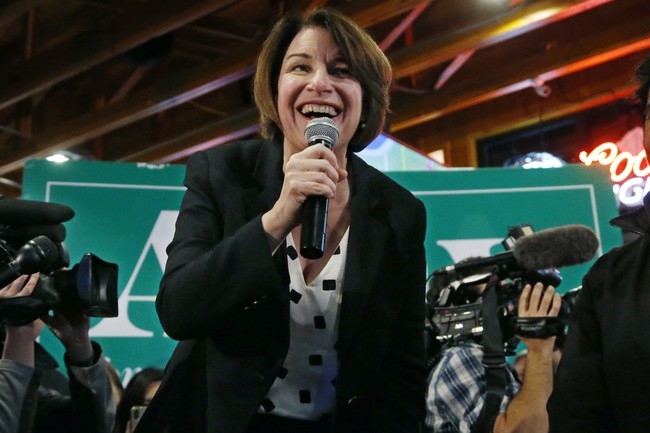
The governor’s surprise exit in Minnesota has opened a chaotic possibility: Senator Amy Klobuchar might run for governor and, if victorious, could appoint Tim Walz to the U.S. Senate to fill her seat until a special election, a scenario that alarms critics who see it as political theater and a reward for a scandal-plagued incumbent.
This all started when Gov. Tim Walz announced he would not seek reelection amid a sprawling fraud scandal, leaving a vacancy that has national political players sniffing for advantage. The idea that a senior senator would leave Washington to run for governor and then name the outgoing governor to her Senate seat reads like a plot twist meant to keep power within a tight circle.
Republicans and independent-minded voters view this as symptomatic of a party more interested in protecting insiders than answering tough questions. The move would let Klobuchar control who temporarily occupies her Senate seat, giving Democrats a chance to harden their grip on Minnesota even as allegations swirl around Walz.
Reports suggest Klobuchar is weighing a run, and the room for maneuver under state law creates the opening critics fear. If she wins, she could appoint a successor who serves until a special election, keeping the seat in friendly hands at least for a time.
Gov. Tim Walz of Minnesota said on Monday that he was abandoning his bid for re-election to a third term. And Senator Amy Klobuchar, a fellow Democrat, is considering seeking the office, two people briefed on conversations between the politicians said.
Mr. Walz and Ms. Klobuchar met on Sunday in Minnesota, where he informed her of his plans and she confirmed her interest in running to succeed him.
Local conservative observers are already suggesting this is a deliberate move to shuffle a tainted official back into federal office while shielding the party from immediate fallout. The optics are terrible: a governor under investigation stepping away, and a senior senator potentially trading places with him in a maneuver that keeps both figures central.
Dustin Grage, a Minnesota columnist known for digging into state politics, flagged this as a realistic possibility worth watching closely. That local perspective amplifies national concern, because what happens in Minnesota could set a precedent for other states tempted to play fast and loose with appointments and accountability.
Klobuchar’s record as a senator includes both bipartisan cover and controversy, and her gubernatorial run would be scrutinized through that lens. Critics call out past staff treatment and voting patterns that, in their view, align her more with progressive priorities than her moderate branding suggests.
Democratic strategists argue a Klobuchar run would be a safe bet politically: she has name recognition, fundraising ability, and the institutional support to mount a serious campaign. Opponents counter that her potential decision to appoint Walz would confirm fears that senior Democrats value party control above transparency or consequence.
Under Minnesota law, the governor appoints someone to fill a vacant Senate seat until a special election can be held. Depending on the timing of events, should Ms. Klobuchar become the governor, she could appoint her own replacement who would serve until a special election is held to complete the remainder of her term, which ends in 2030.
Shortly after Mr. Walz announced he was suspending his campaign, Ms. Klobuchar praised him that did not shed light on her own plans.
The procedural side is simple: the governor has appointment power, and timing matters. If Klobuchar times a run right, she could influence who sits in the Senate for months or even years, affecting votes on high-stakes issues long before voters can weigh in again.
That prospect has energized conservative critics, who describe Minnesota as a case study in how political machines protect insiders. They argue that such a swap would erode public trust and reward political risk-taking that skirts accountability during scandals.
Beyond the theatrics, this situation raises real questions about democratic norms and the balance between legal power and ethical responsibility. Appointing a governor under investigation to a higher office might be lawful, but legality and legitimacy are not the same, and public confidence could suffer.
Regardless of how this plays out, Minnesotans and the rest of the country should pay attention to the next moves from both Klobuchar and the state party apparatus. If the goal is to preserve institutional integrity, leaders will need to prioritize transparency and avoid maneuvers that look like insider trading in public office.



Add comment