
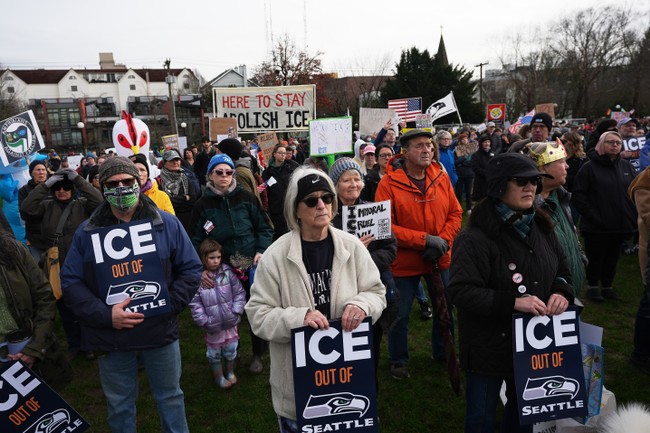
The ICE Watch networks that have surfaced in Portland and Minneapolis are drawing fresh scrutiny after leaks, confrontations, and a possible funding trail tied to a Minnesota nonprofit; this piece traces the incidents, the leaks, the on-the-ground dangers when emergency responders and activists mix, and the murky money route that may tie several groups together.
Local activist cells labeled ICE Watch have been central to recent disturbances in Portland and Minneapolis, mobilizing quickly after sensitive information about law enforcement actions was disseminated. Those mobilizations turned tense on multiple occasions, prompting questions about who is coordinating these groups and how internal operational details keep leaking to the public. The incidents are notable because they mix civilian emergency responses, street-level confrontation tactics, and a stream of online organizing. This combination raises the stakes for public safety and accountability.
In Portland, activists rushed to a scene after a 911 recording spread among ICE Watch supporters following a shooting that involved Customs and Border Protection. According to reporting on the incident, two suspects with alleged ties to Tren de Aragua had been struck during an encounter with federal agents after a truck reportedly tried to ram a Border Patrol vehicle. After one of the wounded individuals called 911 for help, the recording reached activists who then converged on the site, creating a volatile crowd dynamic.
Independent journalist Andy Ngo followed the trail of that leak and reported a link to a private EMS contractor, noting internal communications were passed from a first responder to ICE Watch activists. A Portland official reportedly said an investigation pointed to a contracted ambulance staffer rather than a county employee. That detail matters because it suggests a breakdown in professional boundaries within emergency services, with potentially dangerous consequences when medical personnel share sensitive operational information.
Left-wing rioters and extremists have been gathering outside the apartment building at 148th and Burnside to confront and attack the @PortlandPolice. Portland Police had nothing to do with the DHS-involved shooting. Two people in a pick-up truck were injured by shots after allegedly trying to run over Border Patrol agents.
Further accounts say a contracted ambulance crew member moved a vehicle near federal agents and later spoke to media about threats they claimed to have heard. Those claims fueled a narrative among activists that emergency services are compromised by personnel sympathetic to their cause. Whether true or exaggerated, the allegation that an EMT considered driving into federal agents and then leaked internal complaints shows how quickly rumors can inflame a crowd and endanger responders and law enforcement alike.
Internal communications about the shooting were immediately leaked by a Multnomah County first responder to PDX ICE Watch, an extremist open-borders network that Renee Good, the Minneapolis woman shot dead last week, was also involved in. The group posted about the shooting and a crowd mobilized to the apartment building, where they cursed at Portland Police.
On Jan. 13, a spokesperson with the Public Safety Area for the City of Portland said it wasn’t a Multnomah County employee who released the photo. “The matter has been reported to the appropriate licensing agency,” the spokesperson said, without naming the agency. American Medical Response (AMR) is a contracted agency for ambulance services but has not been confirmed as the agency the first responder leaker works for.
Similar tactics showed up in Minneapolis, where Renee Good, who had trained with a local ICE Watch cell, struck an ICE agent with her vehicle during a confrontation and was killed when the agent returned fire. Law enforcement accounts indicate the agent sustained injuries, with reports of internal bleeding, contradicting attempts to downplay the threat he faced. That episode underscores how street-level resistance tactics can escalate into deadly encounters in a matter of seconds.
The broader ICE Watch phenomenon appears to be a patchwork of loosely affiliated groups that share tactics and materials, including guides on resisting arrests and instructions for mobilizing neighborhoods when immigration enforcement vehicles arrive. Organizers have circulated primers and resource lists advising activists to use phone apps, whistles, and horns to warn communities and to create traffic slowdowns around enforcement actions. Those manuals suggest an evolving playbook that can be quickly adopted across cities.
Immediately after the Tren de Aragua suspects in Portland were shot and wounded by Border Patrol during a truck ramming attack, selective internal, sensitive information about the shooting was leaked by a first responder to extremist group PDX ICE Watch, which mobilized people on scene. A Portland spokesperson told me an investigation revealed it was a first responder from a contracted agency. That suggests it was an ambulance staffer with @AMR_Social.
Where funding comes into play is murky but worth watching. Reporting has tied fundraising and pass-through donations to a Minnesota nonprofit that organized events and reportedly funneled support to local groups. The nonprofit’s public mission language frames its work as grassroots organizing for social and environmental justice, which supporters present as community defense. Critics argue the structure can obscure who backs direct-action tactics and whether funds indirectly bankroll confrontational operations.
That suspicion of hidden funding links has led observers to call for clearer transparency from nonprofits that operate as intermediaries. When mobilizations lead to property damage, threats to public servants, or deadly clashes, citizens and officials alike have a right to know how campaigns are financed and who is training organizers on escalation techniques. Until that trail is clarified, these loose coalitions will remain a volatile mix of ideology, street tactics, and contested accountability.
An EMT driver who suddenly moved the parked ambulance, nearing (sic) striking federal agents at the ICE facility, leaked to the media the complaint he/she made about being told that if he/she tried to drive the vehicle into the agents, he/she would be shot. @AMR_Social has hired some far-left extremists, and that agency is compromised. Its patients are not safe with some of the people working for them.



Add comment