
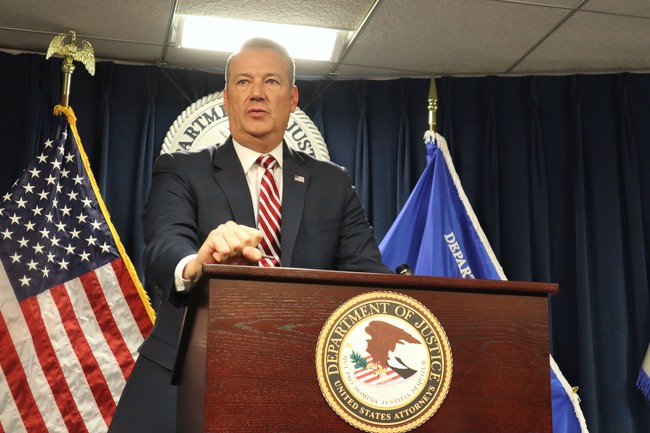
Todd Lyons, director of ICE, faced a confrontational House Homeland Security hearing where Democrats unloaded accusations, comparisons and dramatic questions; Lyons answered directly, defended his agents, and pushed back on misleading narratives about ICE’s work and the people it detains. The hearing featured moments of outright hostility from some members, pointed clarifications from Lyons about criminal history and care for children in custody, and several fiery exchanges that exposed the partisan theater on display. This piece recounts key exchanges, Lyons’ rebuttals, and the broader context of how ICE officers are portrayed and attacked in public discourse.
ICE Director Todd Lyons testified before the House Homeland Security Committee under intense fire from several Democratic members who framed his agency as a menace. The tone was set early when a congresswoman asked a personal, moral question that had less to do with policy and more to do with performance art. Lyons stayed composed and insisted on answering questions about operations and officer safety rather than engaging in theatrical smears.
One moment involved Rep. LaMonica McIver asking Lyons if he thought he was going to hell, an exchange that highlighted how hearings can stray from facts to spectacle. Lyons, representing the men and women doing difficult jobs, repeatedly drew the line between partisan attacks and real-world consequences for officers. He emphasized that his personnel face threats and harassment while carrying out duties that Congress authorized.
Members pressed Lyons about whether agents should stop wearing masks to protect themselves after receiving threats from extremists, seeking a dramatic concession. Lyons’ response was direct and unambiguous: “No,” he replied. That answer underscored a simple reality—officers must be allowed to take reasonable precautions to protect their safety while enforcing the law.
Another line of questioning focused on statistics about the criminality of those ICE detains, a frequent talking point used to diminish enforcement. When Rep. Lou Correa cited a figure that only 14 percent were “violent” offenders, Lyons corrected the framing and explained the broader picture. He clarified that more than 60 percent of those arrested have a pending charge or conviction on some criminal charge, and that many so-called nonviolent categories still include serious offenses like drug trafficking and child exploitation.
Lyons laid out examples that many in the media and some politicians conveniently ignore: burglaries, DUIs, people tied to child pornography, and drug dealers all present real public-safety risks. His point was practical, not rhetorical—labels like nonviolent mask a variety of crimes that threaten communities. That pushback forced some members to pivot quickly because the facts complicated their narrative.
The hearing also included hyperbolic comparisons that muddied historical context and intent, with a member likening ICE to the KKK and slave patrols. That claim ignored decades of legal framework and bipartisan enforcement decisions, and it frustrated Republicans who see such rhetoric as dishonest. Lyons pushed back by emphasizing ICE’s role under law and the continuity of immigration enforcement across administrations.
At times the exchanges crossed into threats and hints of political retribution, such as when a member suggested a CBP leader should “hope he gets pardoned,” language that read more like a partisan jab than responsible oversight. Those moments highlighted how oversight hearings can devolve when oversight is used as a platform for scoring points instead of improving policy. Lyons remained focused on outcomes, citing what ICE has done operationally and the dangers officers face from radicalized critics.
One of the sharpest confrontations came when Rep. Eric Swalwell pointed to a photo of a little boy and demanded Lyons’s resignation, framing ICE as responsible for the child’s plight. Lyons answered plainly: “No, sir, I won’t,” and explained that ICE agents actually cared for the child after the father fled law enforcement and abandoned him. That factual correction exposed the misuse of a child image for political theater and underscored that agency personnel often act to protect vulnerable people in chaotic situations.
The hearing captured a broader truth about contemporary politics—agencies like ICE become proxies for cultural anger, and nuanced facts get lost in loud accusations. Lyons repeatedly returned the conversation to specifics: what ICE officers do, what charges the detained individuals face, and how threats to agents undermine public safety. His answers were aimed at grounding the debate in the operational realities the media narrative often neglects.
Lawmakers who leaned on dramatic language tried to portray enforcement as uniquely malevolent under current leadership, ignoring the institutional role ICE has played across administrations. Lyons refused to be baited into apologies for enforcing laws that Congress wrote and presidents of both parties implemented. His testimony was a defense of officers, the rule of law, and the practical work of public-safety agencies amid escalating partisan attacks.
Throughout the hearing Lyons stuck to concrete facts, pushing back on exaggerations and keeping the focus on safety, charges, and the humane treatment of people in custody when appropriate. He emphasized that political theater and false narratives distract from making meaningful policy choices about borders, enforcement, and public safety. In a chamber full of theatrical lines and overheated rhetoric, Lyons chose clarity and the record as his tools for rebuttal.

Add comment