
I’ll explain why reshoring manufacturing matters, show how a hometown company rebuilt jobs in upstate New York, outline policy priorities to scale that model, and describe the practical results already delivered by American workers and entrepreneurs.
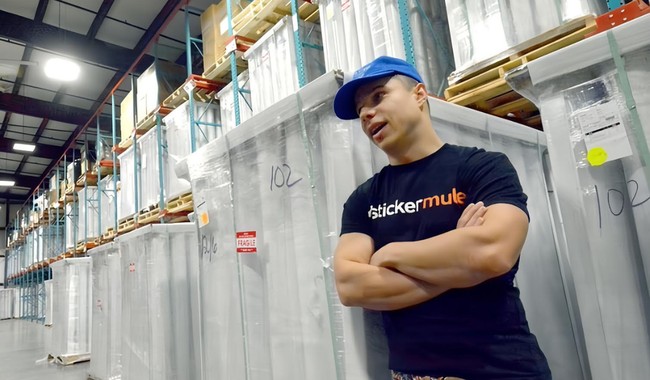
I’ve spent the last decade proving manufacturing can come home, building Sticker Mule from a small startup in Amsterdam, New York, into a company that employs about 1,200 people. That growth wasn’t luck; it was a deliberate choice to hire locally, invest in technology, and keep production on American soil. When critics insisted “factories only belonged in China or Mexico”, the response was hands-on work and real results in places others had written off.
Upstate communities have seen factories close and families leave for jobs elsewhere, leaving towns hollowed out and struggling. The pandemic exposed how fragile global supply chains are and how dangerous dependency on foreign suppliers can become for national security. Rebuilding manufacturing at home is a straightforward answer to those risks: it stabilizes local economies, raises wages, and strengthens resilience against geopolitical shocks.
Sticker Mule operates multiple factory buildings and warehouses in New York, creating hundreds of high-skilled manufacturing roles and thousands of jobs across a domestic supplier network. Most components and production steps for their custom products are now handled in the United States, and the business has actively invested in people, engineering, and new processes to reduce foreign reliance. That shift demonstrates a practical path for other firms to follow when incentives and common-sense regulation align.
Not everything moved back immediately; some inputs like certain t-shirt blanks still come from abroad because U.S. alternatives are not yet available. That reality is acknowledged and being addressed through investment and innovation: the company has hired leading engineers, funded research and development, and placed multi-million-dollar bets on manufacturing M&A to grow domestic capabilities. Printing and finishing for those garments are done in America, adding value and preserving higher-paying jobs.
There are clear policy levers that make reshoring possible: tax relief targeted at domestic producers, regulatory reform to cut costly red tape, strategic infrastructure investments like rural broadband, and enforcement of border policies that protect wages and workforce integrity. Those ideas are practical, not ideological—cut costs where government unnecessarily burdens growth, and direct support where market failures block domestic production.
Self-funding a campaign with $5 million demonstrates a commitment to independence from special interests, and it also reflects a philosophy of putting private-sector discipline into public service. The aim is to replicate what worked in Amsterdam across congressional districts with similar needs, using tax incentives and streamlined approvals to encourage companies to bring work back to the United States. That approach emphasizes outcomes: jobs created, families staying put, and towns regaining economic purpose.
Local investment produced tangible community wins: job training programs, millions spent on local facilities, and initiatives to keep employment in the region. Those efforts helped stabilize neighborhoods and offered alternatives to downward trends in substance abuse and despair that often follow long-term economic decline. Employers that invest locally can be anchors for entire regional ecosystems—vendors, services, and other industries benefit when manufacturing returns.
Reshoring also carries national defense implications. Dependence on adversary-controlled supply chains for semiconductors, medical supplies, or other critical goods compromises U.S. leverage and readiness. A robust domestic industrial base increases strategic autonomy and supports rapid mobilization when needed. Manufacturing policy should therefore be treated as a national-security priority, not merely an economic program.
Success stories include operational choices that signal abundance and stability—like one public event where 2,000 frozen turkeys were distributed and staff were surprised with $1,000 Christmas bonuses—actions that build community trust and show profits reinvested locally. Scaling those models requires federal policy that rewards companies for keeping jobs home and penalizes strategies that offshore critical capabilities for short-term cost savings. Clear incentives and consistent enforcement create predictability businesses need to invest.
Critics who defended offshoring for decades underestimated the costs to communities and to national power. Leadership that prioritizes makers over managers, builders over bureaucrats, and workers over distant shareholders can change that calculus. The evidence from a single company in upstate New York shows that with focused investment, technology adoption, and sensible policy, manufacturing can return and thrive across America.
Turning policy into practice means aligning tax, regulatory, infrastructure, and enforcement strategies to make domestic production a competitive choice. When those pieces line up, the result is sustainable jobs, stronger local economies, and a manufacturing base that supports both prosperity and security. That combination is the core argument for bringing production back where Americans can benefit directly from the value they create.



I just came across this amazing way to earn $6,000-$8,000 a m0nth 0nline! No selling, no struggle—just a simple system that anyone can follow. Kelly Richards did it, and so can you! Don’t miss out on this life-changing 0pportunity. check it out by Limited time only – grab it before it’s gone!” .
Here is I started_______ PayAtHome1.Com