
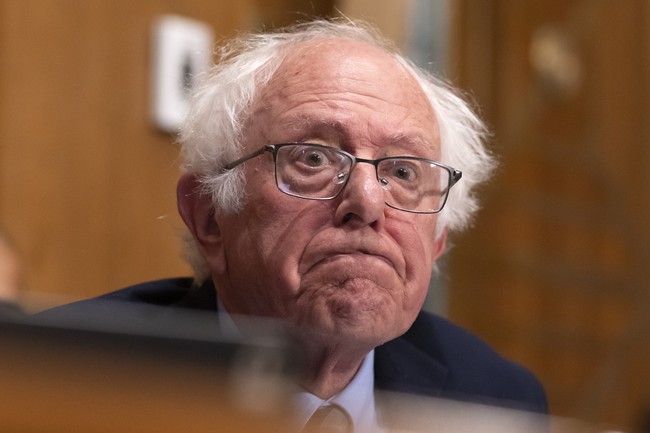
Bernie Sanders has been the face of the modern socialist surge, but even he balks at one candidate who’s openly embraced the hard-left playbook. This piece looks at why Sanders declined to back Francesca Hong in the Wisconsin governor’s race, how her record and rhetoric have played out, and what that says about the Democratic Party’s direction as the midterms approach.
Socialist-leaning candidates are getting headline attention this primary season, winning nominations and forcing voters to reckon with ideas outside the mainstream. Figures who boast endorsements from Bernie Sanders have seen fortunes change quickly, turning local contests into national spectacles. Yet endorsements are political currency, and Sanders has shown he still chooses his battles.
Sanders’ reluctance to get behind Francesca Hong stood out because he rarely refuses to support fellow progressives. He told the Pod Save America hosts he’s “not that familiar” with the Wisconsin governor’s race and framed his priority as protecting seats in the Senate and House. That answer landed oddly given Sanders’ past involvement in other statewide and local contests where he publicly backed candidates.
Public records and social media give a clearer picture of what makes Hong such a flashpoint. She has advocated for abolishing the police, shutting down jails and prisons, and questioned cultural institutions like Thanksgiving and Valentine’s Day. Those are not small policy differences; they’re sweeping cultural and legal shifts that would be radical even inside her own party.
There is a pattern here: some Democrats wink at extreme rhetoric behind softer language, while others embrace blunt demands for top-to-bottom change. Hong falls squarely into the latter camp, speaking plainly about positions many voters find unsettling. That candor may appeal to ideological purists, but it also hands opponents a clear, unvarnished target to use in a swing-state general election.
Sanders’ selective intervention suggests a strategic calculation rather than ideological purity. He’s backed mayoral hopefuls and House candidates, and he even endorsed a gubernatorial candidate in Maine earlier this year, showing he’s willing to intervene when the math or optics fit his goals. Skipping Hong signals either a belief she’s unelectable statewide or a willingness to avoid a fight he might lose.
The reaction from critics was immediate. Commentators pointed out inconsistencies, noting Sanders once supported controversial figures and has involved himself in a range of races. Yet when a self-described democratic socialist runs in a major swing state, Sanders says his attention must be elsewhere. That contrast has opened him up to charges of political convenience.
https://x.com/jonfavs/status/2085143804798218544
Sanders noted he met Hong “a couple of years ago” and called her “very, very nice.” But the Vermont progressive added he is “not that familiar” with the race to succeed term-limited Wisconsin Gov. Tony Evers (D).
“We have not gotten involved in many governors races. … My major concern right now is seeing that we have a Senate and a House that is going to stand up to [President] Trump,” the senator said.
Hong’s online footprint makes it easy for opponents to stitch together a narrative of extremism. Her social media history includes calls to abolish the U.S. Senate and to defund the police, positions she has since tried to soften. For voters who worry about law and order, economic stability, and the practicalities of governance, those are alarming policy stances.
Aligning with radicals can energize a base but alienate independents and moderate voters who decide general elections. The Wisconsin governorship is a prize for both parties, and having a nominee who openly promotes sweeping abolitionist policies hands the GOP ammunition to portray Democrats as unmoored from mainstream priorities. That dynamic likely factors into Sanders’ calculus.
Francesca Hong’s willingness to associate with polarizing personalities has only intensified scrutiny. She has appeared with controversial online figures and embraced messaging that many see as performative or extreme. In tight races, optics matter as much as policy, and those optics have the potential to swing undecided voters away from Democrats in a crucial Midwestern state.
There’s also a practical question about electability. Statewide campaigns require coalition-building across urban and rural divides, appealing to voters who value public safety, small businesses, and local traditions. A platform centered on abolishing institutions and canceling cultural touchstones struggles to win those voters over. Republican strategists will emphasize that gap hard in November.
The primary next Tuesday will show whether Wisconsin voters prefer a candidate who speaks bold reforms in plain terms or one who packages progressive goals in softer language to win a broader electorate. Either outcome will send a message about how far the Democratic Party is willing to push its agenda in an election year where control of Congress is at stake.
Add comment