
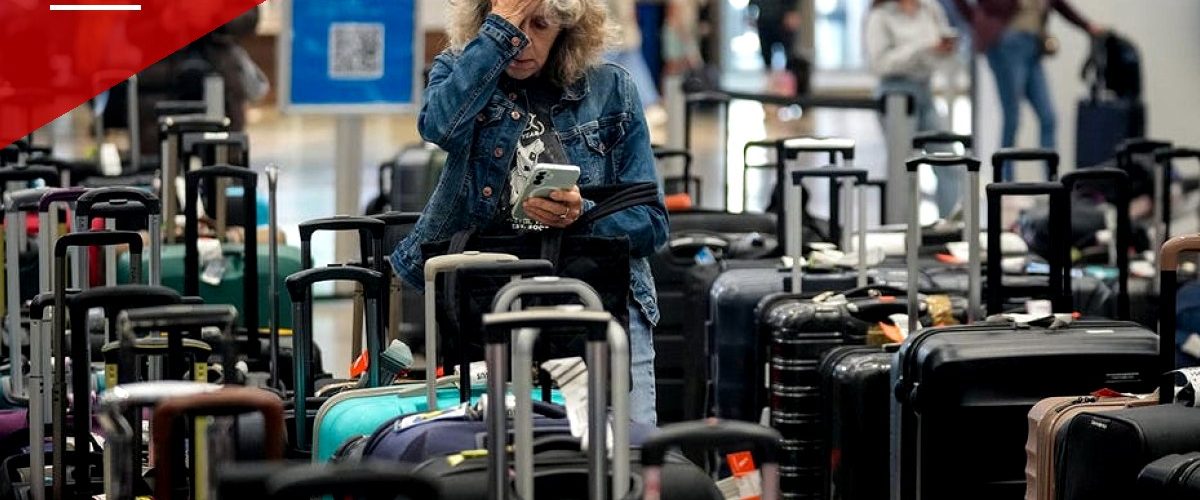
Last Friday’s nationwide Federal Aviation Administration ground stop, which halted U.S. air travel for more than four hours, left a secondary mess behind: thousands of checked bags separated from their owners.
At Austin-Bergstrom International Airport in Texas, hundreds of unclaimed bags were still sitting in the terminal as of Monday, according to the Austin American-Statesman. Airport officials say a surge of stranded luggage is typical after widespread flight disruptions, as airlines work through the backlog to reunite passengers with their belongings.
With the holiday travel season ramping up, travel advisors say there are concrete steps passengers can take now to cut the odds of a lost bag turning into a lost weekend.
Track your bag, don’t just wait
Whytney Rawls, a Florida-based travel advisor and founder of The Amara Escapes who works with Fora Travel, recommends downloading the apps for any airline you fly and turning on notifications so you can monitor updates and reach the carrier directly.
“It will help you keep everything organized and in order, especially if something goes wrong because they’re going to send the updates to that app,” Rawls said.
She also advises holding onto baggage claim receipts and tag information, and photographing them so the details are easy to pull up if a bag disappears. A tracking device such as an AirTag placed in each checked bag, she said, is “really important” for knowing where your belongings actually are.
Pack lighter, pack smarter
Rawls suggests fitting as much clothing as possible into a carry-on, using vacuum-sealed bags to save space and wearing bulky items like boots or a jacket on the plane, even when flying from somewhere warm, to free up room in checked luggage.
“That’ll get you much more space for things that you need to travel with on the plane,” she said, also recommending travel-size toiletries.
She said the extra precautions matter even more when a trip involves connecting flights.
Treat your carry-on as insurance
Cheryl Nelson, a Virginia-based FEMA-certified disaster and travel preparedness expert who founded Prepare With Cher, recently lived through the scenario firsthand. Delayed while flying out of San Francisco, she missed her Atlanta connection to Norfolk by five minutes and spent the night near the airport without her checked bag, which didn’t arrive until the next morning.
“I like to tell people to think of your carry-on as your insurance policy for a disrupted travel day,” Nelson said.
She recommends keeping medications, glasses, valuables, electronics, chargers, basic toiletries, snacks and a change of clothes in your carry-on.
“Don’t pack something in your checked bag that you absolutely need or couldn’t easily replace,” Nelson said.
Before checking a suitcase, Nelson said travelers should strip off old airline tags to avoid confusion about the bag’s destination and attach a distinctive tag or ribbon so it’s easier to spot on a crowded carousel. She also encourages building in extra time for connections, since tight layovers leave little room for delays, gate changes or long taxi times.
“Travel preparedness isn’t about expecting everything to go wrong,” Nelson said. “It’s about having a few things with you that make a stressful situation a whole lot easier when it does.”



Add comment