
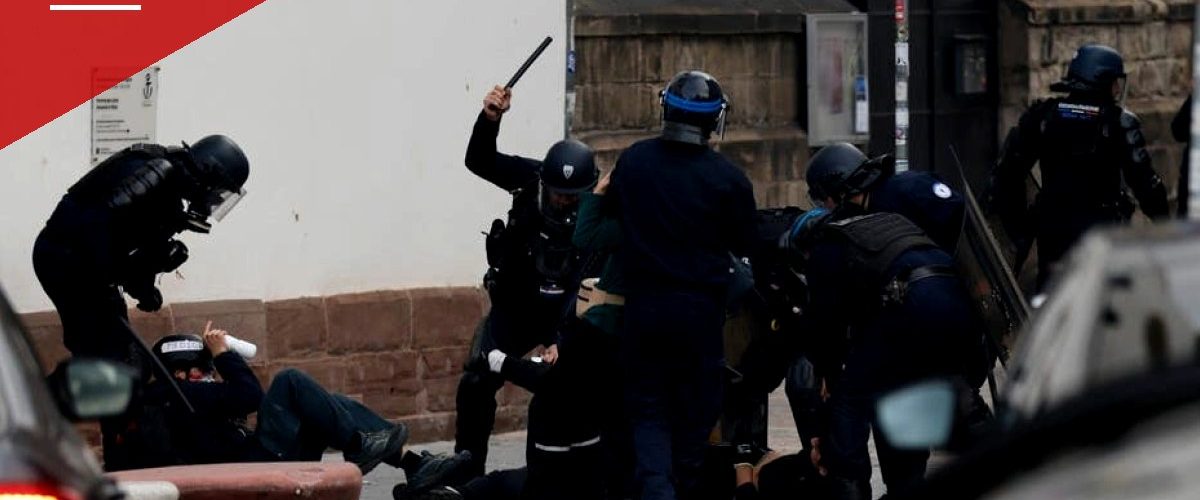
French authorities arrested 135 people Saturday as nationwide protests resumed across the country, Interior Minister Laurent Nuñez told reporters.
Most of the arrests followed preemptive police searches of protesters, Reuters reported. Officers said those detained were carrying items that could be used as weapons, including fireworks and ball bearings. Nuñez did not specify where the arrests took place.
In Paris, where tens of thousands marched, police conducted more than 3,000 checks and arrested 65 people, according to the BBC.
“Violent individuals have no place in the marches,” the Paris Police Department said in a social media post. “The objective is clear: to prevent troublemakers from joining the procession, and to ensure the safety of the demonstrators.”
Central Paris took on the look of a city bracing for trouble. Shopkeepers boarded up storefronts, museums shut their doors, and more than 20 metro stations suspended service.
Elsewhere, police used tear gas to disperse unruly crowds in Clermont-Ferrand, Grenoble, Lille and Nice, Reuters reported. In Nice, officers also deployed a water cannon against demonstrators who refused to pull back. Clashes between police and hooded youths broke out in Marseille and Lyon.
Some 70,000 police officers were deployed nationwide to contain agitators and prevent a repeat of recent unrest, which saw cars torched and the city hall building in Limoges set on fire. Last weekend alone, more than 2,700 people were arrested after protests turned into riots and looting.
A Movement That Has Broadened
The demonstrations began weeks earlier, led by high school and university students protesting teacher shortages and poor school conditions, including overcrowded classrooms and dilapidated buildings.
The movement gained momentum once major labor unions joined in, widening the protests into a broader challenge to the government’s austerity policies and growing concern over wages, pensions and the cost of living.

Add comment