
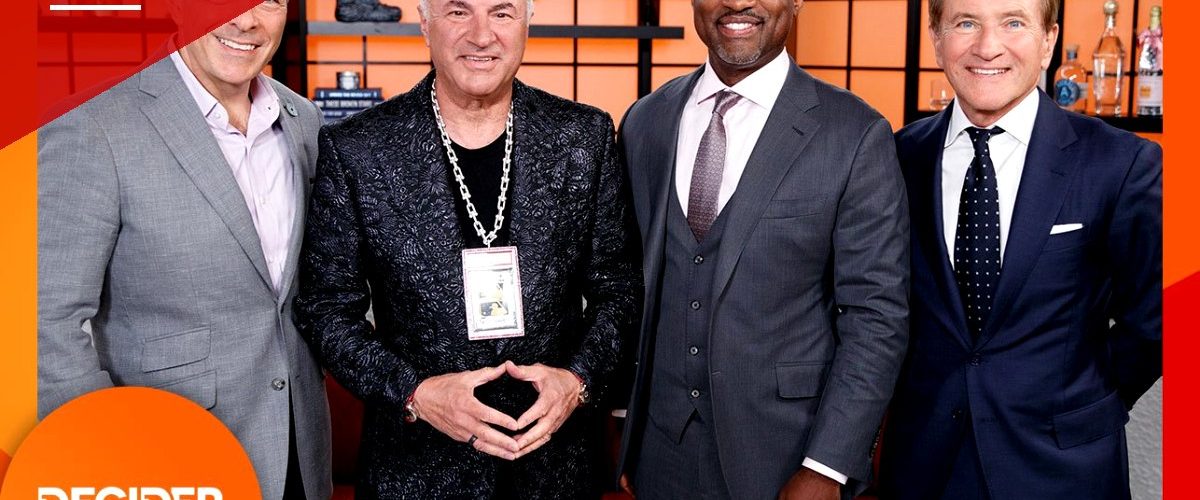
ABC’s long-running reality competition “Shark Tank” has relocated production to Atlanta for its 18th season, and the panel of investor-judges says the move is opening doors for entrepreneurs who’ve historically had little access to venture capital.
Rashaun Williams, now a permanent Shark on the series, said Georgia’s capital brings a different energy than Los Angeles or Hollywood. “Atlanta’s been the hotbed for entrepreneurship—especially for sports and entertainment—for a very long time,” Williams said. “I’m really happy that entrepreneurs from all across the country get to come there and experience Southern hospitality. You don’t feel the pressure that you feel in LA or in Hollywood. You can just lose preconceived notions about Shark Tank and about entrepreneurship and raising capital, and you can be yourself.”
Williams, who also runs a venture capital firm, said the Atlanta season surfaced pitches from entrepreneurs who typically get passed over by traditional investors. “In my venture capital world, we see the same guys from the same schools with the same CVs backing them, whose uncles gave them $2 million to start their business,” he said. “On Shark Tank, we saw a farmer from the Midwest who was selling sunflower seed oil. We saw a guy from the South Side of Chicago. It’s just all these different people. People who are looking for a new chance at life now come to Atlanta.”
The show’s pitch has always rested on the idea that ordinary Americans, with a good product and the nerve to walk onto a television soundstage, can change their lives. Robert Herjavec, a Shark since the show’s first season, said that promise still holds. “Anybody watching our show in their basement in middle America can invent a great product or a great business, end up on Shark Tank, and change their life,” Herjavec said. “It’s still very inspiring after all this time.”
Williams argued the current economy makes that access more urgent, not less. “Now is the perfect time to inspire the next generation of entrepreneurs,” he said. “People are struggling with gas prices and all those things. They don’t have access to capital or the information necessary to take their businesses or products to the next level. When they show up on Shark Tank, they have a once-in-a-lifetime opportunity to acquire all of the things that they’ve always wanted.”
A bipartisan pitch
Kevin O’Leary, who along with Herjavec has sat on the panel since Season 1, framed the show’s mission in explicitly national terms, independent of party. “We are the ambassadors of the American dream, every one of us,” O’Leary said. “The number one export of America is not energy or oil; it’s the American Dream. During these really difficult political times, we’re bipartisan. We create jobs for red or blue, Democrats or Republicans. We just love doing it.”
O’Leary also described the show as a leading indicator for consumer markets. “We’ve learned over the years that Shark Tank is two years ahead of the market,” he said. “What you see on Shark Tank now will be on shelves in about 18 to 24 months. We get a preview of what makes America hum.”
New faces, same stakes
Daniel Lubetzky, an eight-season Shark, said the show keeps evolving by rotating in high-profile guest investors, including Mr. Beast, Mindy Kaling, J.J. Watt, Steven Bartlett, and Erin and Sara Foster of “Favorite Daughter.” “We’re doing a lot more social media-forward work, and nobody does that better than Mr. Beast,” Lubetzky said.
Williams cautioned viewers not to mistake the guest panelists for mere television judges. “People look at these guest Sharks as judges, but these people are coming to write a real check for these entrepreneurs and help them scale their businesses,” he said.
Williams has also partnered with former Shark Mark Cuban and his firm, Harbinger Sports Partners, to acquire a stake in the Athletics baseball franchise. He said the broader goal is widening access to an asset class ordinary investors have rarely been able to touch. “We’re helping Americans for the first time have access to professional sports teams,” Williams said. “For a hundred years, the average American couldn’t do that. Now they can invest through a private equity fund and have access.”
Advice for entrepreneurs
Asked what matters most for anyone hoping to pitch on the show, O’Leary emphasized preparation over sentiment: “Get your pitch down. Be able to explain the opportunity in 90 seconds or less. Tell us why you’re the right person to execute on the deal, and how you can de-risk it for us. And lastly, and so importantly, know your numbers.”
Herjavec put it more bluntly. “I don’t care about your passion. I don’t give a damn what you’re passionate about because passion fades. I care what you are obsessed with because that’s what’s gonna keep you going when it gets hard.”
Williams added that for early-stage entrepreneurs without financial track records, character and traction carry more weight than spreadsheets. “Seed round evaluations don’t exist,” he said. “You don’t have the financials to value the business. If you come on Shark Tank, the way that I’m going to value your team or your business is by looking at your qualifications, how obsessed and knowledgeable you are about this business, the team you’ve been able to assemble, and what traction you’ve been able to accomplish.”


Add comment