
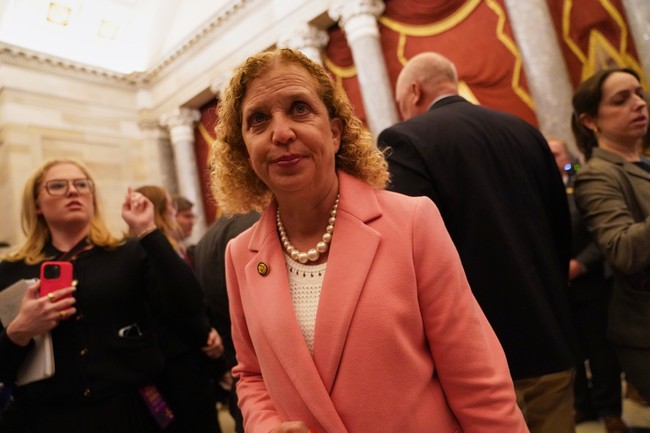
The Florida 20th District Democratic primary ended with Debbie Wasserman Schultz winning a contentious race, but the result highlights a split among Black Democratic candidates that likely handed her the victory and could shape the general election matchup against a Republican challenger.
The race drew attention because the newly redrawn district is a majority-minority seat that had previously been represented by Black Democrats, yet longtime Rep. Debbie Wasserman Schultz switched districts to run here after redistricting reshaped the lines. Her decision to move from District 25 into the 20th was driven by the maps becoming more favorable to Republicans in her old district, prompting a strategic bid to stay in Congress.
That move sparked predictable anger among the Black Democratic field, several of whom saw Wasserman Schultz as an outsider stepping into a seat typically held by a Black Democrat. At least one candidate who had recently left office entered the race, and other Black Democrats talked about trying to consolidate support to avoid splitting votes that could allow Wasserman Schultz to win.
Talk of coalescing around a single Black candidate never fully materialized, partly because of personal ambitions and strategic disagreements among the challengers. Instead of unifying, the group fractured, and the divided field diluted the anti-Wasserman Schultz vote. That division proved costly in a crowded primary where a plurality can secure victory.
Wasserman Schultz prevailed in the primary, taking advantage of that split and her name recognition within the party and the district. Her victory shows how a single, well-known candidate can win a crowded primary when opponents fail to coordinate, especially in a race where loyalties and identity politics play a major role.
https://x.com/DecisionDeskHQ/status/2089851273445028162
The post-primary numbers make the point bluntly: if the Black Democratic candidates had successfully rallied around one contender, they likely would have avoided handing the seat to Wasserman Schultz. Instead, infighting and overlapping bases of support let a seasoned incumbent slip through with a plurality, a lesson in practical politics and coalition-building.
That dynamic could have consequences beyond the primary. There is real potential for backlash among Black Democratic voters who feel the district was hijacked by an outsider, and that anger could reduce enthusiasm or turnout in the general election. Republican strategists will be watching closely to see if this primary result depresses Democratic unity and opens an opportunity.
Florida Governor Ron DeSantis’s influence on redistricting created the conditions that pushed Wasserman Schultz to change districts in the first place. Republicans engineered maps that made her old seat less secure, prompting her move and setting up this messy primary. If the general election becomes competitive, Democrats will have only themselves to blame for the fractures that made it possible.
Brent Andersen, a Republican businessman, will be the Republican nominee facing Wasserman Schultz in the general election. His presence on the ballot gives conservatives a clear target: highlight the lack of cohesion among Democrats and press voters on the redistricting angle that pushed this scramble. That strategy could resonate in a district where change and accountability are already on voters’ minds.
The primary also underscores a broader point about candidate selection and coalition discipline. When candidates with overlapping constituencies fail to strike pragmatic deals, they risk handing victory to a more established opponent. Political campaigns that manage coordination and prioritize strategic unity tend to fare better in crowded fields.
Beyond electoral mechanics, the episode will sting for Democrats who pride themselves on representing diverse communities. Seeing a seat that had typically been held by Black Democrats go to a white Democratic incumbent after redistricting and a divided field is an awkward outcome for the party. It raises questions about who speaks for the district and how the party organizes talent and ambition in critical races.
“Editor’s Note: The 2026 Midterms will determine the fate of President Trump’s America First agenda. Republicans must maintain control of both chambers of Congress.”
Help RedState continue to report on the Democrats’ radicalism and inform voters as our nation faces a crossroads. Join RedState VIP and use promo code FIGHT to receive 60% off your membership.

Add comment