
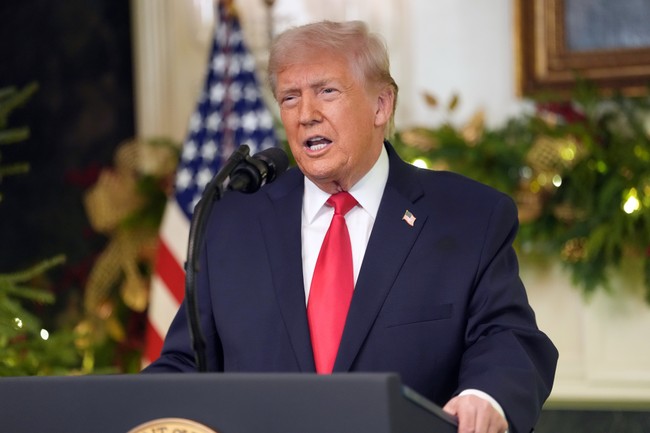
President Trump announced a sweeping agreement with nine major pharmaceutical companies that applies Most Favored Nation Pricing to a range of medicines, promising sharp price cuts for chronic conditions, diabetes, asthma, and cancer drugs and extending those prices to state Medicaid programs.
The administration says the deals with Amgen, Bristol Myers Squibb, Boehringer Ingelheim, Genentech, Gilead Sciences, GSK, Merck, Novartis, and Sanofi will align U.S. patient prices with the lowest global prices available, and the White House released specific examples of dramatic reductions. This marks another bold negotiation claim from the president, framed as a major win for affordability and for American patients ahead of the holidays.
Trump emphasized the simple principle behind the policy: give Americans the lowest price found anywhere in the world for the covered medicines. The approach is presented as a direct confrontation with the high domestic prices that persisted under prior administrations, with the administration arguing this levels the playing field for patients and taxpayers.
Officials highlighted concrete savings for individual drugs to show how the effort works in practice, pointing to large percentage drops in retail costs when purchased through the administration’s designated channel. The examples include steep reductions for cholesterol, diabetes, flu, asthma, and blood thinner medications, and the announcement stresses this will affect millions who rely on regular prescriptions.
Here are some of the specific price changes the administration released as examples: Amgen’s Repatha would fall from $573 to $239; Boehringer Ingelheim’s Jentadeuto would drop from $525 to $55; Genentech’s Xofluza would change from $168 to $50; GSK’s Advair Diskus 500/50 would go from $265 to $89; Merck’s Januvia would decline from $330 to $100; and Sanofi’s Plavix would be cut from $756 to $16 while Sanofi insulin products were listed at $35 per month. Presenting numbers helps make the case that this is not abstract policy but concrete savings that patients can expect to see.
“As of today, 14 out of the 17 largest pharmaceutical companies, but they’ve all agreed, have now agreed to drastically lower drug prices for their American patients, for the American people and patients. This represent the greatest victory for patient affordability in the history of American healthcare by far.” That sentence from the president remains central to how the White House is selling the initiative and underscores the administration’s confidence in its negotiating leverage. Officials are using bold language to frame the deals as historic and transformative.
The president added that “every single American will benefit. So, this is the biggest thing ever to happen on drug pricing and on healthcare.” That direct claim speaks to the political messaging strategy: present policy as universal relief and frame the administration as delivering results where predecessors failed. It also positions the agreement as a signature achievement heading into a politically charged season.
To show popular and bipartisan appeal, Health and Human Services Secretary Robert F. Kennedy Jr. relayed a personal anecdote about his son, calling him a “very, very, left-wing Democrat” who congratulated his father on the outcome. The secretary quoted the call as high praise for an achievement that other administrations and candidates had promised but not delivered, using the anecdote to reinforce the deals’ significance.
“He called me, and he said, ‘Dad. I want to tell you how proud I am about this. This is the best achievement that could happen to our country.’” Secretary Kennedy described it as a near-miracle for affordability, insisting that nothing before had matched this level of progress for patients. That level of praise from an unexpectedly placed source is being used to amplify the narrative of bipartisan astonishment.
“I would say this is a miracle. Nobody had done anything for affordability greater than this,” Sec. Kennedy added. The administration credits persistent pressure from the president and his team for securing the agreements, with officials saying relentless follow-up was crucial to getting manufacturers to the table. That emphasis on tenacity feeds into the larger theme of Trump-style dealmaking presented throughout the announcement.
The White House statement also says the agreement will allow every state Medicaid program access to these Most Favored Nation prices for products from the nine companies, projecting billions in savings for state budgets and federal spending. The policy shift is framed not only as a household win but also as a fiscal move to strengthen Medicaid for vulnerable populations while reducing long-term government outlays.
The political framing is unmistakable: the administration casts this as delivering where others promised, spinning drug pricing wins into proof of effective leadership. Supporters argue it will reduce out-of-pocket costs for patients and ease pressure on public programs, while critics will likely challenge details of implementation and sustainability in the months ahead.
“So much winning! What a great present for the American people.” That closing line captures the tone the administration wants to strike: confident, triumphant, and focused on tangible benefits for voters during a high-profile policy rollout. The announcement is presented as a signature policy moment intended to reshape the narrative on health care affordability.
Editor’s Note: President Trump is leading America into the “Golden Age” as Democrats try desperately to stop it.

Add comment