
This article tells the story of a Steps for Life 5K event in Boca Raton where two blood cancer survivors met the people whose stem-cell donations saved them, highlights the progress in cancer care through immunotherapy and stem-cell transplants, and shares the personal reactions of donors and recipients at a public celebration of the Gift of Life registry.
Feel-Good Friday: Cancer Survivors Meet Stem-Cell Donors at 5K Run/Walk
Running for a cause is simple: you show up, lace up, and use your effort to push a mission forward. Over the years, community runs have raised awareness and funds for cancer research, and the Steps for Life 5K is one of those events focused on expanding the stem cell and bone marrow registry. The event has grown since its start and now includes in-person runs across several cities plus a virtual option for those who want to support from afar.
Medical advances like immunotherapy and stem-cell replacement have shifted the odds for many facing blood cancers. Treatments that once offered only a short reprieve can now produce long-term survival for some patients, turning a bleak prognosis into a fight with real hope. Stories of people who received life-saving donations underscore how donor registries and transplants can alter families’ futures.
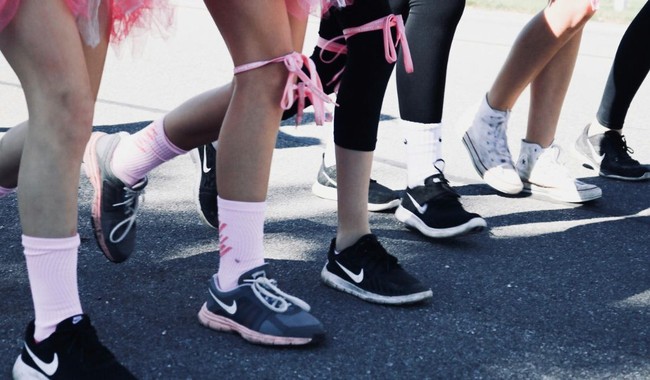
This year’s Florida Steps for Life 5K in Boca Raton marked the event’s 15th anniversary and drew roughly 1,000 runners and walkers who came out to support the Gift of Life registry. The gathering wasn’t just about fundraising; it provided a stage for two survivors to meet the strangers who ultimately gave them a second chance at life. Those personal encounters are what turn statistics into human stories.
Roxanne Lockhart and Caitlyn Grewe, both wearing orange shirts, were filled with emotion as they prepared to meet their donors in front of more than 1,000 people gathered for the 5K event celebrating the Gift of Life registry.
“A lot of emotions, nervousness, excitement,” Grewe said before the meeting.
Lockhart described feeling “kind of giddy” about the encounter.
Roxanne Lockhart, a leukemia survivor, met the doctor whose swab sample from medical school eventually matched Lockhart when she needed a transplant. That donor, now a sports medicine physician, had provided the sample years earlier and later learned through the registry that she could help someone in need. The timing was remarkable: the donor had just become a parent when she discovered she was a match, making the week one of both personal joy and lifesaving action.
“As soon as I thought about it and realized I could help save someone’s life, I was super excited and ready to come in and do whatever it meant, whatever it would take,” von Rickenbach said.
The timing proved remarkable for von Rickenbach, who had just given birth to a son when she learned she was a stem cell donor match, essentially giving life to two people in the same week.
Caitlyn Grewe’s recovery also traced back to a stranger’s generosity: Brianna Marr, a firefighter paramedic, was her donor and helped restore Grewe’s health. The emotional weight of that meeting was clear when Grewe said, “Words just don’t even express the gratitude I have for Brianna.” That kind of response is common when people meet the person whose donation literally rewrote their family’s future.
Events like the Steps for Life 5K do more than raise money. They spotlight what it means to join a donor registry, explain the donation process, and put names and faces to otherwise abstract medical procedures. For many attendees, seeing survivors and donors embrace gives practical shape to the idea that one small act—swabbing a cheek, signing up, showing up—can lead to a lifesaving match years later.
Organizers reported the event raised nearly its goal, with a substantial amount collected to strengthen outreach and registry growth. Those funds support recruitment efforts that increase the chance of finding matches for patients across diverse ethnic and racial backgrounds. The more varied the registry becomes, the better the odds for patients who need a compatible stem-cell donor.
Witnessing donors and recipients meet in public also offers a teachable moment about the realities of donating stem cells. Modern donation methods and the support available for donors make the process less intimidating than many expect, and local spotlights from organizers and news teams help demystify the steps involved. That clarity encourages more people to consider registering and potentially changing someone’s life.
The Boca Raton gathering was a reminder that community events can catalyze real medical outcomes. When neighbors sign up, share their stories, and support registry drives, they build a stronger, more hopeful pathway for people fighting blood cancers. Personal meetings between donors and recipients turn medical science into human connection, and those moments are what keep many volunteers and supporters coming back year after year.
WATCH:


Add comment