
The Weekly briefing covers five stories that dominated conversations this week: organized anti-ICE activity in Minnesota, a public harassment flop in California, rising separatist sentiment in Canada, a sharp public takedown of Tim Walz by former President Trump, and the deepening crisis in California’s oil refining. Each item highlights law, order, and governance failures that matter to voters and communities, and the quotes from the original reporting are preserved exactly where they appeared.
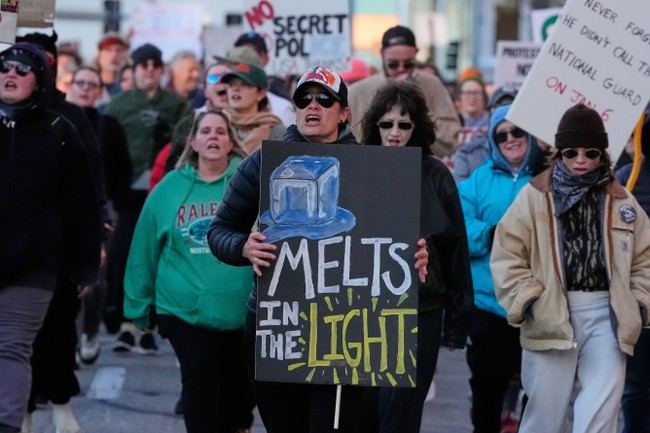
The first story digs into Signal chat groups tied to anti-ICE actions in Minnesota and the broader network that appears to support them. Reporting shows the chats were organized by geography, with daily rotation and deletion practices designed to frustrate oversight. That degree of coordination raises real questions about elected officials and activist networks working together to impede federal enforcement.
We’re learning a lot more about the people who were in the anti-ICE Signal chat groups that independent journalist Cam Higby infiltrated in Minnesota, the organization of the group, its donors, and the significance of the address at which Alex Pretti was obstructing federal officers. There’s far too much information to detail completely in this piece, but even just from an overview, it’s clear that there is an organized insurrection underway, led by several elected officials in Minnesota and aided by alleged journalists.
Let’s hit the highlights:
Organization
The groups are highly sophisticated. They’re set up geographically; within the City of Minneapolis, they’re generally divided by City Council district, but also cover St. Paul, Bloomington, and other suburbs. They start a new chat every day and delete the prior day’s chat. Because of Signal’s encryption, it would be exceedingly difficult for the deleted messages to be recovered unless, say, participants were recording those messages prior to deletion. Signal also has a “no screenshots” function, which undoubtedly was enabled on these chats, so the messages would have to be recorded the way Higby did – by recording using a separate phone.
The second piece describes a public confrontation in California that didn’t go as protesters planned. Organizers targeted men they thought were ICE agents at a restaurant, but the men were identified as federal air marshals or TSA workers. The incident underscores how performative harassment can backfire and inflame communities for no substantive reason.
Turns out, of course, the men weren’t ICE agents. Fox 11 identified them as TSA workers; other local news clarified that, specifically, they were federal air marshals.
Either way, the anti-ICE crew struck out again. When Fox’s Matthew Seedorff tried to plumb how they felt about that, they didn’t want to talk with him because he was with Fox, and they knew they screwed up. That was pretty funny.
But this kind of harassment just isn’t right, either for ICE agents or anyone else. This isn’t “resisting” anything except reality. If you took away the leftist “it’s ICE” excuse, who would really argue that it’s all just cool if you follow people, blow whistles in their ears, scream curse words at them? They think they can do this because of their political opinion. It’s bizarrely delusional.
Next up is a report on separatist sentiment in Canada and why it matters to American interests. Polling shows sizable minority support in Alberta and Quebec for independence under current conditions, and the analysis warns that trade and geopolitical shifts could push those numbers higher. The piece frames a potential breakup of Canada as an outcome driven by economic and diplomatic choices, including the influence of global powers.
That article argues a fracturing Canada could carry long-term strategic consequences, and suggests that certain policy directions risk weakening continental stability. The take here is explicitly political: leadership choices that alienate allies or favor adversaries can produce unintended, far-reaching effects. Voters concerned with trade, security, and immigration should pay attention to how foreign policy and economic ties evolve.
The fourth item reports a blunt exchange in which former President Trump mocked Tim Walz for invoking Civil War imagery, framing it as further evidence of poor judgment. The coverage reproduces Trump’s exact lines and frames the incident as another example of why law and order themes matter in public debate. The tone is critical of Walz and supportive of firm responses to political rhetoric that risks escalation.
“Wow. Does he know what Fort Sumter was?” Trump asked. “Or do you think somebody wrote it out for him?” He went on to say that he was elected on law and order, and that was what all of this was about.
That’s a hilarious takedown of Walz. But it’s true, Walz is not very bright.
Does Tim know what happened in that scenario? Maybe that’s not what he wants to be implying or inciting. Yet he’s already shown he wants to keep ratcheting up the temperature when he makes Civil War references.
Tim knows he’s in big trouble, between the massive fraud and the chaos he’s helped to incite with the anti-ICE people. If he or they go full Civil War, it would not end well for them. They’re already treading all over the insurrection line at this point; he shouldn’t want to be trying to confirm that.
Finally, the briefing covers California’s collapsed refining system and its local consequences. The reporting calls out the state’s failure to balance energy reliability, affordability, environmental goals, and national security. Residents in hard-hit districts are left dealing with the fallout while leaders keep promising progress without realistic execution.
Competent leadership starts with an honest accounting of refining capacity and geographic concentration. It treats energy reliability, affordability, environmental protection, and national security as linked responsibilities.
Right now, California does none of this.
Residents of AD-66 live with the infrastructure. They bear the environmental risk. They absorb the economic consequences. And they are told disruption is the price of progress, even as the state fails to manage that disruption responsibly.
They did not ask to become ground zero for California’s energy contradictions. But they have. The refining reckoning has arrived. California can continue mistaking aspiration for execution, or it can start governing like a state that understands how systems work.
These stories together highlight themes of accountability, law, and public safety, and they point to political consequences for officials who ignore those responsibilities. Voters should note patterns where governance breaks down and where rhetoric crosses into real-world risk. The week’s coverage prioritizes facts and direct quotes to let readers draw informed conclusions based on the evidence presented.



I just came across this amazing way to earn $6,000-$8,000 a m0nth 0nline! No selling, no struggle—just a simple system that anyone can follow. Kelly Richards did it, and so can you! Don’t miss out on this life-changing 0pportunity. check it out by Limited time only – grab it before it’s gone!” ..
Here is I started_______ PayAtHome1.Com