
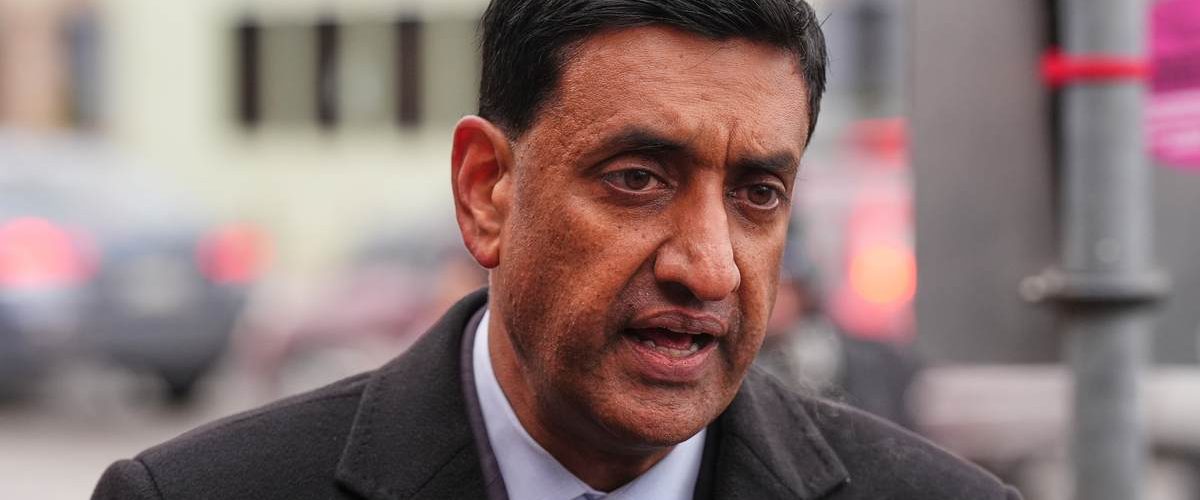
This article examines reports tying a civic group to alleged Chinese influence operations, the group’s continuing role placing interns in U.S. political offices, and why Rep. Ro Khanna’s past association with a group leader now raises questions about his suitability to serve as a top Democrat on the congressional China oversight panel.
Recent reporting says an accused Chinese operative, Fang Fang, used a chapter of The Asian Pacific American Public Affairs to reach American politicians, and that organization still places interns into political offices. That alone would be concerning, because a group that funnels people into policymaking circles should be above reproach. The piece details connections between the group’s current leaders and entities U.S. officials consider part of the CCP’s influence apparatus.
A New York Post investigation says the organization’s national chair, Henry Yin, has associations that align with United Front activity and a history of travel to China amplified by party-controlled media. A 2018 U.S.-China Economic and Security Review Commission report described United Front work as the CCP’s effort “to co-opt and neutralize sources of potential opposition” to its “policies and authority,” including among overseas Chinese communities. Those descriptions are not partisan talking points; they are precisely the sort of documented influence operations this country needs to guard against.
Rep. Ro Khanna publicly named Yin his “senior adviser” in 2019, with a social post that stated, “Henry will serve as my Senior Advisor on Foreign Trade and Economic Development.” That endorsement matters because Khanna is the ranking Democrat on the House Select Committee on Strategic Competition between the United States and the Chinese Communist Party. His role should demand clear distance from anyone appearing to be tied to influence efforts originating in Beijing.
After questions surfaced about Yin’s ties, a Khanna spokeswoman sought to minimize the relationship and said Yin “lives in Fremont and is a respected community member, but has never held a formal role with the Congressman.” That pushback fails to erase the public association and the documented instances where Yin’s name appeared connected to Khanna. Voters deserve plain answers, not spin, especially when it concerns national security and foreign influence.
The organization at issue reportedly still places interns in lawmakers’ offices, and the Post says that other Democrats have accepted internships, awards, or hosted the group’s people. Even if those staffers and officials are innocent of wrongdoing, the possibility that any pipeline into American politics is connected to United Front networks should trigger immediate scrutiny. Influence is not always criminal, but it can still erode the integrity of institutions.
Fang Fang’s alleged conduct is particularly alarming. She has been accused of targeting a former congressman and used civic channels to ingratiate herself with elected officials. The reporting notes she was able to get an intern placed in a congressional office at one point and had a sexual relationship with the lawmaker reportedly central to her access. That pattern illustrates how soft influence and personal relationships can be leveraged into political access.
The Justice Department assembled significant evidence about Fang’s activities but did not prosecute her after she returned to China, according to the reporting. FBI material also suggested campaign-finance questions and other troubling interactions that merited serious investigation. The outcome — no prosecution — raises hard questions about whether U.S. institutions moved aggressively enough to shut down a potential foreign influence operation.
https://x.com/nypost/status/2095090168189407426
Yin’s public profile includes leadership roles promoted as part of the overseas-Chinese community, and his travel to China as head of delegations drew coverage in state-controlled outlets. Official overseas-Chinese affairs accounts have called him an “overseas Chinese leader” in California and Silicon Valley. When a community figure appears in such reporting, elected officials who associate with him should disclose the nature and limits of that relationship to their constituents.
Watchdogs argue anyone who provides a pipeline into political offices and has ties to Beijing-aligned activity should be treated as a live influence risk. That is prudent advice, not partisan rhetoric. The House committee Khanna serves on is tasked with policing CCP influence in American politics, business, and technology, and the public should expect the committee’s top members to exemplify the caution they preach.
It’s worth noting that none of the aides and officials mentioned in the reporting have been accused of espionage or wrongdoing. But prudence requires clear separation from organizations or leaders whose connections can be traced to United Front networks. Elected leaders who fail to maintain that separation invite doubt about their judgment and the security of the institutions they represent.


Add comment