
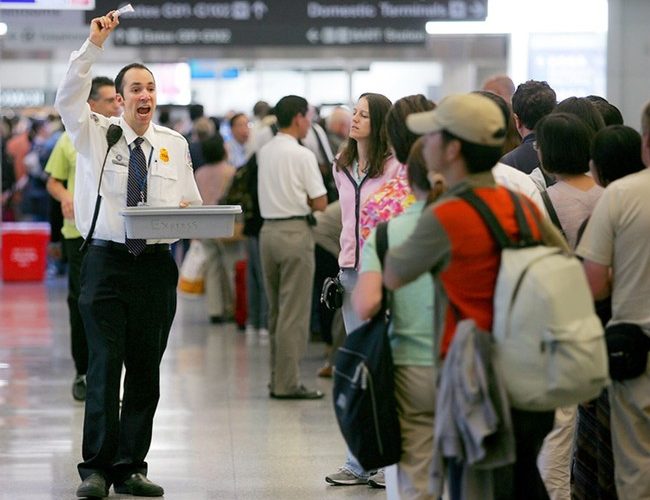
Evita Duffy-Alfonso, daughter of Transportation Secretary Sean Duffy, aired a travel complaint about a pat-down and TSA treatment that quickly drew attention online, asked hard questions about screenings and private alternatives, and suggested abolishing the TSA; this article lays out the incident, her criticisms, quoted remarks, and the broader debate around airport security and passenger dignity.
Evita described a rough morning at airport security that left her frustrated and vocal on social media about the behavior of some agents. She called out what she called “rude” and “handsy” tactics during screening and captured the irritation many travelers feel when routine trips turn humiliating. Her account speaks to a familiar tension: balancing safety with a traveler’s sense of personal respect and privacy.
She directly questioned the necessity and consistency of the screening process in a message that resonated with parents, pregnant travelers, and anyone who’s ever waited in a long line. Evita’s experience sparked a broader conversation about discretion, training, and when invasive procedures like pat-downs are chosen over less intrusive alternatives. Those details matter because they shape how people feel about government checkpoints that touch on personal privacy.
Evita’s post included this exact quote: “The agents were passive-aggressive, rude, and tried to pressure me and another pregnant woman into just walking through the scanner because it’s “safe.”” That sentence stayed word-for-word in her social posts and became a focal point for critics and supporters alike. It highlights a complaint about pressure tactics and the uneven application of screening rules across different passengers.
She went on to describe what she called an “absurdly invasive pat-down” that nearly caused her to miss her flight, and she raised a pointed concern about private companies offering expedited screening for a fee. Her message critiqued the idea that convenience can be bought, especially when that convenience requires surrendering biometric data to a private vendor. That contrast — pay-to-skip versus being subject to invasive screening — is central to her argument about fairness and liberty.
In a follow-up she wrote, “After finally getting the absurdly invasive pat-down, I barely made my flight. All this for an unconstitutional agency that isn’t even good at its job. Perhaps things would have gone more smoothly if I’d handed over my biometric data to a random private company (CLEAR). Then I could enjoy the special privilege of waiting in a shorter line to be treated like a terrorist in my own country. Is this freedom? Travel, brought to you by George Orwell—and the privilege of convenience based solely on your willingness to surrender biometric data and submit to radiation exposure?” That quote was posted intact and reflects her broader constitutional and privacy objections.
Her frustration culminated in a bold suggestion: eliminate the Transportation Security Administration entirely. She declared that “The “golden age of transportation” cannot begin until the TSA is gone.” For many conservatives, questioning federal agencies that carry out intrusive, often arbitrary routines is a natural stance; for others, the idea raises immediate concerns about how to preserve safety on mass transit without federal oversight.
Evita tagged national figures in parts of her social commentary, and in one message she used the phrase “violates the Fourth Amendment and is therefore unconstitutional. Pls abolish.” That passage became a rallying cry for people who believe the balance has tipped too far toward state power and away from individual rights. The exchange highlighted how family members of public officials can push policy debates into the spotlight in blunt terms.
Observers wondered whether her father, Secretary Sean Duffy, would respond publicly, though the TSA reports to the Department of Homeland Security rather than Transportation in administrative terms. That separation matters when assigning responsibility for policy changes and personnel practices. It also means that calls for reform typically focus on DHS leadership and congressional oversight rather than a single cabinet member’s office.
Even while criticizing TSA practices, Evita affirmed support for broader administration goals on national security in another message where she wrote, “To be clear, I am 100% behind all that @POTUS & @DHS has done to keep out terrorists and illegals, especially at the border. In fact, President Trump & @Sec_Noem aren’t getting enough credit for achieving zero illegal border crossings and stopping deranged terrorists from coming into the U.S.,” This statement kept her stance pro-administration while differentiating between policy aims and screening tactics, and it was posted exactly as shown in her social feed.
Recent DHS changes have touched on passenger convenience, such as the removal of the shoe-removal requirement announced earlier in the year, which many travelers welcomed. That policy shift shows that incremental reforms can reduce humiliation without necessarily compromising security, and it offers a model for other adjustments. The path forward likely requires continued improvements to technology, clearer screening protocols, and better agent training that preserves both safety and dignity.
The episode illustrates a recurring political and practical debate: how do you keep the public safe while avoiding unnecessary invasions of privacy and disrespectful treatment? Evita’s experience, and the reactions it provoked, make that question immediate again and force officials to reckon with how policies and procedures affect real people. That pressure could produce targeted fixes, or it could fuel calls for broader structural changes to how we secure travel in this country.

Add comment