
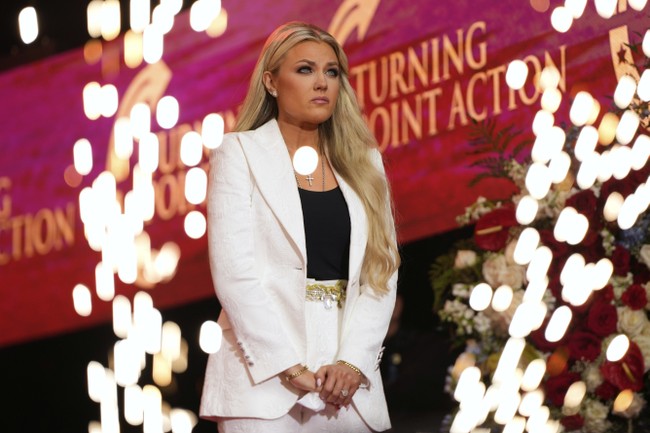
The DealBook Summit featured a range of moments, but it ended with a heavy, personal reflection from Turning Point CEO Erika Kirk about what she sees as the deeper cause of violence in America after her husband was murdered. Kirk, still coping with the assassination, argued the country faces a soul and mental health crisis rather than merely a problem with firearms. Her comments touched on faith, grief, and the need to talk about brain and emotional health in public life. Several other speakers drew attention during the event, but Kirk’s remarks closed the day on a sober, urgent note.
The summit had plenty of lighter and sharper moments earlier, yet the close of the event turned inward and serious. Erika Kirk, who lost her husband in a tragic act of domestic terrorism, spoke plainly about what she believes lies beneath acts of violence. Her perspective came from personal loss and long-standing engagement with students and campus life through advocacy work.
When asked about gun violence, she answered with a focus on mental and emotional health rather than policy posturing or headline-grabbing fixes. She emphasized that supporting the Second Amendment and recognizing the reality of violence are not mutually exclusive positions. That framing challenges the usual polarized debate and pushes toward addressing root causes of violent acts.
“It’s a thoughtful question, and I wouldn’t wish upon anyone what I have been through, and I support the Second Amendment, as well. I do,” Erika Kirk said. “But there’s a bigger and much deeper conversation to all of that.”
“And it’s interesting, because if you go on a campus and you ask a counselor, ‘What is the number one or number two thing that these students are facing?’ They will always say, ‘Mental health, anxiety, depression.’ Those are usually the top three,” the widow added.
Kirk explained that her late husband cared deeply about “brain health” and how personal habits affect emotional stability. She highlighted sleep, nutrition, and self-care as parts of a broader conversation that often gets lost. In her telling, these everyday choices can be part of preventing someone from reaching a breaking point where violence feels like an option.
She did not shy away from hard statements about human responsibility and cultural trends. “It’s not guns that are shooting people, it’s troubled people,” she said in subsequent remarks, directing attention where she believes meaningful solutions must start. That line pushes against narratives that reduce the issue to a single policy lever and insists on a more complete view of cause and effect.
What Charlie knew — and he was trying to explain to students on campus — was that you have to understand that brain health is so important.
How you eat, how you take care of yourself, how you nourish yourself, how you rest. And, to him, it was much more deeper and intricate.
What I’ve realized through all of this is that you can have individuals that will always resort to violence.
Kirk warned that a part of our culture appears to accept violence as an answer when someone disagrees with them or refuses to listen. That observation is blunt and uncomfortable but worth confronting in any honest conversation about safety. She framed such behavior as a failure of character and community rather than a mere policy gap.
And what I’m afraid of, is that we are living in a day and age where they think violence is the solution to them not wanting to hear a different point of view.
That’s not a gun problem. That’s a deeply human problem. That is a soul problem. That is a mental, that is a very deeper issue.
Her words landed as both a personal testimony and a public diagnosis, asking leaders and citizens to tackle mental health, social isolation, and the cultural forces that normalize aggression. That direction calls for community-based approaches, campus support systems, and cultural reinforcement of civility and resilience. The end goal, from her perspective, is preventing future tragedies by strengthening people before they snap.
Following this summit appearance, Kirk is scheduled to join a public conversation later this month to continue discussing grief and political violence. That conversation will likely dig further into how communities and institutions can better identify and support people at risk of harming themselves or others. For many listening, her message reframes the argument about safety into one about restoration and character as much as policy.
Watch:
Here’s the entire DealBook Summit segment:



Add comment