
The new survey showing roughly one-third of Democrats identifying as democratic socialists is a wake-up call about where the party is heading, how that shifts voter sentiment, and why Republicans should be blunt about the consequences for national politics.
We keep hearing that the Democratic Party is moving left, but this poll makes it concrete: a sizable chunk of the party now embraces democratic socialism, and they are politically active. That makes them loud influencers inside the party and a defining faction in contested primaries. For Republicans, this is not just an abstract debate; it is a clear line voters can see and respond to.
The CNN poll figure is striking because it shows size and momentum, not just a handful of activists. About a third of Democrats identify as democratic socialists, according to a new CNN poll conducted by SSRS, showing the growing influence of the party’s progressive wing. While they make up the minority of the party, the survey found that they are among Democrats’ most loyal supporters and are more likely than other Democrats to favor sweeping changes to party leadership and direction.
That concentration of enthusiasm matters in ways casual observers might miss, because motivated voters decide primaries and push party platforms. They also reported higher levels of enthusiasm ahead of this year’s midterm elections. Among respondents who are registered voters, 66 percent of democratic socialists said they are extremely motivated to vote, compared with 57 percent of other Democrats. The emerging subset is also more likely to support changes to the party’s current leadership, nominating younger candidates and moving the party further to the left on policy issues.
Outside the party, most Americans are not sold on socialism; in another recent poll, a majority of voters said socialism has no beneficial beliefs. In other words, Democrats are tilting toward ideas the broader electorate rejects. That mismatch is dangerous politically because it hands Republicans a simple contrast: mainstream, common-sense policy versus a radical direction that most voters distrust.
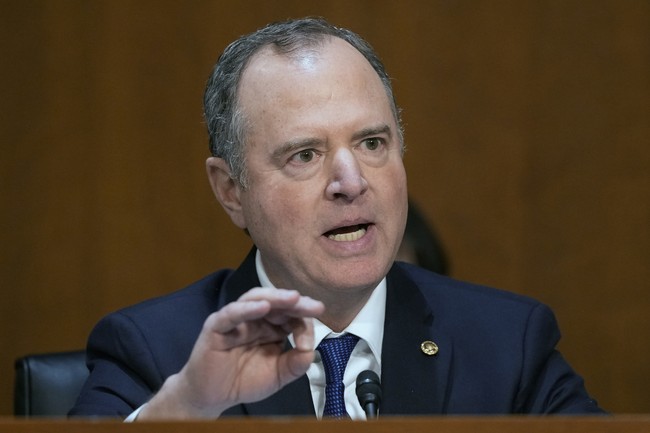
On cable news, Senator Adam Schiff was asked whether he accepts his party’s leftward drift, and his answer exposed an internal contradiction. “Are you on board with it?” she asked him. “Do you accept that this is where your party is going, and are you good with it?”
His response was revealing and blunt: “I would rather be in that big tent in the majority than be a smaller party that is stuck forever in the minority.” That statement tries to paper over a real dilemma: embracing radical ideas to satisfy a faction risks alienating the voters needed to win nationwide majorities. Republicans should highlight that trade-off rather than pretending it does not exist.
Political reality matters: you can’t win general elections by catering mostly to the most ideologically intense activists if the larger electorate disagrees. Because those democratic socialist voters are energized, they have outsized influence on nominations and messaging, and that tilts the whole party leftward. It’s a strategy that can deliver primary wins but lose general-election appeal.
Republicans should be strategic and factual when pointing this out, showing how the policy prescriptions associated with democratic socialism differ from mainstream American preferences. Focus on the specific outcomes voters care about, like economic growth, public safety, and personal freedom, and contrast them with ambitious plans that often imply higher taxes, expanded government control, and limits on choice.
There are political opportunities in a clear, consistent message: when one party moves toward an ideological edge, the other party can frame that shift as a choice between practical governance and risky experiments. The public already leans skeptical of socialism, and Republicans can use that skepticism to define the fall campaign in terms Americans recognize and care about.
Part of that effort should include showing concrete examples of what this ideology looks like in practice, particularly when national or local officials embrace policies that voters find unpopular. Video clips, debate moments, and public statements from influential activists make the abstract tangible and drive the point home to undecided or moderate voters.
At the same time, Republicans must explain what they will deliver: specific, achievable policies that improve everyday life without radical restructuring. That combination — contrast the Democrats’ leftward push and offer clear alternatives — is the clearest path to persuading voters concerned about direction and results.
Finally, the political lesson is simple: the direction of a major party matters. When a party embraces a vocal, organized faction, the consequences reach beyond primaries and spill into national elections. Republicans should use the evidence from these polls to tell a straightforward story about the choice facing voters in the coming contests.
https://x.com/RNCResearch/status/2082978356320993728

Add comment