
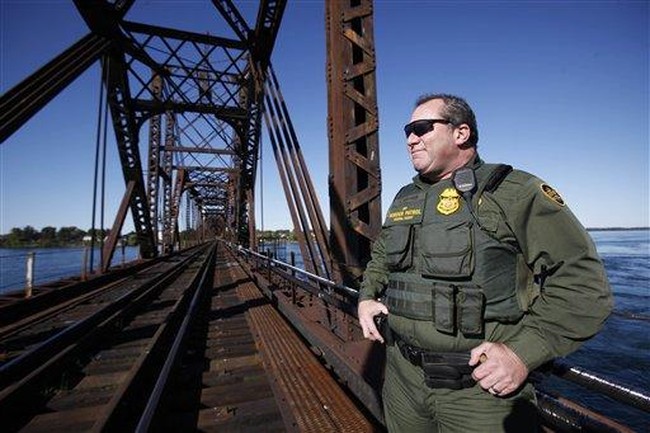
The piece examines how U.S. Customs and Border Patrol uses Automated License Plate Recognition technology, why civil libertarians and left-leaning activists object, and how local agencies and vendors are reacting amid fears of data sharing and political interference. It lays out real-world checkpoint experiences, the operational benefits of ALPR for tracking traffickers and stolen vehicles, and the tensions between public safety and privacy, all from a viewpoint that supports vigorous border enforcement. Embedded reactions from city officials and community pauses on vendor programs show the political fight playing out at the local level. The narrative argues that enforcement agencies must keep tools that work while addressing legitimate oversight concerns.
The Associated Press reported on CBP’s use of Automated License Plate Recognition, and the story has stirred a lot of predictable outrage from anti-enforcement activists. ALPR has been around for decades and its capabilities have improved, making it more useful for stopping drug and human trafficking and for finding stolen vehicles. Conservatives see this technology as a necessary part of modern enforcement that helps protect citizens and support arrest and deportation operations. Critics paint the use of ALPR as intrusive surveillance aimed at ordinary Americans rather than a targeted law enforcement tool.
Some states introduced bills to limit ALPR use, but those measures failed to advance in most legislatures this year. High-profile vetoes and lawsuits at the state level have only added fuel to the fire, with local officials and state leaders trading accusations about politics versus public safety. One mayor captured the frustration: “This isn’t about privacy; it’s about politics.” That blunt line framed the clash as local officials defending their communities against state-driven agendas that reduce law enforcement effectiveness.
The AP framed CBP’s program as secretive and expansive, claiming it monitors millions of American drivers to flag suspicious travel. That description ignores public documents and plain notice about how ALPR is deployed at checkpoints and border crossings. The Department of Homeland Security and vendors have explained how the systems operate for years, and the tech’s role in inspections is hardly hidden. What some call secrecy, others call operational security necessary to prevent bad actors from gaming the system.
The U.S. Border Patrol is monitoring millions of American drivers nationwide in a secretive program to identify and detain people whose travel patterns it deems suspicious, The Associated Press has found.
At formal CBP checkpoints the process is straightforward: cameras capture front and rear plates and the system reduces manual entry so agents can focus on the vehicle and occupants. In practice, many drivers see a quick check and move on; in other cases, the data points investigators to suspicious patterns that merit closer attention. For those whose plates or travel match intelligence, a routine stop can lead to searches and arrests that otherwise might never have occurred. That operational efficiency is exactly what law enforcement needs to combat transnational crime.
Once limited to policing the nation’s boundaries, the Border Patrol has built a surveillance system stretching into the country’s interior that can monitor ordinary Americans’ daily actions and connections for anomalies instead of simply targeting wanted suspects. Started about a decade ago to fight illegal border-related activities and the trafficking of both drugs and people, it has expanded over the past five years.
The Border Patrol has recently grown even more powerful through collaborations with other agencies, drawing information from license plate readers nationwide run by the Drug Enforcement Administration, private companies and, increasingly, local law enforcement programs funded through federal grants. Texas law enforcement agencies have asked Border Patrol to use facial recognition to identify drivers, documents show.
Local governments have reacted by pausing or reevaluating vendor partnerships after discovering unauthorized access paths into databases. Municipal leaders defensively frame these pauses as steps to restore public trust while pointing to the technology’s concrete benefits in solving crimes. Police chiefs and mayors report that ALPR systems have produced hundreds of alerts for stolen plates and vehicles, and have helped recover property and locate missing persons. Those public safety wins are hard to dismiss in communities hit by crime spikes.
Claims of “illegal access” are often tied to interference with state sanctuary rules that limit cooperation with federal immigration authorities. Where local law restricts coordination, any out-of-state searches that involve immigration enforcement become highly controversial. Critics treat such incidents as proof the system is being abused; defenders call them isolated compliance failures that should be fixed without gutting an effective tool. Either way, vendor controls and clear access policies are a fixable part of the debate.
Several cities, including Santa Cruz and Lynnwood, paused data sharing while they tightened contracts and disabled problematic vendor features. City officials emphasized transparency and reviews, saying the systems will only return after privacy safeguards are strengthened. Police departments pointed to measurable investigative outcomes while promising to work with communities on responsible policies. That balancing act is exactly what conservative enforcement advocates want to see: keep effective tools, add accountability, and don’t let politics hobble safety.
FLOCK cameras capture the license plates of cars driving by, and a national search tool has been added without informing local police.
Capitola Police Chief Sarah Ryan said, “Capitola PD became aware of this issue only after receiving a Public Records Act request in October 2025.”
The department has since discovered that some of those searches were done for ICE.
On a personal note, a routine checkpoint on I‑20 in Texas demonstrated how the system works in practice: plates are scanned before you reach the officer, and agents use the information to make fast, informed decisions. The interaction can be respectful and quick, leaving travelers reassured that the system is protecting them. For people who value secure borders and safer roads, that outcome matches the public mandate voters gave for stronger enforcement. Technology that saves lives and recovers stolen property deserves both oversight and continued use.
CBP and local partners must keep improving governance, tighten vendor controls, and be transparent where possible while defending the right to enforce the law. The political push to hobble border tools often prioritizes ideology over community safety, and conservatives will argue that enforcement must remain robust. Border security works when agencies have the tools and the public has confidence that those tools are used properly and lawfully.


Add comment