
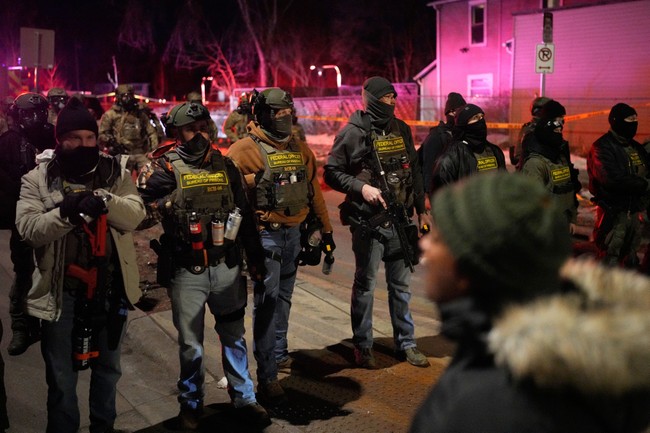
The federal court in Minnesota refused to block the Biden administration’s “Operation Metro Surge,” ruling that the state and two cities had not shown they were likely to win on the legal theory they offered, while the judge recognized harms on both sides and left open further litigation or appeal.
The United States District Court for the District of Minnesota denied a preliminary injunction sought by the State of Minnesota, the City of Minneapolis, and the City of St. Paul challenging the federal immigration enforcement effort labeled Operation Metro Surge. The suit, filed January 12, 2026, named the Department of Homeland Security, DHS Secretary Kristi Noem, and other federal officials as defendants. The plaintiffs asked the court to declare the surge unlawful and to halt its implementation while litigation proceeds.
Judge Katherine Menendez issued a 30-page order on Saturday declining to grant the emergency relief the plaintiffs sought. She made clear at the outset that the court was not deciding the ultimate merits of the dispute or ruling on the wisdom of the operation, but rather whether a preliminary injunction was appropriate under the law. The opinion frames the decision as a narrow gatekeeping choice about whether to pause federal law enforcement while the case moves forward.
The Court pauses to observe what it is not deciding. At this stage, the Court makes no final determination on the merits of any claims asserted by Plaintiffs. Nor does the Court offer any opinion about the wisdom of Operation Metro Surge. And the legality of many of the specific actions taken by federal agents during the operation is not before the Court in this case. Instead, the Court only decides whether to grant the extraordinary remedy of a preliminary injunction halting a federal law enforcement operation based upon the Tenth Amendment. In answering this question, the Court must view Plaintiffs’ claims through the lens of the specific legal framework they invoke, and, having done so, finds that Plaintiffs have not met their burden. For the reasons discussed below, the motion is denied.
Menendez concluded the plaintiffs had not shown a likelihood of success on the merits under the Tenth Amendment anticommandeering theory they pressed. The court explained that extending anticommandeering precedent into the context of a broad federal law enforcement deployment would be novel and that prior cases typically addressed clear statutory compulsion of state officials. That gap in precedent led the judge to judge against emergency relief at this stage.
The opinion also engaged the plaintiffs’ claim that Operation Metro Surge functioned as coercion aimed at changing so-called sanctuary policies. The judge acknowledged that plaintiffs presented arguments suggesting the operation could be read as an effort to pressure local governments, yet she also found the federal government’s counterargument plausible: that local noncooperation with immigration enforcement may increase the need for federal resources in a jurisdiction.
Based on the record before the Court, a factfinder could reasonably credit that Plaintiffs’ sanctuary policies require a greater presence of federal agents to achieve the federal government’s immigration enforcement objectives than in a jurisdiction that actively assists ICE.
Menendez recognized the tangible effects Operation Metro Surge has had on Minnesota communities and resources, noting the operation’s impact while also weighing the harm an injunction would cause if it blocked federal enforcement of immigration law. The judge determined that enjoining federal authorities would itself produce significant harms that the court could not justify at the preliminary stage given the legal posture before it.
The ruling follows earlier encounters between this judge and federal immigration enforcement: Menendez had previously limited certain ICE tactics in the context of anti-ICE protests earlier in January, though that injunction was stayed by the Eighth Circuit. That procedural history underscores that these disputes often keep moving through appeals and emergency stays rather than ending at a single decision.
Litigation is likely to continue, with appeal an available path for the plaintiffs if they choose it. The opinion’s reliance on established anticommandeering doctrine and its conservative application of preliminary injunction standards make an immediate reversal at the trial level uncertain, so any next steps will be tactical choices for the cities and state.
The decision keeps Operation Metro Surge in place for now while preserving the parties’ rights to press their claims in court. The judge’s order is careful about what it does and does not decide, leaving room for the factual record and appellate review to develop as the dispute proceeds through the federal system.

Add comment