
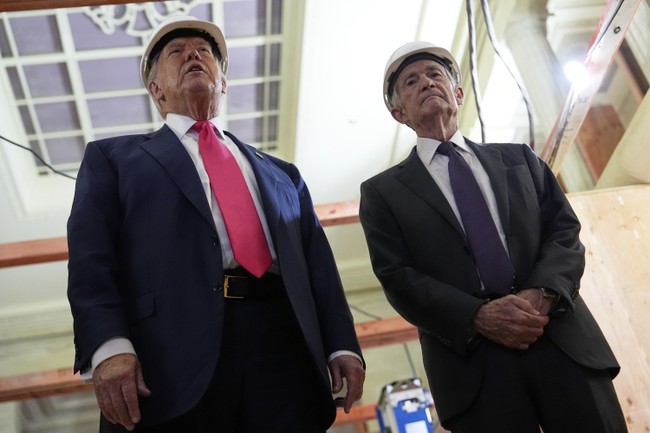
The Justice Department has opened an investigation into Federal Reserve Chair Jerome Powell over alleged cost overruns and possible misleading testimony, and the White House says President Trump did not order the probe despite his repeated public criticism of Powell’s stewardship. Press secretary Karoline Leavitt told reporters the president is unhappy with Powell’s job performance, especially on interest-rate policy and renovation spending, but insisted the Department of Justice is conducting its own work independently. Republican members of Congress have already pushed for criminal referrals, arguing that false statements under oath about spending are serious, while the administration deflects questions about direct involvement. The story mixes political critique, legal scrutiny, and ongoing debate over accountability at the highest levels of economic oversight.
Weekend headlines flagged a DOJ review focused on how much the Federal Reserve is spending to renovate its buildings and whether Powell misled Congress about the overruns. Democrats quickly went into alarm mode, framing the inquiry as political retaliation and warning about threats to Fed independence. From a conservative viewpoint, those reactions are predictable: accountability is necessary whenever public officials overspend or appear evasive, regardless of their title.
On Monday, Press Secretary Karoline Leavitt flatly told reporters that the president did not order the probe. Asked whether President Trump had commanded the Justice Department to investigate Powell, she responded with one word: “No.” That denial matters because critics tied Trump’s public complaints to the timing of the investigation, so the White House was eager to draw a clear line.
Leavitt made clear the president’s displeasure with Powell is about performance, not direct interference in DOJ work. Trump has repeatedly criticized Powell for not cutting rates aggressively and for what he views as wasteful construction spending at the Fed. The president even mocked the renovations, comparing them to “building a basement into the Potomac River,” and he has threatened legal action over what he calls staggering price tags.
“Look, the president has every right to criticize the Fed chair. He has a First Amendment right, just like all of you do.
“And one thing for sure, the president’s made it quite clear, is Jerome Powell is bad at his job.
“As for whether or not Jerome Powell is a criminal, that’s an answer the Department of Justice is going to have to find out, and it looks like they intend to find that out.”
Republican members of Congress have not sat quietly either. Last July, Representative Anna Paulina Luna formally referred Powell to the Department of Justice for allegedly misleading Congress about the cost overruns, calling the conduct “criminal.” That referral amplified calls for a full, independent review of what happened and whether anyone lied under oath. Supporters of the referral say the integrity of congressional testimony is nonnegotiable when billions of taxpayer dollars are at stake.
Lying under oath is a serious offense— especially from someone tasked with overseeing our monetary system and public trust.
The administration’s public line is straightforward: criticize where warranted, but let the DOJ do its job. Karoline Leavitt reiterated that view in media appearances, saying the criminal probe is in the hands of prosecutors and not a White House initiative. That separation is important for the optics of independence, even if skeptics argue political pressure can still influence investigative priorities.
Trump’s criticisms focus on two threads: monetary policy and renovation spending. He believes Powell has been too slow to loosen policy and too wasteful on construction projects, claiming costs could top several billion dollars. Whether those complaints amount to political theater or legitimate oversight depends on one’s perspective, but they have certainly framed public expectations of what a federal inquiry should examine.
Legal questions remain central. If the DOJ determines Powell knowingly misled Congress about spending, the consequences could be severe, up to criminal charges. If, on the other hand, investigators find sloppy accounting or honest mistakes, the outcome will look very different. Either way, the review will test whether institutions can hold their own leaders accountable without succumbing to partisan narratives.
Observers on the right argue that holding Powell to account aligns with conservative principles of fiscal responsibility and transparency. The insistence on clear answers about how public money is spent and whether testimony to Congress was accurate fits naturally with those priorities. Critics on the left, by contrast, often interpret the probe through the lens of political warfare and warn about compromising the Fed’s independence.
For now, the public has statements, referrals, and a formal DOJ inquiry to follow; what matters next is what the investigators uncover. The Justice Department must be allowed to pursue evidence and reach conclusions based on facts, not spin, while the public should demand clarity from both Powell and those defending him. The rest of the story will hinge on documents, testimony, and whether any legal breaches are proven.


Add comment