
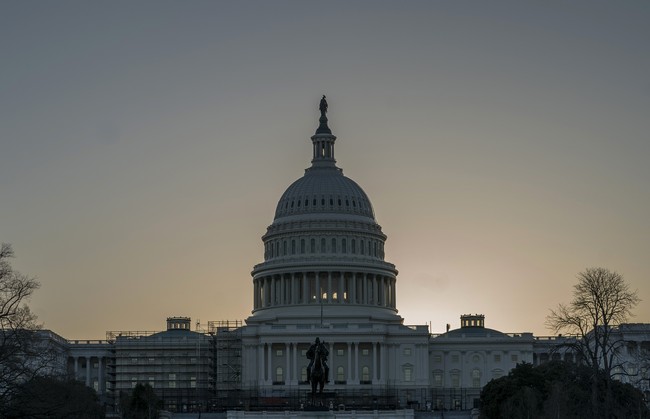
Senate Republicans blocked a war powers resolution this week that would have directed President Trump to end offensive operations against Iran, leaving the current military posture intact as partisan and procedural battles continue in Congress.
The Senate voted down the motion to advance the War Powers resolution by 47 to 49, effectively stopping a legislative effort to force a change in the president’s conduct of operations against Iran. That outcome reflects a mix of defections, absences, and strategic calculations by senators who weighed operational realities against constitutional concerns.
In the House, a separate measure moved forward with a narrow margin, and a handful of Republicans supported it, showing that GOP unity on war powers is not automatic. These cross-currents in both chambers highlight how divided lawmakers remain over who gets to decide matters of war and peace when troops are engaged overseas.
Senate Republicans on Thursday defeated a motion to advance a war powers resolution that would direct President Trump to withdraw U.S. troops from hostilities against Iran, even though a growing number of GOP lawmakers are voicing concerns about mounting casualties and how long the war has dragged on.
The chamber voted 47-49 on a motion to discharge the war powers resolution out of the Senate Foreign Relations Committee. Sen. Susan Collins (R-Maine) crossed the aisle to vote with Democrats in support of it.
There were predictable absences and a small number of senators switching sides, but the vote did not reach the threshold needed to give Congress leverage over the commander in chief. The practical effect is that President Trump keeps authority to direct ongoing operations absent a successful veto override or a new authorization from Congress.
Centrist Sen. John Fetterman (Pa.) was the only Democrat to vote against the motion to advance the resolution.
Sens. Rand Paul (R-Ky.) and Lisa Murkowski (R-Alaska), who have previously voted for resolutions to curtail Trump’s authority as commander in chief, missed the vote.
Sens. Mitch McConnell (R-Ky.) and Katie Britt (R-Ala.) were also absent.
The House approved its own version by a tight margin, 214 to 208, and a few Republicans joined Democrats in that chamber. Names reported as voting for the House measure included Tom Barrett, Warren Davidson, Thomas Massie, and Brian Fitzpatrick, showing a minority within the GOP willing to press Congress’s authority.
From a Republican perspective, the central issue is simple: Congress must protect the Constitution’s allocation of war powers, but it must also avoid hamstringing commanders and exposing troops to greater danger. Legislating in the middle of active operations is fraught and can send mixed signals to adversaries who exploit perceived divisions.
Sen. Tim Sheehy delivered forceful remarks on the floor, arguing the enemy does not respect partisan labels and seeks America’s destruction. His words underscore the argument that decisive action against hostile regimes sometimes requires executive flexibility, not additional procedural restraints that can endanger lives.
“This regime that we are fighting does not care about our partisan politics. They don’t care who you voted for, who you pray to, or where you live. They want to kill all of us and they don’t just say it, they actually do it,” he said.
Those concerns are rooted in decades of Iranian hostility toward U.S. forces and allies, and in Tehran’s support for militant groups across the region. The administration has framed its operations as necessary to degrade threats and protect American personnel, an argument resonating with senators who prioritize national security over procedural rebukes.
Procedurally, a presidential veto would have been a near-certainty had Congress passed a binding limit on operations, and the votes to override a veto were not there. That political reality makes nonbinding resolutions more symbolic than effective and leaves the president with practical control unless lawmakers build a stronger, bipartisan consensus.
Congressional debate over war powers is necessary and healthy, but timing matters. When military operations are active, moves perceived as undermining the mission can create risk. Republicans arguing for strength contend that political theater in the middle of conflict benefits adversaries and weakens deterrence.


Add comment