
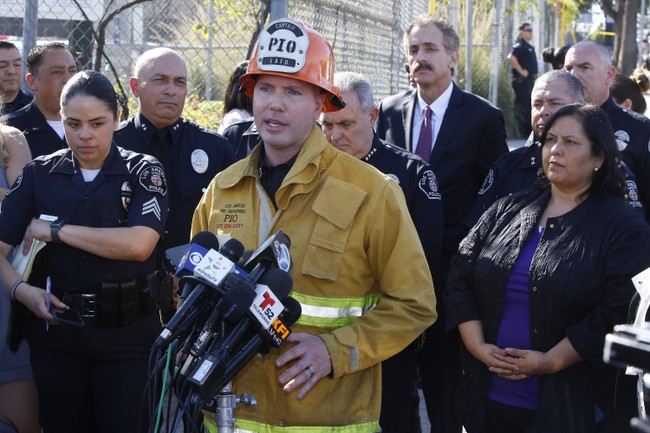
The Los Angeles Fire Department’s handling of the Palisades Fire and the aftermath have left survivors furious, and the department’s lead public information officer turning that disaster into a personal memoir has intensified anger. This article examines the timing, the messaging, the endorsements, and the gap between the department’s public narrative and the on-the-ground reality residents continue to face. It highlights specific failures people point to, the promotional framing of the book, and the broader sense of betrayal felt by those who lost homes and loved ones.
Erik Scott, the LAFD Public Information Officer, has been the department’s public face during the Palisades Fire coverage, delivering statements and shaping the official narrative. After a year of that visibility, he announced a memoir titled “Calm Amidst Chaos: A Frontline Memoir of the Palisades Fire and the Voice That Guided a City,” which the publisher describes as a behind-the-scenes account dedicated to those who died and to firefighters. The decision to publish and promote the book has struck many as profiting from a tragedy they feel was mishandled.
Survivors and critics argue that a true reckoning would address specific operational issues, including wind speeds, the impact of an empty Santa Ynez Reservoir on initial aerial response, and whether the Lachman Fire was fully extinguished on January 1. Those are technical, consequential questions that go beyond soundbites and require transparent investigation and accountability. If the memoir avoids those tough topics, readers who want clarity and reform will see it as self-promotion rather than a service to the community.
Timing has added insult to injury: the book is scheduled for release on January 7, the anniversary of the fire, rather than following traditional release patterns. That choice has been read as tone-deaf by many who lost property or family members, who expected remembrance rather than marketing. Releasing on that date feeds the perception that the memoir prioritizes visibility over sensitivity to survivors.
The book’s back-cover language frames the story as cinematic and uplifting, emphasizing leadership and resilience in the face of catastrophe. That framing centers the narrative around the author’s role, leaning into a personal leadership arc rather than a rigorous accounting of systemic shortcomings. For victims insisting on truth and accountability, a celebratory tone feels like a deflection from harder questions.
Behind the Flames Lies the Human Story of Courage and Resilience
When a wind-driven inferno swept across Southern California, it pushed first responders and entire communities to their limits. Amid hurricane-force winds, mass evacuations, and nonstop breaking news, millions searched for clarity in the chaos.
In Calm Amidst Chaos, Los Angeles Fire Captain and lead Public Information Officer Erik Scott delivers a gripping, behind-the-scenes account of the January 2025 Palisades Fire—one of the most complex emergencies the region has ever faced. Blending frontline interviews, on-scene observations, Hollywood’s red carpets, and leadership forged under impossible conditions, Scott reveals the human side of disaster: the emotional wreckage left behind, the toll on firefighters, and the quiet courage that carries a city through its darkest hours.
This is a non-political, deeply human memoir about resilience:
- Leading when the stakes are life and death
- Navigating the hidden challenges behind major incidents
- Witnessing communities rise from the ashes
- Finding calm when the world ignites
Equal parts cinematic and grounded, Calm Amidst Chaos is a tribute to courage, a study in leadership under fire, and a testament to what happens when ordinary people face extraordinary conditions—and how courage can spread faster than flames.
Many Palisades residents want clear admission of mistakes and corrective action, not rhetoric about cinematic leadership. They point to the slow pace of rebuilding: while thousands of properties were affected, only a small number have begun reconstruction. The contrast between polished messaging and visible stagnation in recovery fuels anger and suspicion about where priorities lie.
Endorsements on the book’s back cover amplify concerns because they come from prominent figures who were part of the media or political conversation during the crisis. One endorsement reads: “Captain Erik Scott has a gift for humanizing crises—his steady communication kept Angelenos informed and reassured when they needed it most. Calm Amidst Chaos is a powerful reflection and moving story of that same grace under pressure.” Critics say that reassurance for some did not match the lived experience of many residents who felt misinformed or abandoned.
“Captain Erik Scott has a gift for humanizing crises—his steady communication kept Angelenos informed and reassured when they needed it most. Calm Amidst Chaos is a powerful reflection and moving story of that same grace under pressure.”
Another endorsement claims he was “the voice journalists trust” and promises an inside look at leadership and empathy during breaking news. That line reads well for public relations, but it also spotlights the cozy relationship between some media figures and official spokespeople. People who lived through the fire want investigation and data rather than polished narratives about trust and empathy.
“When breaking news unfolds in Los Angeles, Captain Erik Scott is the voice journalists trust. Calm Amidst Chaos takes you behind the cameras to show how leadership and empathy can save lives.”
Meanwhile, many people remain displaced and are confronting long-term smoke damage that renders surviving homes uninhabitable. Visible recovery on the ground lags behind the optimistic language used in official updates, and local residents who returned to inspect losses saw slow progress firsthand. That disconnect deepens the feeling that public messaging has outrun tangible action.
There are clips of Scott early in the fire cycle boasting about aerial capabilities and later setting a defensive tone in national interviews, and those moments appear in public archives and broadcasts. Those pieces, viewed together, form the narrative critics point to when arguing the department prioritized appearances. The memoir and its promotional campaign now join that record, further testing public tolerance for officials turning disaster into a platform.
Here is the initial public messaging from LAFD about the department’s air response captured at the start of the incident:
And here is a later interview where the narrative focus shifted toward managing perception:
For residents who lost homes and neighbors, seeing those clips and now a book release timed to the anniversary feels like a final layer of insult on top of loss. The demand from the community remains straightforward: clear answers about what went wrong, who is accountable, and what changes will prevent the same outcome in future disasters.


Add comment