
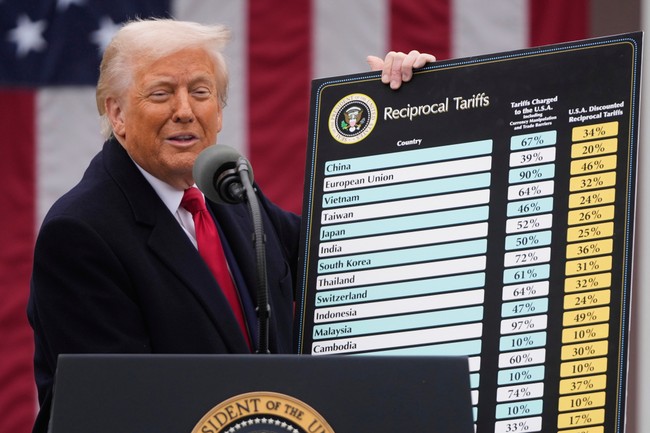
This article examines the Supreme Court fight over whether the Trump administration can use the International Emergency Economic Powers Act to impose tariffs, President Trump’s warning about massive repayment costs if the Court rejects that authority, and Kevin Hassett’s assurance that the administration has fallback tools ready to achieve the same trade outcomes.
At the center of this dispute is whether the administration can rely on emergency authority to levy broad tariffs without owing refunds to importers. Supporters of the policy argue it is a legitimate national security and negotiation tool, while opponents have challenged the legal basis in court. The upcoming decision will shape how the United States uses tariff power in diplomacy and trade going forward.
President Trump took to Truth Social to frame a worst-case scenario if the Court limits his tariff authority, warning that repayment obligations could reach into the hundreds of billions or even trillions of dollars. His post painted a picture of complex claims from companies and countries seeking compensation for investments made to avoid tariffs. That stark assessment was intended to highlight the stakes beyond legal theory and to underline the real-world economic turmoil a negative ruling could produce.
The actual numbers that we would have to pay back if, for any reason, the Supreme Court were to rule against the United States of America on Tariffs, would be many Hundreds of Billions of Dollars, and that doesn’t include the amount of “payback” that Countries and Companies would require for the Investments they are making on building Plants, Factories, and Equipment, for the purpose of being able to avoid the payment of Tariffs. When these Investments are added, we are talking about Trillions of Dollars! It would be a complete mess, and almost impossible for our Country to pay. Anybody who says that it can be quickly and easily done would be making a false, inaccurate, or totally misunderstood answer to this very large and complex question. It may not be possible but, if it were, it would be Dollars that would be so large that it would take many years to figure out what number we are talking about and even, who, when, and where, to pay. Remember, when America shines brightly, the World shines brightly. In other words, if the Supreme Court rules against the United States of America on this National Security bonanza, WE’RE SCREWED!
PRESIDENT DONALD J. TRUMP
The legal challenges were brought by a mix of small businesses, but funding and organizational backing has come from prominent conservative donors and groups who disagree with the administration’s approach. That alliance makes the case politically complicated: it pits long-standing conservative legal activism against an administration that has reshaped trade policy. Those dynamics have amplified the public attention on what might otherwise seem like arcane statutory interpretation.
Court watchers had hoped for a quick ruling but were disappointed when the decision did not arrive on the expected date. The delay only ratcheted up the tension around potential economic fallout and left markets and policymakers waiting. Whatever the Court announces, the decision will immediately affect trade negotiations, tariff implementation, and planning by businesses that have already responded to the administration’s measures.
Within the administration, reactions vary between alarm and calm contingency planning. Treasury officials warned that a mixed ruling could limit presidential flexibility while still allowing revenue collection at current levels. That assessment underscored the practical challenge: even if tariffs continue to raise revenue, losing the emergency authority would blunt the executive branch’s leverage in dealing with foreign competitors and adversaries.
Treasury Secretary Scott Bessent himself said Thursday he expects a “mishmash” ruling.
“What is not in doubt is our ability to continue collecting tariffs at roughly the same level, in terms of overall revenues,” Bessent said during an appearance in Minneapolis. “What is in doubt, and it’s a real shame for the American people, was the president loses flexibility to use tariffs both for national security, for negotiating leverage.”
Kevin Hassett, who leads the National Economic Council, struck a pragmatic tone and emphasized contingency options. He told reporters that the White House has other legal authorities and tools that can replicate the outcomes achieved through the IEEPA tariffs. Hassett’s message was simple: the administration is prepared to pivot if the Court narrows emergency powers, and negotiators have already mapped out alternative paths.
National Economic Council Director Kevin Hassett said Friday that the White House could deploy alternative measures if the Supreme Court rules against President Donald Trump’s use of emergency powers to impose sweeping levies.

“There was a big call last night with all the principals to talk about if the Supreme Court were to rule against this IEEPA tariff, what would the next step be?” Hassett said on CNBC’s “Squawk on the Street,” referring to the administration’s use of the International Emergency Economic Powers Act.

“There are a lot of other legal authorities that can reproduce the deals that we’ve made with other countries, and can do so basically immediately. And so our expectation is that we’re going to win, and if we don’t win, then we know that we’ve got other tools that we could use that get us to the same place,” he said.

Hassett said U.S. Trade Representative Jamieson Greer has been closely involved in mapping out contingency plans.
National security framed much of the administration’s rationale for the tariffs, and the president pointed to Iran as one of the regimes targeted by economic measures. This framing ties trade tools to broader foreign policy goals, making the outcome of the Court fight consequential beyond balance sheets. Americans watching the debate should understand that the choice facing justices will influence how the United States exerts pressure abroad.
Beyond the Courtroom, the policy debate has already educated businesses and the public about tariffs as an instrument of statecraft. Firms that expected a stable regime of tariffs have adjusted investments and supply chains, and any reversal would require sorting through compensation and contractual complexity. The reality is the law and policy choices made now will reverberate through trade and industry for years to come, so the stakes are genuinely national and strategic.



Add comment