
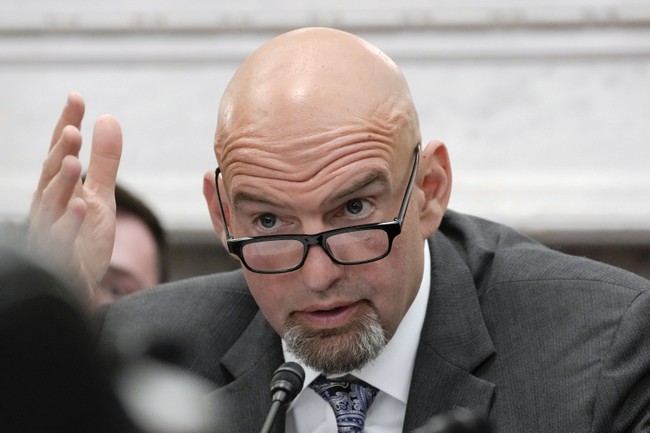
The Democratic Party is fracturing along ideological lines, and this piece examines how Sen. John Fetterman’s reaction to a leftist primary threat highlights the split, why many Democrats are drifting toward socialism, how leadership is responding, and what that means for Pennsylvania politics.
The party’s internal tug of war is now public and ugly, with a significant number of Democrats refusing to back a formal condemnation of socialism. On a recent House vote, 98 members opposed the condemnation and 86 Democrats joined Republicans in support, a split that underlines how far left a sizable faction of the party has moved. That shift has real consequences for governance and messaging when elected officials cannot agree on basic priorities.
Some leaders tried to navigate this by voting to condemn socialism, but their efforts look more like band-aids than solutions. House Minority Leader Hakeem Jeffries cast a vote to condemn, yet he still faces pressure from the left inside his own district. Gesture politics won’t steady a party when ideology has become a litmus test and electoral math is being sacrificed to appease primary voters.
There are claims that leftist pressure even fueled brinkmanship around funding and the government shutdown, which many interpreted as a way to placate the most extreme voices. The leadership’s willingness to flirt with shutdown tactics shows a misplacement of priorities when funding SNAP, defense, and federal paychecks should be noncontroversial. Voters who want stability and common-sense stewardship of government notice when their representatives play political poker with everyday necessities.
Sen. John Fetterman has stood apart from the faction that backed the shutdown strategy, and that independence has drawn ire from the Working Families Party. Their Pennsylvania wing announced plans to primary him, signaling a direct challenge from the left to a high-profile Democratic senator. Primarying a sitting senator in a purple state might satisfy activists, but it risks splintering the broader coalition needed to win statewide races in competitive places like Pennsylvania.
Fetterman’s response to the threat was pointed and unapologetic, delivered with a mix of humor and confidence. “Ooh, ooh, oh, I hope, promise. I hope so,” Fetterman laughed when asked about being targeted. He went on to argue the activists would only make him look like “the reasonable guy” who will work across aisles to find solutions for Pennsylvanians, not an ideologue chasing purity tests.
His point was practical: a primary from the left in a state that swings both ways is unlikely to flip the Senate seat to the Working Families Party. Pennsylvania voters have repeatedly shown they prefer pragmatic approaches over doctrinaire politics, especially on issues that affect pocketbooks and security. The Working Families strategy looks more like a protest than a path to victory in 2028, when Fetterman’s term ends.
Fetterman also defended his legislative record, saying the criticism about his vote on the shutdown mischaracterized his motives. He emphasized that his choices were tied to funding SNAP, military pay, and other federal obligations, not to backing brinksmanship for its own sake. That rationale lands with voters who expect their senators to shield vital programs from partisan brink play.
Beyond the personalities, there’s a strategic lesson here: nominating candidates who appeal only to the activist base can hollow out a party’s electability. Activist victories in primaries may energize a faction for a news cycle, but they often produce nominees who struggle in general elections. Republicans watching this split see a clear path to make political headway in competitive states if Democrats keep nominating for purity instead of pragmatism.
The left’s push for ideological control also sidelines voices that want to govern responsibly and negotiate durable solutions. When internal party fights become public and vicious, voters get turned off, and the political center drifts away. That is precisely the opening opponents will exploit in upcoming cycles unless Democrats recalibrate toward the middle and prioritize power retention over doctrinal wins.
For now, Fetterman appears unbothered and ready to let the activists use their energy where it matters to them most. With a term that runs through 2028, he has time to continue positioning himself as a veto against the most extreme impulses of his party. In a state that decides elections by appealing to moderates and independents, his steadiness could matter more than a leftward primary purge.

Add comment