

The state of Minnesota has sued the Department of Homeland Security over a heightened ICE presence in the Twin Cities, framing federal immigration enforcement as an unlawful surge and sparking a political and legal showdown between state leaders and the Biden administration.
Protests have flared in Minneapolis and St. Paul after a deadly confrontation involving an activist and an ICE agent, and those tensions pushed Minnesota’s attorney general to take legal action. The suit accuses federal officials of overwhelming local communities with armed agents and interfering with state and local authority. That move turns a law enforcement dispute into a courtroom battle that could hinge on which judge steps in.
For conservatives, this lawsuit is part of a broader pattern: when politics fail, litigation becomes the strategy of choice for Democrats. Courts have been the primary venue for opposing the president’s priorities, and federal judges have issued numerous injunctions against administration policies in recent months. Plaintiffs have brought hundreds of challenges, and injunctions have become a daily risk for federal action.
On Monday, Minnesota Attorney General Keith Ellison filed suit against the Department of Homeland Security and named several senior officials as defendants in the complaint. The filing accuses the administration of targeting Minnesota with a heavy-handed enforcement strategy that has produced fear and unrest among residents. That legal theory frames federal action as an overreach into state sovereignty and civil life.
The state’s complaint, as reported in court documents, lists the Department of Homeland Security, U.S. Immigration and Customs Enforcement, and U.S. Customs and Border Protection among the defendants. It also names specific leaders within those agencies as parties to the suit. The legal claims seek to halt what Minnesota describes as an unprecedented enforcement surge in its communities.
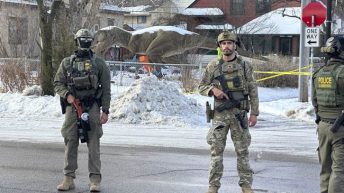
Minnesota and the cities of Minneapolis and St. Paul sued the Trump administration Monday, seeking to block a massive federal immigration enforcement surge they say has flooded the Twin Cities with armed agents, sparked fear and unrest, and interfered with state and local authorities, according to court filings.
The lawsuit names Department of Homeland Security (DHS) Secretary Kristi Noem, top officials with DHS, U.S. Immigration and Customs Enforcement (ICE) and U.S. Customs and Border Protection (CBP), including Acting ICE Director Todd Lyons and Border Patrol Commander Gregory Bovino, along with the federal agencies themselves.
Ellison’s rhetoric leaned hard into progressive frames, calling the enforcement actions a “federal invasion” and accusing agents of making “racist arrests” in Minnesota. That kind of language makes the legal fight also a political one, aimed at rallying local support and national attention. Critics respond that the accusations mischaracterize federal responsibilities and ignore the realities of immigration enforcement.
Ellison announced the lawsuit in blunt terms and said, “We’re here to announce a lawsuit we’re filing against the U.S. Department of Homeland Security to end the unlawful, unprecedented surge of the federal law enforcement agents into Minnesota.” He added, “We allege that the obvious targeting of Minnesota for our diversity, for our democracy and our differences of opinion with the federal government is a violation of the Constitution and of federal law.” Those are strong claims aimed at framing federal immigration work as discriminatory and unconstitutional.
From a conservative perspective, Minnesota’s narrative gets the causality backwards: federal agents respond to collapsed local enforcement and sanctuary policies that invite illegal entry and fraud. The argument here is simple—when state and local officials refuse to enforce immigration laws, the federal government has a duty to act. Calling that response an invasion ignores the constitutional obligation to uphold federal law.
DHS officials publicly criticized the lawsuit as inconsistent, pointing out that the same voices invoking states’ rights now oppose federal enforcement. A senior DHS official said it’s “astounding” that the Left rediscovers the Tenth Amendment only when it suits them, and accused state leaders of federalizing responsibilities when convenient. That rebuke highlights the tug-of-war between federal authority and local political priorities.
There’s a practical risk beyond the political theater: district court judges can and do shape policy through temporary orders, and litigation can delay or stop enforcement operations for months. That creates uncertainty for agents in the field and for communities dealing with crime and fraud linked to illegal immigration. For those who prioritize law and order, the stakes are more than abstract—public safety and rule of law are on the line.
Whether this suit succeeds will depend on the court it lands in and the appetite of judges to second-guess federal enforcement choices. Seen through a conservative lens, this case is another example of progressive authorities using the legal system as a political tool while local policies have left federal officers no choice but to step in. The courtroom will be the next battleground in a conflict that began on city streets and unfolded in headlines across the country.

Add comment