
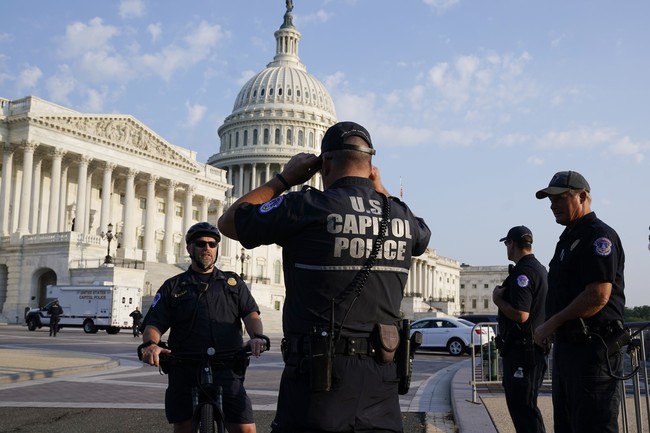
The story here is short on sense and long on oddity: a 35-year-old California man showed up in Washington, D.C., with a guillotine in the bed of his pickup, parked between the U.S. Capitol and the Supreme Court, and drew the attention of Capitol Police after an illegal parking job led to his arrest. The headline that circulated read “Guillotine in pickup truck parked near U.S. Capitol building prompts driver’s arrest.” The apparatus, the trip, and the motive remain baffling, and investigators are now piecing together why he made the cross-country trek. What started as a parking violation turned into a federal inquiry and a story that feels like it came from another century.
A man identified as Philan-Tam-Duy Le, 35, reportedly drove roughly 2,500 miles from California to Washington with the medieval execution device secured in his truck. He parked on the 100 block of East Capitol Street, the narrow stretch of road sandwiched between two of the nation’s most visible civic institutions. Capitol Police noticed the vehicle because it was parked illegally, not because it screamed danger from a distance. That detail undercuts the sense of a dramatic plot and emphasizes how mundane enforcement can collide with extraordinary circumstances.
Officers inspected the truck and found the guillotine in plain view in the bed of the vehicle, which immediately raised questions about intent and public safety. Le was arrested for carrying a dangerous weapon, though officials have not publicly laid out a clear motive or target. Investigators began searching his background to determine if the trip and the device were connected to a specific plan or statement. For now, authorities are treating it as a serious incident that warranted intervention once the illegal parking highlighted the situation.
It’s striking that a single parking violation exposed a scenario that could have gone unnoticed for thousands of miles. The guillotine was transported across multiple jurisdictions without triggering intervention until it arrived at the heart of the government district and someone parked improperly. That sequence raises practical questions about oversight and how unusual items move through public spaces. It also points to the unpredictable ways the justice system sometimes becomes aware of potential threats.
The choice of where to park itself added a layer of theater to the episode, placing the vehicle between the Capitol and the Supreme Court and inviting wild speculation. Given the symbolic weight of both institutions, observers immediately imagined a political motive, though no evidence has been presented to confirm that. The presence of the device in that location amplified the alarm and ensured a swift law enforcement response. Officials are now working to separate symbolism from fact as they examine Le’s movements and communications.
Le’s journey raises logistical questions as well: how does one transport a guillotine cross-country without notice, and at what point should different agencies have intervened? There’s a practical, forensic process underway to determine the origins of the device, whether it was assembled or purchased, and who knew about it. Authorities will look into whether anyone else assisted in moving the device or if other jurisdictions had prior contact with the vehicle or its driver. The scope of that review will determine whether this was a lone, inexplicable stunt or part of something larger.
Public reaction predictably split between alarm and incredulity, with many pointing to the absurdity of a medieval execution device turning up in a modern capital city. Social commentary has been sharp, with some observers highlighting the obvious dangers and others mocking the symbolism. The press coverage that quoted the headline “Guillotine in pickup truck parked near U.S. Capitol building prompts driver’s arrest.” captured both the shock value and the simplicity of how the incident came to light. For officials, however, the matter is procedural: establish intent, assess threat, and move forward with appropriate charges if warranted.
https://x.com/7NewsDC/status/2092392222989713585
From a law enforcement perspective, the incident underscores how routine violations can lead to discoveries that require a much deeper response. Parking enforcement habits and traffic patrols played a role in preventing a potential escalation, and the early intervention limited any immediate risk to the public. Investigators will now sift through digital and physical evidence to figure out whether the guillotine was a prop, a political statement, or a genuine attempt at violence. That analytical work usually moves slower than the viral headlines, but it will provide the facts authorities need to prosecute if necessary.
Meanwhile, the scene in D.C. was temporarily unsettling to passersby and staff in nearby government buildings, who watched law enforcement secure the area and question the driver. The visual of a guillotine in a pickup truck parked near the centers of national power is jarring enough to make it a persistent image in public conversation. Officials emphasize there was no immediate attack and that the arrest focused on the weapon and the illegal parking that revealed it. Still, the symbolism makes it a story people remember long after the facts are sorted.
At the moment, the most important facts remain simple: a man from California drove to Washington with a guillotine, parked illegally between the Capitol and the Supreme Court, and was arrested by Capitol Police for carrying a dangerous weapon. Investigators continue to work through his background and any possible connections, and the public waits to learn whether a clear motive will emerge. The case serves as a reminder that odd, potentially threatening items can move through modern life unnoticed until routine enforcement brings them into view.

Add comment