
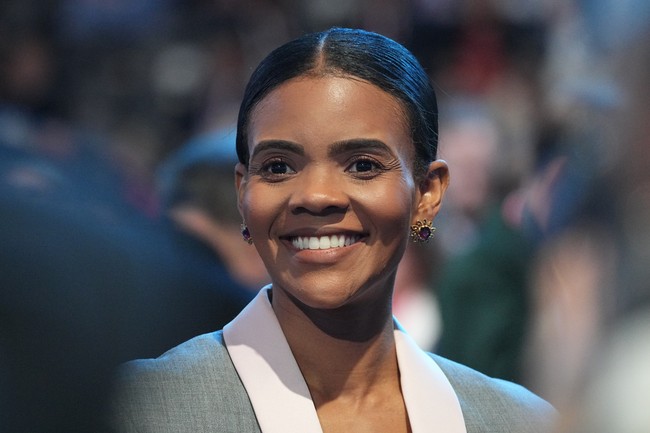
Hasan Piker surprised people by praising Candace Owens after she publicly undermined efforts to turn Charlie Kirk into a political martyr following his assassination, and his remarks expose how chaotic the post-shooting debate has become. Piker explicitly says he thinks Tyler Robinson is the likely shooter while cheering Owens for wrecking a Republican narrative, and that collision of motives and statements from both sides has blurred the line between political speech and encouragement of violence. The episode highlights how partisan theater now shapes responses to real-world tragedy.
Left-wing streamer Hasan Piker called Candace Owens a “queen” for derailing the conservative push to elevate Charlie Kirk into a martyr after the killing. Piker’s praise was surprising given his history and the deeply polarized environment around the case, but he framed Owens’s actions as a strategic sabotage of a particular Republican narrative. That single line of commentary has fueled conversations across the political spectrum about motives and responsibility.
Piker does not pretend to believe every claim Owens makes about the shooting, and he openly admits he thinks Tyler Robinson almost certainly pulled the trigger. Still, he celebrated Owens because, in his view, she scuttled the momentum conservatives hoped to build around martyrdom and calls for a crackdown. He described her intervention in stark terms and suggested it derailed efforts to turn a tragedy into a political lever.
In his own words, “I can’t speak out against this queen because this is a queen that successfully and single-handedly undermined the Republican initiative to martyrize Charlie Kirk and used that example to crack down on political dissent,” the Democrat mouthpiece said. “She dropped a grenade on the discourse.” That quote has been replayed and dissected because it comes from a figure who rarely aligns with Owens on anything, much less praises her in such personal terms.
When Piker talks about a “crackdown on political dissent,” what he really means is a crackdown aimed at political violence, which he sees as closely tied to efforts to politicize the killing. That conflation is politically charged: some call for law enforcement and legal consequences; others call out what they see as political exploitation. Piker framed Owens’s move as an act that prevented a broader punitive campaign that might follow from weaponizing the tragedy.
Piker also made clear that part of his attraction to Owens’s disruption is performative; he admitted he’s “with her” even while acknowledging the probably factual conclusion about the shooter. “So, I’m with her,” he declared. “It’s probably Tyler Robinson, but my heart says, ‘Go, Candace, go!’ Keep cooking.” That mix of skepticism and cheerleading from a prominent left-wing voice has unnerved many on both sides.
https://x.com/MaxNordau/status/2088996116045959359
Critics point out Piker’s own past statements and controversies to argue his endorsement is not entirely sincere or moral; his history of inflammatory remarks is well known and shapes how people interpret his praise now. Observers on the right emphasize that Owens’s conspiratorial claims have often lacked evidence, while observers on the left stress Piker’s tendency to normalize or excuse extreme positions. The situation has become as much about personalities as about facts.
Meanwhile, Candace Owens continues to run with conspiracy theories about Charlie Kirk’s death despite repeated debunking and a lack of solid evidence. That persistence has made her a magnet for attention, and in the aftermath she has doubled down rather than retreating. Her approach has attracted both fervent supporters and loud critics, and the result has been a louder, cruder public discourse that prizes spectacle over verification.
The applause for Owens from unexpected quarters shows how easily political tribes will flip when it’s useful, and how quickly adversaries can become allies in a culture of outrage. People who once denounced her now celebrate her because her narrative harms a political opponent they already dislike, which tells you more about tribal incentives than about truth-seeking. That transactional dynamic rewards the loudest voices regardless of accuracy.
At the same time, this episode reveals how the politics of martyrdom function in the modern media ecosystem: a death becomes a rallying cry if it fits a narrative, and skeptics become maligned if they challenge that story. The chaotic mix of accusations, praise, and conspiracy has left the public uncertain about what to believe and who to trust. In the end, the winners are often those who profit from confusion and the spectacle of outrage rather than those pursuing clarity or accountability.

Home-based job that pays more than 12,000 Dollar per month by doing simple tasks on a laptop or mobile device part-time. Last month, I earned 24,863 Dollar from this job by working 4 hours per day online. Very simple jobs to do, and the earnings are insane. Everyone can now make more money online by joining the website listed below…..
𝒋𝒖𝒔𝒕 𝒖𝒔𝒊𝒏𝒈 𝒕𝒉𝒊𝒔 𝒔𝒊𝒕𝒆.. Www.PayAtHome1.Com