
This article examines how massive fraud in Minnesota’s federally funded child nutrition programs was executed with startling ease, based on the account of former federal prosecutor Joe Teirab, and lays responsibility at the feet of state leaders while explaining how the scheme worked and why it matters politically.
How They Did It: Former Fed Prosecutor Reveals How ‘Shockingly Easy’ It Was to Pull Off MN Fraud Scam frames a story of bureaucratic failure and criminal opportunism in a program meant to feed kids. The alleged theft—now reported in the hundreds of millions and possibly rising toward two billion dollars—exposes systemic weaknesses in oversight and accountability. This isn’t just a policing failure; it’s a governance failure that has real victims: needy children and taxpayers. The narrative also includes political consequences, since state officials appointed by Governor Tim Walz and law enforcement choices by Attorney General Keith Ellison are implicated by critics.
Former federal prosecutor Joe Teirab, who worked on the Feeding Our Future investigation, described the mechanics as almost laughably simple for anyone willing to lie. According to his account, fraudulent operators fabricated paperwork, falsified attendance and expense reports, and ran bogus spreadsheets to justify vast sums of federal funds. That simplicity is what makes the scandal frightening: the barrier to entry was low and the payoff was enormous, which suggests gaps in basic verification and auditing.
“When I was on the Feeding Our Future case, the big thing that jumped out to me was, honestly, how easy this fraud was to do,” Teirab told Fox News Digital. “I mean, these fraudsters were just saying that they were spending all this money on feeding kids, and they were just making up these PDFs, putting false names into Excel sheets. I could do that in five minutes on a computer if I had absolutely no conscience.”
The alleged scheme involved charities and sponsor organizations that were supposed to audit and oversee meal distribution sites, but instead supplied fabricated counts and accepted kickbacks. Feeding Our Future and similar groups were meant to serve as watchdogs for local food sites, yet they allegedly colluded with those sites to report feeding thousands of children when, in practice, far fewer were served. The system relied on paperwork rather than on-the-ground verification, creating an environment where dishonesty could flourish.
According to Teirab, investigators are likely to increase their estimate of stolen funds as the probe continues, with serious suggestions that totals could reach at least two billion dollars. When organizations are allowed to self-report without effective cross-checks, fraudulent claims compound quickly and grow into multi-year thefts. That magnitude of loss drains resources intended for struggling families and undermines public trust in government safety nets.
“So the bottom line of this scandal was this: that there were supposed to be these different organizations, like Feeding Our Future, they were supposed to be a sponsor of different food sites that would give out food to kids who purportedly need it,” Teirab said. “And so this Feeding Our Future was supposed to be the watchdog of these food sites. But they were not doing that at all. They were basically getting kickbacks from these sites that were supposed to be giving up food. That was totally false. And they were ginning up the numbers and saying that they fed 3,000 kids a day when they actually maybe fed zero or maybe three kids.”
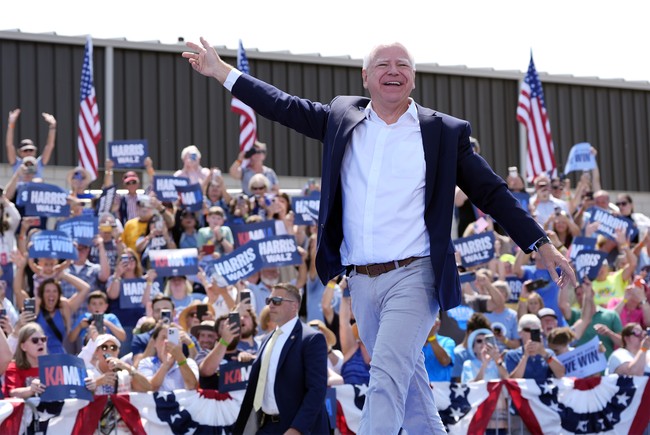
The political fallout is predictable and deserved from a conservative perspective: those in charge must answer for the failure. Teirab directs blame toward Governor Walz for appointing the department commissioners who allowed programs to operate without effective oversight, and toward Attorney General Keith Ellison for failing to investigate sooner once irregularities were apparent. When executive branch supervision and law enforcement response lag behind obvious red flags, corruption grows unchecked.
Beyond Minnesota, this case illustrates a broader problem with large, centrally administered welfare programs that rely on trust and minimal verification. Fraudsters exploit complexity and lax monitoring, and the result is money diverted away from intended beneficiaries. Republicans argue that replacing broad, bureaucratic distribution with stronger controls, accountability, and local transparency can reduce opportunities for abuse.
The consequences extend beyond dollars. Communities suffer when programs meant to help children instead feed criminal enterprises, and public confidence in government programs erodes. Accountability is the linchpin: without it, every well-meaning social initiative becomes vulnerable to exploitation by bad actors who see only the profit. The Minnesota investigation should be a wake-up call for policymakers and prosecutors.
What happens next will matter. Prosecutors pursuing those responsible, auditors redesigning verification processes, and political leaders forced to explain lapses all shape whether reforms stick. For conservatives watching this unfold, the instinct is clear: tighten oversight, demand audits, and hold officials accountable when federal funds are misused. The scammers found an easy scheme; it is on leaders to make sure it cannot be easy again.

Add comment