
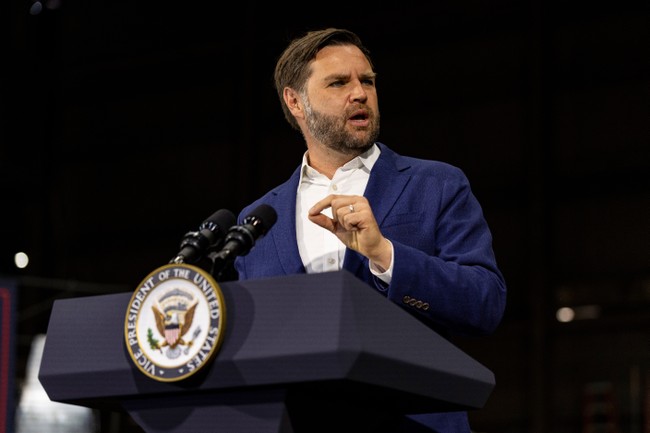
A Massachusetts college radio volunteer resigned after an explicit assassination threat against Vice President JD Vance appeared on BlueSky, drawing a Secret Service inquiry and coordination between local and federal law enforcement. The university said it worked with agents to assess the situation and concluded there was no immediate threat, while the post was removed and the host stepped down. The episode follows a recent break-in at Vance’s residence that led to an arrest, and it comes amid a charged climate where threats to public figures must be treated seriously. This piece outlines what happened, how authorities responded, and why this matters for public safety and campus responsibility.
The post in question came from an account identified as hansopez.bsky.social and reportedly said, “It’s simple, we kill JD Vance.” That line, blunt and violent, was apparently removed after it circulated and prompted immediate concern. The Secret Service confirmed it was aware of the post and began an investigation, which is the appropriate federal-level response when threats target a national official.
University officials said UMass Lowell police worked with the FBI, Secret Service and local police right away to make sure the situation was handled. In the university’s statement they wrote, “UMass Lowell police promptly coordinated with the FBI, Secret Service and Haverhill police the same day to ensure an appropriate response.” That kind of coordination is necessary when an online threat crosses into potential criminal conduct, and the school says it took those steps immediately.
The university added that it contacted the individual and carried out assessments with federal partners, noting that “Contact was made with the individual in question, and the necessary assessments were conducted in collaboration with federal partners. Authorities confirmed there was no immediate threat.” After those checks, the student broadcaster resigned from his volunteer role at the station and removed the post from BlueSky.
Officials have been cautious about public details, and some agencies have declined to comment directly beyond confirming involvement. The Haverhill Police directed inquiries to the FBI, and the FBI provided no public comment on the status of the investigation. That pattern—local law enforcement triaging to federal investigators—is common when threats touch on a federal official’s safety.
This incident followed an actual attempted break-in at Vance’s Cincinnati residence, where a man was detained after property damage and windows being broken. According to the Secret Service, “‘An adult male was taken into custody by the Cincinnati Police Department after being detained by U.S. Secret Service personnel for causing property damage, including breaking windows on the exterior of a personal residence associated with the Vice President.'” Agents on scene reported that the residence was unoccupied and the Vice President and his family were not there, but the confrontation and subsequent custody of a suspect underscore the tangible danger behind threats.
Secret Service agents detained a suspect shortly after midnight and alerted local police when the suspect fled the scene, according to their account. “‘Shortly after midnight on Monday, January 5, the man was physically detained by Secret Service agents assigned to the Vice President’s home. The residence was unoccupied at the time of the incident, and the Vice President and his family were not in Ohio,'” the agency stated. That episode shows how online rhetoric can parallel or precede real-world actions, which is why swift, joint responses matter.
Universities that support student-run media have a duty to balance free expression with safety and legal obligations. The university labeled the post inconsistent with democratic values and its own standards, and officials emphasized taking any threat of violence seriously. When a volunteer broadcaster crosses the line from commentary into an explicit call for violence, institutions must act swiftly to limit harm and cooperate with investigators.
From a law-and-order perspective, this kind of incident raises predictable concerns: threats must be investigated, suspects questioned, and preventive steps taken. The broader pattern of attacks and attempted attacks on public figures in recent months only heightens the need for vigilance by law enforcement and clear consequences for individuals who advocate violence, online or in person.
As the investigation continues, the important facts are straightforward: a violent post targeted a sitting official, the post was removed and the volunteer resigned, and federal and local authorities coordinated to assess the threat. The public can expect the proper investigative channels to run their course so that accountability and safety are preserved.

Add comment