
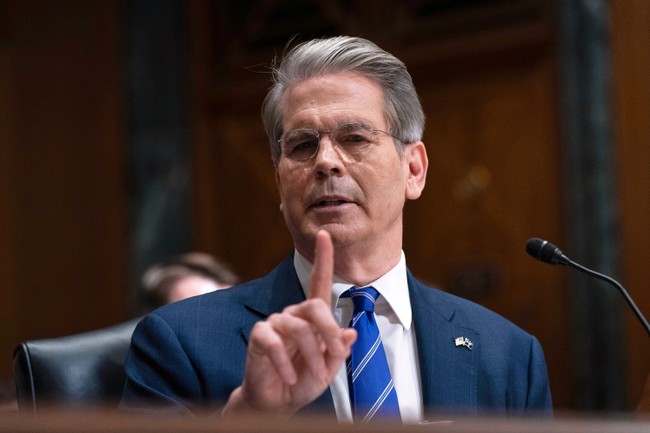
The Treasury has moved from local outrage to a national response after reports of widespread benefit fraud in Minnesota and other states, and Secretary Scott Bessent has laid out how investigators are tracing money, scrutinizing financial institutions, and warning that the losses could be staggering; this piece walks through the scope of the problem, the Treasury’s actions, and policy steps conservatives are urging to stop the theft and hold offenders accountable.
Recent reporting has made clear that organized fraud rings have been siphoning government benefits in several states, creating a political and fiscal problem that demands federal attention. Officials say money often moves through informal channels and money service businesses, complicating detection and increasing the risk funds will be diverted abroad. That cross-border flow raises national security concerns, especially when funds could be routed to extremist groups. Conservatives argue that enforcing existing laws and tightening oversight are common-sense moves that protect taxpayers and national security alike.
Secretary Scott Bessent has been explicit about what Treasury is doing and why it matters, describing efforts to trace transfers from affected states to other countries. Treasury’s Financial Crimes Enforcement Network and the IRS are reportedly investigating whether financial firms complied with the Bank Secrecy Act and related rules meant to stop money laundering. Those enforcement actions aim to make it harder for criminals to exploit gaps in the financial system and to ensure intermediaries meet their legal obligations. From a conservative view, this is the sort of rigorous follow-through federal agencies should have been doing all along.
At the president’s direction, the Treasury Department is examining the transfer of funds allegedly sent from the affected parts of Minnesota to other countries, including Somalia. These funds are often sent through money services businesses, which provide financial services outside the banking system. This money could have potentially been diverted to terrorist organizations, such as Al-Shabaab. Treasury has a long history of following the money to financially suffocate bad actors, like the mafia and Mexican drug cartels. Now we are doing the same to shut down Somali fraud rings.
As part of this effort, Treasury’s Financial Crimes Enforcement Network (FinCEN) and the IRS are investigating financial institutions that may have played a role in abetting rampant fraud. Specifically, we are evaluating whether these institutions have complied with their legal obligations under the Bank Secrecy Act and Treasury’s regulations, which are designed to detect money laundering and safeguard the U.S. financial system from abuse.
The scale of the alleged losses is shocking and should focus minds across party lines: the Government Accountability Office estimates annual fraud losses may exceed $500 billion. That number is larger than the GDP of many countries and could equal as much as 10 percent of federal tax revenues in a year. Even if full recovery is unrealistic, closing these loopholes would relieve pressure on federal budgets and reduce abuse of programs intended for the needy. Conservatives see this as a fiscal and moral duty to stop fraudsters and restore program integrity.
Sadly, Minnesota does not have a monopoly on this sort of fraud. Similar misconduct is almost certainly happening in many other states, especially states like California, New York, and Illinois, which impose lax controls on the use of government benefit funds. In fact, our own Government Accountability Office estimates that the government may lose more than $500 billion each year to fraud. This is a staggering figure larger than the GDP of most countries. It represents up to 10% of federal tax revenues each year and approximately 1% to 2% of GDP.
Those figures put the issue in political terms: taxpayers are funding massive theft while public officials bicker and deflect blame. From the conservative perspective, policy responses should include stricter enforcement, clearer accountability for financial intermediaries, and criminal penalties that reflect the scale of the harm. That also means coordinating Treasury investigations with law enforcement and immigration authorities where appropriate. Tougher consequences will deter future schemes and send a message that stealing from Americans has real costs.
There are practical things to do beyond audits and indictments, such as closing registration and benefit distribution loopholes, improving verification systems, and targeting the networks that enable cross-border transfers. Lawful residents who commit fraud should face the full weight of the law, and noncitizens engaged in criminal schemes must not be shielded from removal. Conservatives argue that protecting borders and enforcing immigration laws are part of preventing fraud that threatens both budgets and safety.
Officials say tracing the money is central to dismantling these operations, and experience shows that following financial trails can cripple criminal enterprises. It will take resources and political will to sustain investigations and to require financial firms to meet their obligations. If Treasury and partner agencies stay on the case, they can disrupt networks, recover assets when possible, and build legal cases against major operators. For Republicans, that kind of disciplined, results-oriented approach is the right response to a national problem that started, for many, as a regional scandal.



Add comment