
Missouri has filed a federal lawsuit challenging the Census Bureau’s practice of counting illegal aliens in the census and asking the court to order a recount of the 2020 Census and the 2021 apportionment, arguing that the current approach misallocates representation and federal resources.
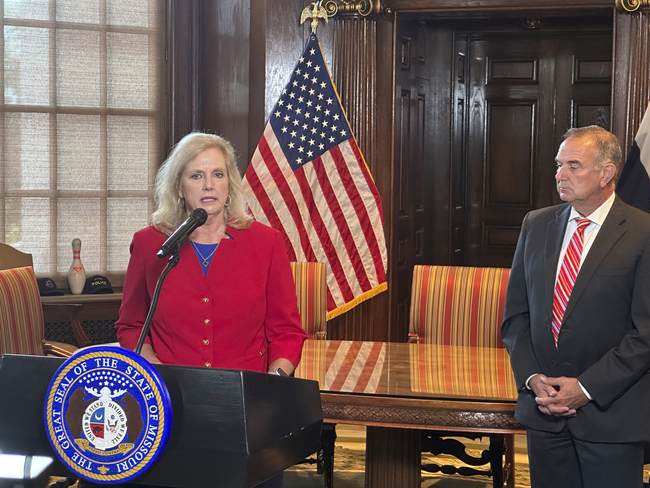
Attorney General Catherine Hanaway announced the action on Friday, saying the state and several individual plaintiffs seek to stop the Census Bureau and Department of Commerce from including illegal aliens and temporary visa holders in apportionment calculations. The complaint targets the Department of Commerce, Commerce Secretary Howard Lutnick, the Census Bureau, and Acting Director George Cook, and it asks for a redo of the 2020 enumeration if necessary.
The filing spans 96 pages and raises constitutional and administrative law claims, centered on the contention that the Fourteenth Amendment and Section 2 do not permit counting noncitizens who are unlawfully present or only temporarily here for the purpose of allocating seats in the House and Electoral College. Missouri argues that the practice transfers political clout and federal funding from states that enforce immigration law to sanctuary states that harbor larger numbers of unauthorized residents.
JEFFERSON CITY, Mo. – To defend our fundamental right to representation in government, Missouri Attorney General Catherine Hanaway filed the most significant election lawsuit in a generation. This first-in-the-nation suit was filed against the United States Department of Commerce (DOC) and the Census Bureau for unconstitutionally allowing illegal aliens to commandeer the path to The White House and compromise our elections.
“The State of Missouri and its voters can no longer ignore the ongoing denial of their right to self-government and fair representation,” said Attorney General Hanaway. “United States citizens and lawful permanent residents have a right to representation, unlike illegal aliens and temporary visa holders. In America, the People, the members of the social compact, are the only legitimate source of the government’s power. We are taking a stand against those who are cheating our system.”
The DOC and the Census Bureau’s current policy of counting illegal aliens in the census tabulation is unjust, unlawful, and unconstitutional. Attorney General Hanaway is demanding a Census recount and that the Court prohibit the inclusion of illegal aliens in the Census.
The complaint repeats a longstanding legal debate about who the Constitution’s framers intended the word “people” to cover for apportionment. Missouri cites a historical change that it says began in the lead-up to the 1980 Census, when the Carter Administration adopted a policy to count illegal aliens and temporary visa holders for apportionment purposes. The state characterizes that administrative decision as incompatible with constitutional principles and not lawful under the Administrative Procedure Act.
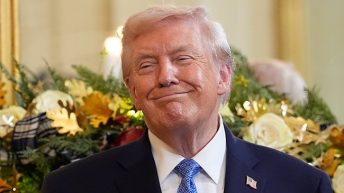
Missouri’s filing also points to recent presidential actions and litigation history to explain the current posture of the law. It notes that a July 2020 memorandum from President Trump sought to exclude illegal aliens from the decennial apportionment base, which sparked immediate litigation from several states and ultimately left the issue open for later administrations to interpret and apply.
Federal representation is being stolen from states who uphold immigration law, including Missouri, and transferred to sanctuary states who artificially inflate their population by harboring illegal aliens. Attorney General Hanaway will not allow open-border states like California, New York, Illinois, Massachusetts, New Jersey, and Maryland to steal an estimated 11 congressional seats, 11 electoral votes, and billions of dollars in funding.
Prior to the 1980 Census, the Carter Administration unilaterally decided that all illegal aliens and temporary visa holders should be counted in the decennial Census and included in the apportionment of congressional representation. The framers of the Constitution and the Fourteenth Amendment would have been shocked by this policy. They could never have imagined an absurd system where 15 million illegal alien trespassers would receive representation in Congress and the Electoral College.
The suit seeks several remedies, including declarations that counting illegal aliens in the 2020 Census and the 2021 apportionment violated the Constitution and the APA. It asks the court to require the Census Bureau to remove illegal aliens and temporary visa holders from apportionment calculations going forward, including for 2030, and to prohibit their inclusion in future tabulations.
In July of 2020, President Trump issued a memorandum requiring the Secretary of Commerce to exclude illegal aliens from the decennial apportionment base, even though illegal aliens were counted in the 2020 Census. California and New York immediately sued against the President’s action. Ultimately, the Supreme Court vacated all the injunctions, but these legal delays opened the door for the Biden Administration to reverse course and include illegal aliens in the apportionment base for federal representation.
If President Trump had succeeded in excluding illegal aliens from the 2021 apportionment, Missouri would have received an extra congressional seat and an extra vote in the Electoral College. Instead, the Biden Administration hijacked the representation of Missourians by reversing the Trump Administration’s action.
Because the case challenges the apportionment of congressional districts, it is subject to a three-judge panel under 28 U.S.C. § 2284(a), a procedural detail the complaint explicitly acknowledges. That requirement means the initial judge assignment may shift and the case will proceed with heightened judicial review given the constitutional questions at stake.
The complaint lists specific demands: declarations of illegality and unconstitutionality, an order to redo the 2020 enumeration if required to correct the apportionment base, and injunctions preventing the Census Bureau from including illegal aliens or temporary visa holders in the 2030 tabulation. Those requests put the case on a collision course with prior administrative practice and years of settled census procedures.
This litigation is poised to test the boundaries between administrative decisions, constitutional text, and the political realities of representation. The outcome could affect congressional seat allocations, Electoral College math, and the distribution of federal funds that flow according to census-derived population counts.
Add comment